Marine Aluminum Transition Joint
Marine Aluminum Transition Joints are explosion-bonded bi-metal connectors engineered to permanently join dissimilar metals—primarily aluminum to steel and titanium to aluminum—in marine and offshore structures.
They are specifically designed to eliminate galvanic corrosion, thermal expansion mismatch, and weld cracking in hybrid metal assemblies, ensuring long-term structural integrity in harsh seawater environments.
What Is an Explosion-Bonded Marine Transition Joint?
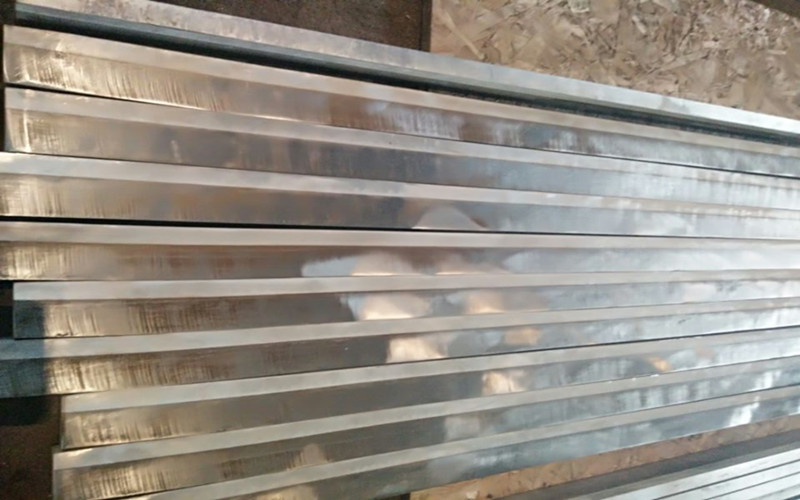
An explosion-bonded transition joint is a solid-state metallurgical bonded connection created through controlled explosive welding. The process forms a high-strength, defect-free bond between two different metals without melting either material.
Compared with conventional mechanical fastening or direct welding, explosion-bonded joints provide:
100% metallurgical bonding interface
No brittle intermetallic fusion layer
Excellent fatigue and shock resistance
Superior corrosion performance in marine environments
These characteristics make them essential for aluminum–steel and titanium–aluminum hybrid marine structures.
Available Material Combinations
1. Aluminum–Steel Transition Joint
Commonly used for aluminum superstructure to steel hull connections.
Aluminum (Marine Grade):
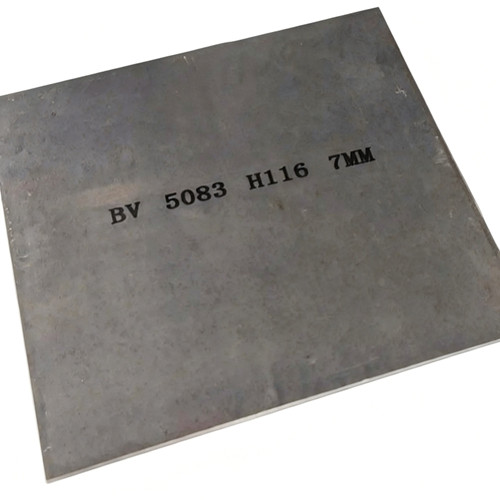
5083-H116 / H321
5086-H116
6061-T6
Steel Grades:
Q235
Q245R
Q345R
2. Titanium–Aluminum Transition Joint
Designed for cryogenic, high-corrosion, or weight-sensitive structures.
Titanium Grades:
Grade 1
Grade 2
Grade 5 (Ti-6Al-4V)
3. Titanium–Steel Transition Joint
Used in specialized marine, offshore, and chemical environments requiring high corrosion resistance and strength.
4. Double-Sided Transition Joints
(Al–Steel–Al or Ti–Al–Ti)
Available for structural reinforcement, symmetrical stress distribution, and advanced fabrication requirements.
Custom alloy combinations are available upon request.

Technical Specifications
| Parameter | Range |
|---|---|
| Base Material Thickness | 1 – 500 mm |
| Clad Layer Thickness | 0.1 – 100 mm |
| Width | 100 – 3000 mm |
| Length | Up to 12,000 mm |
Custom sizes and machining services available.
Standards & Certifications
Our marine transition joints can be supplied in accordance with:
ASTM B432 – Explosion-bonded transition joints
ISO 15614 – Welding qualification
ABS – American Bureau of Shipping
DNV – Det Norske Veritas
LR – Lloyd's Register
BV – Bureau Veritas
EN & ASTM material certification available
Marine classification approval support and full traceability documentation are provided upon request.
Typical Applications
Shipbuilding
Aluminum superstructure to steel hull connections
Deckhouse installations
Exhaust funnel structures
Helicopter deck transitions
Offshore Platforms
Living quarters modules
Hybrid aluminum–steel frames
Corrosion-critical structural joints
Naval & Defense
Lightweight naval vessel structures
Shock-resistant connections
Stealth vessel fabrication
LNG & Cryogenic Systems
Cryogenic pipeline transitions
Low-temperature structural joints
High-corrosion process zones
Why Choose Our Marine Transition Joints?
Eliminates galvanic corrosion between dissimilar metals
Explosion-bonded, high-integrity interface
Excellent fatigue and shock resistance
Long-term seawater durability
Lightweight structure optimization
Custom alloy and double-sided designs available
Marine class approval support
Complete inspection and test reports
Proven performance in harsh marine environments