What Can Cold Drawn Aluminum Tubing Be Used For?
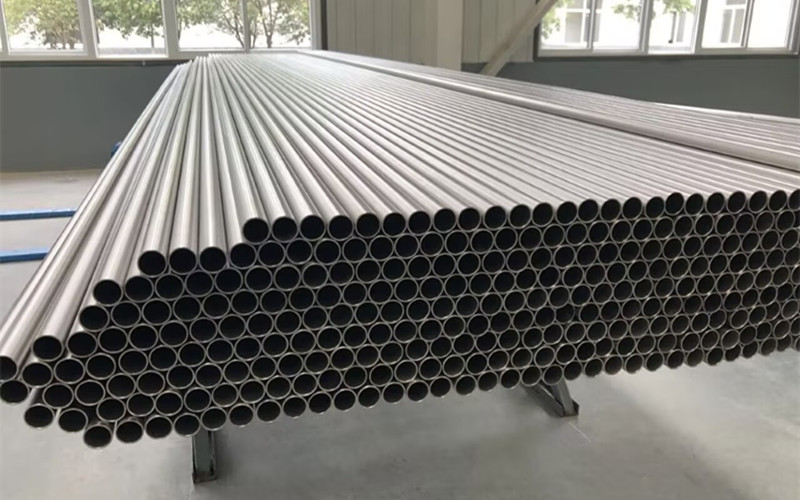
What Is Cold Drawn Aluminum?
Before discussing applications, it's important to make clear "cold drawn meaning".
Cold drawn aluminum refers to aluminum that is shaped or processed below its recrystallization temperature, typically at or near room temperature.
This is best understood in contrast with hot working:
Cold drawn (cold working)
Performed at low temperature
Improves strength through strain hardening
Produces tighter tolerances and smoother surfaces
Hot worked (e.g., hot rolled or hot extruded)
Performed at high temperatures
Easier to shape
Lower dimensional accuracy
So in simple words: cold drawn aluminum is that the aluminum material be processed in the "cold state" for higher precision and strength.
Cold Drawn Aluminum Tubing Manufacturing Process
Cold drawn aluminum tubes are not formed in a single step—they go through multiple stages to achieve their final properties.
1. Billet Preparation
Aluminum billets (solid cylinders) are prepared, usually from cast material.
2. Extrusion (Hot Process First)
The billet is typically hot extruded into a hollow tube (this is the starting form).
3. Cooling & Cleaning
The extruded tube is cooled and surface-treated (pickling/lubrication).
4. Cold Drawing Process
The tube is pulled through a die and mandrel:
Reduces diameter and wall thickness
Improves dimensional accuracy
Enhances surface finish
5. Annealing (Optional)
Heat treatment may be applied to restore ductility between drawing passes.
6. Straightening & Cutting
Final sizing, straightening, and cutting to length.
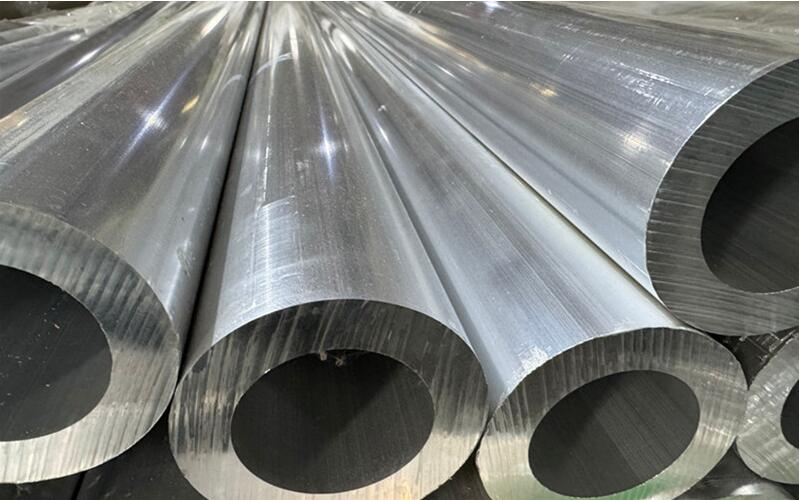
Common Grades of Cold Drawn Aluminum Tubing
Some widely used cold drawn aluminum tubing products are available in specific alloys and tempers, each suited for different performance requirements:
6061-T6 / 6061-T4 seamless cold drawn aluminum tube – widely used for structural applications due to its balanced strength, machinability, and corrosion resistance
7075-T6 / 7075-T73 / 7075-T73511 cold drawn seamless aluminum tube – high-strength tubing commonly used in aerospace and high-performance engineering applications
5052-H32 cold drawn seamless aluminum pipe – known for excellent corrosion resistance, especially in marine and humid environments
3003-H14 / 3003-H112 aluminum pipe – offers good corrosion resistance and formability, suitable for general-purpose and low-strength applications
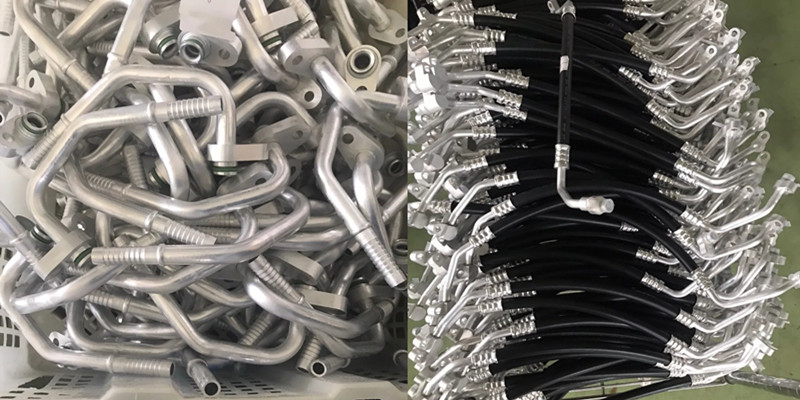
Applications of Cold Drawn Aluminum Tubing
Thanks to its high precision, smooth finish, and improved strength, cold drawn aluminum tubing is used in many real-world applications:
1. Automotive Industry
Fuel lines
Hydraulic systems
Structural components
2. Aerospace
Lightweight structural tubing
Aircraft frames and fittings
3. Bicycles & Sports Equipment
Bike frames
Scooter and fitness equipment tubing
4. Furniture & Consumer Products
Chair frames
Curtain rods
Telescopic poles
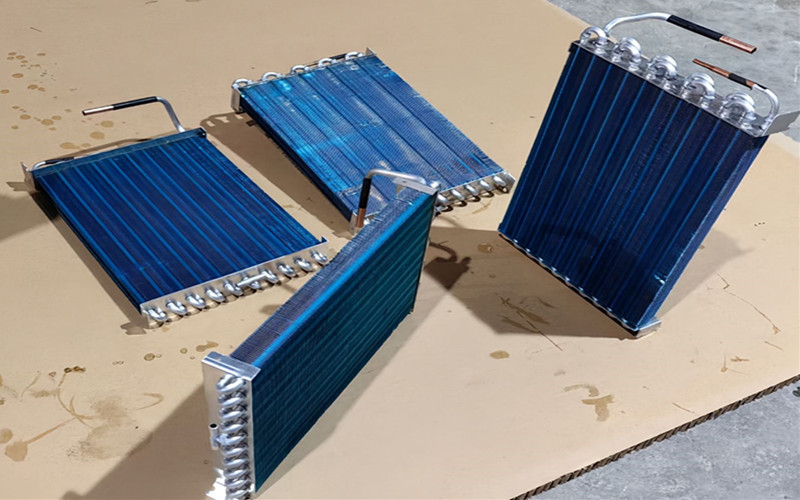
5. HVAC & Heat Transfer Systems
Air conditioning tubing
Heat exchanger components
6. Industrial Equipment
Pneumatic cylinders
Precision machinery parts
Is Cold Drawn the Same as Cold Rolled?
No — these are different processes.
Cold drawing
Used for tubes, rods, and wires
Material is pulled through a die
Cold rolling
Used for sheets and plates
Material is compressed between rollers
Key difference: Drawing = pulling Rolling = pressing
Is All Cold Drawn Tubing Seamless?
Not necessarily. Cold drawn tubing can be either seamless or welded, depending on how the initial tube is formed.
Seamless tubing is typically produced from a solid billet that is extruded into a hollow form and then further processed. Because it has no weld seam, it offers better strength, uniformity, and pressure resistance. On the other hand, some tubing starts as welded tube and is then cold drawn to improve its dimensional accuracy, surface finish, and mechanical properties. This is often referred to as drawn-over-mandrel (DOM) tubing.
So while many high-performance tubes are both seamless and cold drawn, the two concepts are not the same. Cold drawing is a finishing process, not a guarantee of how the tube was originally made.
What Is the Difference Between Cold Drawn and Extruded Aluminum Tubing?
The key difference lies in the stage of processing and the level of precision achieved.
Extruded aluminum tubing is formed by pushing heated aluminum through a die to create a hollow shape. This is a hot working process and is typically the first step in producing aluminum tubes. Extrusion allows for efficient shaping, but the resulting tubes usually have looser tolerances and a relatively rougher surface finish.
Cold drawn aluminum tubing, by contrast, is produced by taking an extruded (or sometimes welded) tube and pulling it through a die at room temperature. This secondary process refines the tube’s dimensions, improves surface smoothness, and increases strength through strain hardening.
In short, extrusion creates the basic shape, while cold drawing enhances precision and performance.

Conclusion
In everyday life, cold drawn aluminum tubing is far more common than most people realize. It can be found in the lightweight frame of a bicycle, the metal tubing inside office chairs, air conditioning lines running through buildings, or even the poles of camping tents and fitness equipment. These applications all rely on materials that are not only lightweight, but also consistent, durable, and visually clean.
This is exactly why cold drawn aluminum tubing is so widely used across industries. By combining precision, strength, and a smooth surface finish, it offers a level of reliability and performance that hot-processed or unfinished tubing alone cannot provide, making it an ideal choice for both high-performance engineering and everyday products.