5 Major Metalworking Processes: Forging,Extrusion,Cold Drawing,Rolling and Stamping
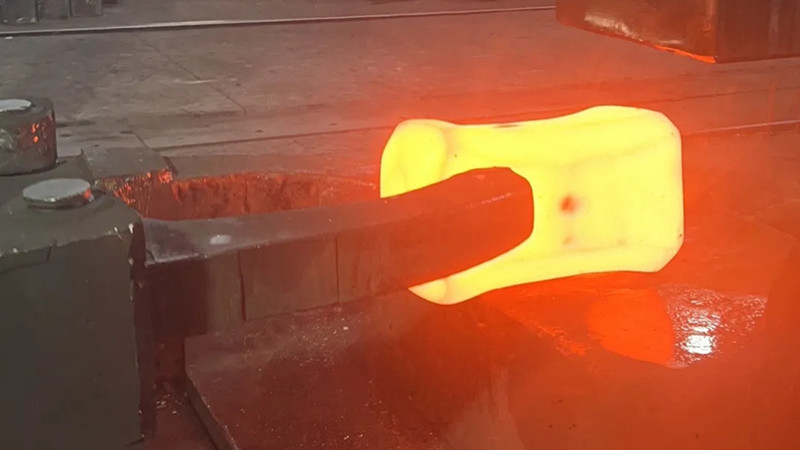
In modern metalworking, plastic forming processes are the foundation of shaping metal into usable components. These methods deform metal under external forces—without removing material—by utilizing the metal’s plasticity. Among them, forging, extrusion, cold drawing, rolling, and stamping are the five most common and vital processes. While all are based on plastic deformation, they differ in forming mechanics, applications, and the resulting product characteristics. This guide explores the fundamentals, classifications, applications, and differences of these five core metalworking processes.
What Is Metal Plastic Forming?
Metal plastic forming (also called pressure working) involves applying external forces such as compression, tension, or impact to a metal workpiece, causing it to deform plastically into a desired shape with specific dimensions and mechanical properties.
Unlike machining—which removes material—plastic forming maximizes material usage, enhances efficiency, and improves the metal’s internal structure and strength. This makes it indispensable in industries such as automotive manufacturing, aerospace, construction, and heavy machinery. Forging, extrusion, cold drawing, rolling, and stamping form the backbone of this field, transforming raw metals into finished products.
1. Forging – Hammer & Press technique of metal shaping
Core Principle
Forging reshapes metal through compressive forces, applied by hammering or pressing. The process may be done at high temperatures (hot forging) or at room temperature (cold forging). It refines the grain structure, removes defects like porosity, and enhances overall strength and toughness. The workpiece retains its volume but changes shape.
Main Classifications
By Temperature:
Hot Forging: Above the recrystallization temperature (e.g., 800–1250°C for steel). Ideal for large, complex parts but produces rougher surfaces.
Cold Forging: At room temperature. Provides smooth surfaces and high precision but requires greater forming force and suits smaller parts.
By Forming Method:
Open-Die Forging: Shaped without a closed mold. Used for simple, large parts like shafts and rings.
Closed-Die Forging: Pressed within a mold cavity for high-precision, complex components—ideal for mass production.
Typical Applications
Automotive: Crankshafts, connecting rods, gears
Aerospace: Turbine disks, engine blades
Heavy Equipment: Hydraulic supports, pressure vessel components
2. Extrusion – Die-Pushed process for long profiles
Core Principle
In extrusion, a metal billet is placed in a closed container and forced through a die with a shaped opening by a hydraulic press. The metal flows through the die, forming continuous profiles with uniform cross-sections.
Main Classifications
By Flow Direction:
Direct Extrusion: Metal flows in the same direction as the ram—most common.
Indirect Extrusion: Metal flows opposite to the ram—less friction, higher precision.
By Temperature:
Hot Extrusion: Above recrystallization temperature (e.g., 350–500°C for aluminum). Enables shaping of strong alloys.
Cold Extrusion: Room temperature operation; produces high-precision, smooth, oxidation-free parts.
Typical Applications
Construction/Transport: Aluminum window frames, curtain wall profiles, auto body frames
Industrial: Copper busbars, oil pipelines, refrigeration tubes
Aerospace: Titanium profiles, engine tubing
3. Cold Drawing – Room-Temperature pulling for precision
Core Principle
Cold drawing pulls a metal bar, wire, or tube through a smaller die using tensile force, reducing its diameter and improving dimensional accuracy. Conducted at room temperature, it increases hardness and strength through work hardening, though ductility decreases.
Main Classifications
Cold-Drawn Bars/Profiles: For shafts, bolts, and guide rails.
Cold-Drawn Wires: For cables, springs, fasteners.
Cold-Drawn Tubes: For precision tubing, needles, and instruments.
Typical Applications
Machinery: Cold-drawn round or hex bars for precision parts
Electronics/Consumer Products: Springs, bicycle frames, wire
Medical: Stainless steel tubes for instruments and catheters
4. Rolling – Roller-Pressed method for mass production
Core Principle
Rolling passes a metal billet between rotating rolls that apply pressure and friction to reduce thickness and shape the metal. It is continuous and highly efficient, ideal for sheets, strips, profiles, and wire.
Main Classifications
By Temperature:
Hot Rolling: Above recrystallization temperature; for large billets and thick plates.
Cold Rolling: At room temperature; produces high-precision, smooth surfaces with enhanced strength.
By Product Type:
Sheet Rolling: For flat sheets and coils.
Profile Rolling: Creates I-beams, channels, and rails.
Wire Rolling: Produces rods later drawn into fine wire.
Typical Applications
Hot-Rolled Plates: Ships, bridges, heavy structures
Cold-Rolled Sheets: Car bodies, appliance panels, aluminum cans
Profiles/Wires: Construction beams, rails, cables, fasteners
5. Stamping – Die-Pressed process for sheet metal
Core Principle
Stamping forms or cuts sheet metal between a die set using a press. Depending on the operation, the process either separates material (cutting) or reshapes it (forming). It is ideal for high-volume, standardized production.
Main Classifications
Separation Processes:
Punching, Blanking, Shearing – Cut or shape sheets.
Forming Processes:
Bending, Deep Drawing, Flanging – Reshape sheets into 3D or reinforced parts.
Typical Applications
Automotive: Body panels, chassis brackets, transmission housings
Appliances: Washer drums, refrigerator doors
Consumer Goods: Cans, bottle caps, lighter casings
Electronics: Phone housings, copper heat sinks
Key Differences Between the 5 Processes
| Comparison Factor | Forging | Extrusion | Cold Drawing | Rolling | Stamping |
|---|---|---|---|---|---|
| Core Force | Compression (impact/press) | Axial pressure (push) | Axial tension (pull) | Roller pressure/friction | Press pressure (via die) |
| Temperature | Hot / Cold | Hot / Cold | Cold only | Hot / Cold | Mostly cold |
| Finished Shape | Irregular 3D parts | Long profiles | Bars, wires, tubes | Sheets, profiles, wire | Sheet parts (flat/3D) |
| Mechanical Properties | High strength, excellent toughness | Medium–high strength | High hardness, lower ductility | Medium–high strength | Moderate–high strength (work hardened) |
| Surface Quality | Rough (hot), smooth (cold) | Moderate (hot), smooth (cold) | Very smooth | Moderate (hot), smooth (cold) | Smooth (die-dependent) |
| Dimensional Precision | Medium | Medium–high | Very high | Medium–high | High |
| Efficiency | Medium | High | High | Very high | Very high |
| Typical Uses | Heavy-load parts | Long structural profiles | Precision parts | Sheets, strips, profiles | Body panels, shells |
Forging, extrusion, cold drawing, rolling, and stamping represent the five pillars of metal plastic forming. Each process offers unique advantages tailored to different materials, shapes, and production needs. Understanding their principles and differences enables engineers and manufacturers to select the optimal forming method for their products.
As materials and manufacturing technologies continue to evolve, innovations such as precision forging, isothermal extrusion, and high-speed rolling are pushing these traditional techniques to new levels—expanding possibilities for stronger, lighter, and more efficient metal components.