Aluminum Seamless tube vs Welded Tubes: Difference, Manufacturing process & Applications
Seamless aluminum tubes and welded aluminum tubes are widely used in aerospace, automotive, marine, hydraulic, construction, and industrial equipment. Because their lightweight, high-strength, corrosion-resistant, and highly machinable characteristics.
From the outside, seamless and welded aluminum tubes look very similar, especially after surface treatment or precision processing. However, when talk about manufacturing methods, structural consistency, pressure resistance, mechanical performance, and application requirements, there are still big differences between the two.
In many industries, choosing between seamless and welded aluminum tubing is not just a matter of appearance or cost. It usually depends on factors such as working pressure, fatigue resistance, dimensional precision, welding requirements, and service environment. Understanding these differences can help engineers, fabricators, and buyers select the most suitable aluminum tube solution for their projects.
Aluminum Seamless Tube Manufacturing Process
Aluminum seamless tube is manufactured without any welded seam, giving it higher pressure resistance, better mechanical strength, and improved corrosion resistance compared with welded tubing. The typical manufacturing process is:
Aluminum billet → Heating → Hot extrusion through a die → Hollow tube formation → Cold drawing (if tighter tolerances are required) → Heat treatment → Straightening → Cutting → Surface finishing (mill finish, anodizing, powder coating, polishing, etc.) → Inspection and packaging
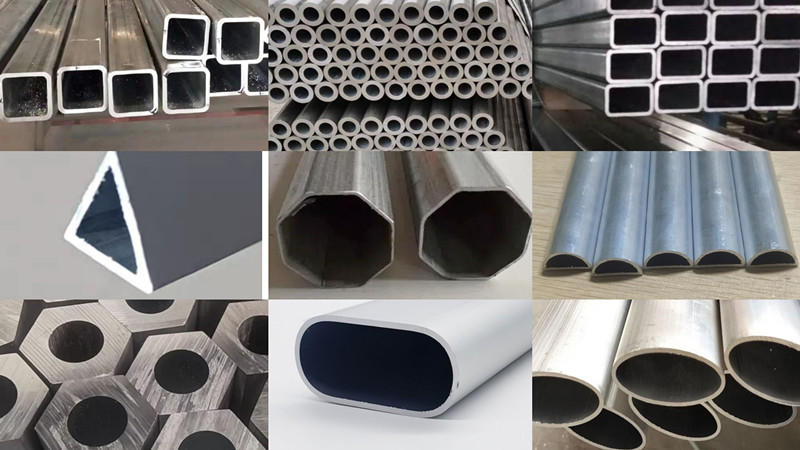
The tube shape is primarily determined by the extrusion die. Round seamless tubes are the most common, but manufacturers can also produce square, rectangular, and hexagonal seamless tubes by using different die designs. In other words, the manufacturing process is basically the same, while the die determines the cross-sectional shape. Standard round, square, and rectangular tubes are widely available, while hexagonal and other special profiles are usually produced upon request. Dimensions such as outside diameter, wall thickness, length, corner radius, and custom cross-sectional shapes can all be customized within the capabilities of the extrusion process.
Welded Aluminum Tube Manufacturing Process & Difference from Seamless Tube
A welded aluminum tube is produced by first forming an aluminum strip or coil into a tubular shape and then joining the edges using a welding process, typically High-Frequency (HF) welding, TIG welding, or laser welding, depending on the application and alloy. The standard manufacturing process is:
Aluminum coil/strip → Slitting → Roll forming into a tube → Longitudinal welding → Weld bead removal (if required) → Sizing and reshaping → Straightening → Heat treatment (optional) → Cutting → Surface finishing → Inspection and packaging
Like seamless tubes, welded aluminum tubes are available in round, square, and rectangular shapes, and hexagonal tubes can also be manufactured, although they are generally custom-made rather than standard stock items. The final shape is achieved through the forming rolls and sizing dies after welding, allowing manufacturers to produce a wide range of dimensions and customized profiles.
The key difference between aluminum seamless tubes and welded aluminum tubes is the manufacturing method. Seamless tubes are extruded directly from a solid billet and contain no longitudinal weld seam, making them better suited for high-pressure, structural, aerospace, hydraulic, and critical mechanical applications. Welded tubes are manufactured from aluminum strip or coil and therefore contain a longitudinal welded seam. They offer lower production costs, better material utilization, and are widely used in furniture, automotive parts, heat exchangers, construction, decoration, and general engineering applications. For most standard structural uses, welded tubes provide excellent performance and are more economical, while seamless tubes are preferred when maximum strength, pressure resistance, or reliability is required.
Seamless Aluminum Tube Forms and Applications
Different seamless manufacturing methods produce tubing with different performance characteristics.
Extruded Seamless Aluminum Tube
Extrusion is one of the most common methods for manufacturing seamless aluminum tubing.
In this process, a heated aluminum billet is forced through a die to form a hollow tube profile.
Advantages of Extruded Seamless Tubes
Excellent structural integrity
Good dimensional stability
Efficient large-scale production
Suitable for medium and large diameters
Cost-effective compared to forged tubes
Common Alloys Used
6061 Extruded Seamless Aluminum Tube
6061 is one of the most widely used aluminum alloys because it provides:
Good strength-to-weight ratio
Excellent corrosion resistance
Good weldability
Strong machinability
Typical applications include:
Hydraulic tubing
Structural components
Industrial equipment
Transportation systems
6063 Extruded Aluminum Tube
6063 offers:
Better surface finish
Good corrosion resistance
Excellent anodizing capability
It is widely used in:
Architectural systems
Decorative tubing
Lightweight structures
6082 Extruded Seamless Tube
6082 provides higher strength than 6063 and is commonly used in:
Heavy structural systems
Transportation
Marine applications
Extruded Aluminum Tube Sizes Supply
| Alloy | Outer Diameter (OD) | Wall Thickness (WT) |
|---|---|---|
| 6061 | 10 – 280 mm | 4 – 60 mm |
| 6063 / 6082 | 10 – 260 mm | 4 – 60 mm |
| 2017 / 2024 | 10 – 300 mm | 4 – 60 mm |
| 7020 / 7050 | 10 – 300 mm | 4 – 60 mm |
| 5083 / 5086 | 10 – 260 mm | 4 – 60 mm |
| 5052 / 3003 | 10 – 200 mm | 4 – 30 mm |
| 7075 / 7055 | 10 – 300 mm | 4 – 60 mm |
Cold Drawn Seamless Aluminum Tube
Cold drawing is a secondary precision manufacturing process used after extrusion.
The tube is pulled through a die at room temperature to improve:
Dimensional accuracy
Surface finish
Mechanical properties
Wall thickness consistency
Cold drawn tubes are commonly used where precision is critical.
Advantages of Cold Drawn Aluminum Tubes
Tighter tolerances
Better concentricity
Improved fatigue resistance
Superior surface quality
Higher tensile strength
Common Alloys for Cold Drawn Tubing
2024 aluminum is widely used in aerospace applications because of its:
High fatigue strength
Excellent mechanical performance
Good machinability
Typical applications:
Aircraft hydraulic systems
Aerospace structural tubing
Precision mechanical parts
7075 is a high-strength aerospace-grade alloy known for:
Extremely high strength
Excellent fatigue resistance
Superior performance under stress
Applications include:
Aircraft frames
Military equipment
High-performance automotive components
Cold drawn Aluminum Tube Sizes Supply
| Alloy Grade | Outer Diameter (OD) | Wall Thickness (WT) | Length (L) |
|---|---|---|---|
| 6061 / 6063 | 200 – 1000 mm | 20 – 150 mm | 20 – 1100 mm |
| 5083 | 200 – 1000 mm | 20 – 150 mm | 20 – 1100 mm |
| 2017 / 2024 | 200 – 1000 mm | 20 – 150 mm | 20 – 1100 mm |
| 7050 / 7055 | 200 – 1000 mm | 20 – 150 mm | 20 – 1100 mm |
| 7075 | 200 – 1000 mm | 20 – 150 mm | 20 – 1100 mm |
Forged Seamless Aluminum Pipe
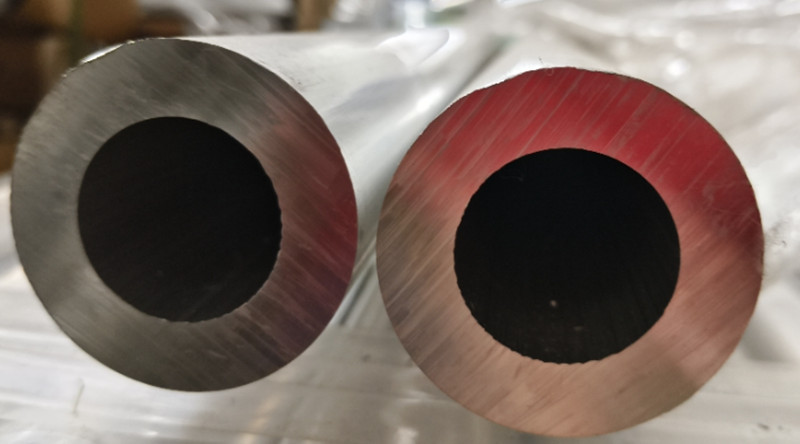
Forged seamless aluminum pipes are produced through heavy deformation processes that improve grain structure and mechanical strength.
Forged tubing is often used in demanding environments requiring:
Thick walls
High pressure resistance
Extreme mechanical reliability
Advantages
Exceptional structural strength
Improved grain flow
Better impact resistance
Suitable for heavy-duty systems
Typical Applications
Pressure vessels
Aerospace systems
Defense equipment
Oil and gas systems
Heavy industrial machinery
Forged Aluminum Tube Sizes Supply
| Alloy | Outer Diameter (OD) | Wall Thickness (WT) |
|---|---|---|
| 6061 | 6 – 160 mm | 1 – 10 mm |
| 6063 | 6 – 160 mm | 1 – 10 mm |
| 7075 | 6 – 180 mm | 1 – 10 mm |
| 2017 | 6 – 180 mm | 1 – 10 mm |
| 2024 | 6 – 180 mm | 1 – 10 mm |
| 5083 | 6 – 180 mm | 1 – 10 mm |
| 3003 | 6 – 150 mm | 1 – 10 mm |
Extra Large Diameter Seamless Aluminum Pipe
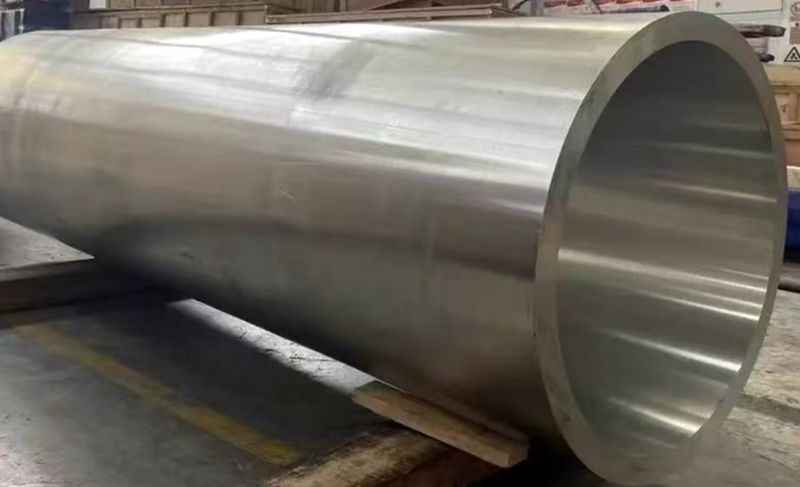
Large-diameter seamless aluminum pipes are used where lightweight corrosion-resistant structures are required.
Advantages
Reduced structural weight
Corrosion resistance
High load-bearing capability
Better flow capacity
Applications
Marine engineering
LNG systems
Offshore structures
Chemical transportation
Large industrial frameworks
Larger Diameter Seamless Aluminum Pipe Sizes
| Aluminum Alloy | Outside Diameter (OD) | Wall Thickness (WT) | Length (L) |
|---|---|---|---|
| 6061 / 6063 | 200 – 1500 mm | 25 – 300 mm | 1000 – 18000 mm |
| 5083 | 200 – 1500 mm | 25 – 300 mm | 1000 – 18000 mm |
| 2017 / 2024 | 200 – 1500 mm | 25 – 300 mm | 1000 – 18000 mm |
| 7075 / 7050 / 7055 | 200 – 1500 mm | 25 – 300 mm | 1000 – 18000 mm |
Welded Aluminum Tube Forms and Applications
Although seamless tubes provide superior mechanical consistency, welded aluminum tubing remains highly important because of its flexibility and lower production cost.
TIG Welded Aluminum Tube
TIG welding is commonly used for high-quality aluminum tubing production.
Advantages
Clean weld appearance
Good dimensional control
Suitable for thin-wall tubing
Lower manufacturing cost
Applications
Automotive systems
Furniture
Decorative structures
Low-pressure piping
ERW Aluminum Tube
Electric Resistance Welding (ERW) is widely used for mass production.
Advantages
High production efficiency
Lower cost
Consistent dimensions
Applications
Structural tubing
Heat exchanger systems
Commercial equipment
Drawn Over Mandrel (DOM) Aluminum Tube
DOM tubing improves welded tube performance by cold drawing after welding.
This process enhances:
Surface finish
Dimensional accuracy
Mechanical consistency
DOM aluminum tubing is often used in:
Automotive applications
Bicycle frames
Precision structural systems
High-Frequency Induction Welded Aluminum Tube
High-frequency induction welded aluminum tubes are widely used in automotive heat exchangers, condensers, evaporators, battery cooling systems, and HVAC equipment.
Compared with conventional structural welded tubes, high-frequency welded aluminum tubes offer:
High production efficiency
Thin wall capability
Excellent dimensional consistency
Good brazing performance
Lightweight heat transfer solutions
These tubes are especially important in modern automotive thermal management systems and EV battery cooling applications.
4343/3003 Aluminum High-Frequency Induction Welding Tube
4343/3003 aluminum welding tubes are commonly used in radiators, condensers, and automotive heat exchanger systems.
In this clad structure:
3003 aluminum serves as the core material
4343 aluminum acts as the brazing layer
This structure provides:
Good corrosion resistance
Excellent brazing performance
Stable heat transfer capability
Lightweight thermal management performance
Typical applications include:
Automotive radiators
Condensers
HVAC systems
Industrial cooling systems
4343/3003/4343 Aluminum High-Frequency Induction Welding Tube
Compared with single-side clad structures, 4343/3003/4343 aluminum tubes feature brazing layers on both sides of the core material.
This double-side clad design offers:
Better brazing consistency
Improved heat exchanger performance
Enhanced corrosion resistance
More stable welding quality
These tubes are widely used in:
Multi-channel heat exchangers
EV battery cooling systems
High-efficiency condensers
Advanced automotive thermal management systems
As electric vehicles and lightweight cooling technologies continue to develop, double-side clad high-frequency welded aluminum tubes are becoming increasingly important in modern heat exchange applications.
Seamless vs Welded Aluminum Tube Application Difference
| Application | Seamless Aluminum Tube | Welded Aluminum Tube |
|---|---|---|
| Hydraulic cylinders & fluid power | ✔ Preferred | ✖ Rarely used |
| High-pressure piping | ✔ Preferred | ✖ Generally not recommended |
| Aerospace | ✔ Common | Limited to non-critical components |
| Oil & gas instrumentation | ✔ Common | Limited |
| Automotive fluid systems | ✔ Preferred | Sometimes |
| Structural frames | Sometimes | ✔ Common |
| Furniture | Rare | ✔ Standard |
| Construction & architecture | Sometimes | ✔ Standard |
| Bicycle frames | High-end applications | ✔ Most commercial products |
| Heat exchangers | High-pressure applications | ✔ Widely used |
| Decorative tubing | Rare | ✔ Most common |
| General fabrication | Sometimes | ✔ Most common |
How to Choose the Right Aluminum Tube
Selecting the correct aluminum tube depends on several engineering factors.
Choose Seamless Aluminum Tube When:
High pressure resistance is required
Fatigue performance is critical
Structural reliability is important
Aerospace or hydraulic applications are involved
Choose Welded Aluminum Tube When:
Lower cost is important
Pressure requirements are moderate
Decorative appearance matters
Large-volume production is needed
Aluminum Alloy Selection Quick Guide
| Alloy | Main Advantages | Typical Applications |
|---|---|---|
| 6061 | Versatile, corrosion resistant | Hydraulic systems, structures |
| 6063 | Excellent surface finish | Architectural systems |
| 2024 | High fatigue strength | Aerospace |
| 7075 | Extremely high strength | Military, aerospace |
| 5083 | Marine corrosion resistance | Offshore and marine systems |
Frequently Asked Questions
Is seamless aluminum tube stronger than welded tube?
Yes. Seamless aluminum tubing generally provides better structural consistency and higher pressure resistance because it does not contain a welded seam.
Why are seamless aluminum tubes more expensive?
Seamless manufacturing processes are more complex and require additional processing such as extrusion, forging, or cold drawing.
What aluminum alloy is best for hydraulic tubing?
6061 seamless aluminum tube is one of the most common choices because it combines strength, corrosion resistance, and machinability.
Are welded aluminum tubes reliable?
Yes. High-quality welded aluminum tubing is reliable for many structural and low- to medium-pressure applications.
Conclusion
Both seamless and welded aluminum tubes play important roles in modern industrial applications, and each has its own advantages depending on the engineering requirements.
Rather than focusing only on whether a tube is seamless or welded, the key is selecting the right aluminum alloy and using it in the right application to achieve the best balance of performance, cost, and reliability.
We hope this guide helps you better understand the differences and makes your material selection easier. If you are looking for seamless aluminum tube products or need technical support for your project, feel free to contact us. Our team can provide professional solutions based on your specific requirements.