What Aluminum Alloy Is Used for Water-Cooled Motor Housings? A Comparison of 5 Major Applications
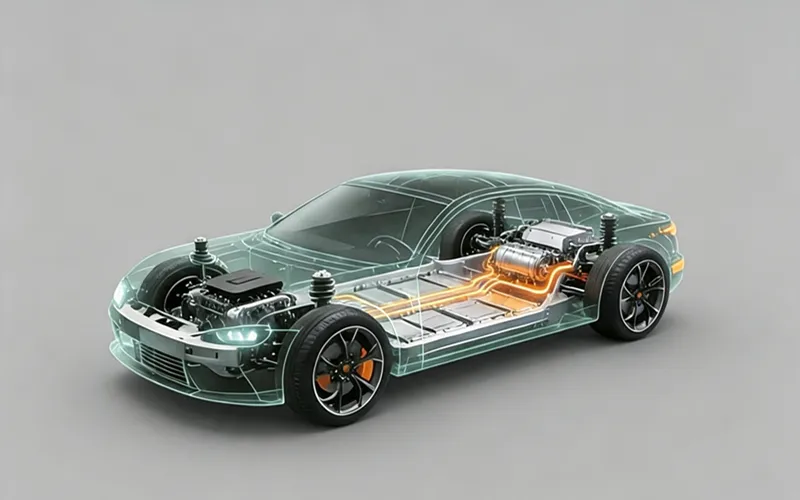
A water-cooled motor housing, also known as a water-cooled motor casing or water-jacket housing, is a core structural component of the cooling system for high-power-density motors. Whether used in new energy vehicle traction motors, wind power generators, industrial servo motors, CNC machine tool spindle motors, or high-power motors used in data centers, once the power density becomes too high for air cooling alone, cooling channels inside the housing are needed to remove heat.
This article systematically examines the commonly used aluminum alloys for water-cooled motor housings across five major application scenarios, along with the material selection logic behind them and the sealing processes and corrosion risks that need to be considered. It is intended to help procurement and engineering professionals quickly identify suitable material solutions.
Why Are Water-Cooled Motor Housings Almost Always Made of Aluminum Alloy?
The selection of a motor housing material is essentially a matter of balancing several factors: thermal conductivity, weight, manufacturing feasibility, and cost. Aluminum alloys offer a particularly good combination of these properties:
High thermal conductivity: Common aluminum alloys generally have thermal conductivity in the range of 150–200 W/(m·K), allowing heat generated inside the motor to be transferred quickly to the walls of the cooling channels and carried away by the coolant.
Low density: Aluminum has a density of approximately one-third that of steel, making it particularly attractive for applications where weight is critical, such as new energy vehicles, drones, and robots.
Mature forming processes: Die casting, extrusion, and machining are all well-established manufacturing routes for aluminum alloys. They can be used to produce complex internal cooling-channel structures while keeping production costs under control for high-volume applications.
Reasonable corrosion resistance: The naturally formed oxide film on aluminum provides a certain degree of protection. However, when the alloy is exposed to coolant over long periods, additional protection and corrosion-control measures may still be required, as discussed later in this article.
Because of this combination of advantages, aluminum alloy is the default choice for water-cooled motor housings in most applications. Only a limited number of high-end or highly specialized applications consider alternative materials.
Material Comparison Across Five Major Applications
Different applications impose very different operating requirements on motor housings, so the material selection logic also varies. The table below provides a quick comparison of five typical applications:
| Application | Typical Operating Conditions | Common Aluminum Alloys | Key Material Considerations |
|---|---|---|---|
| New Energy Vehicle Traction Motors | High speed, frequent start/stop cycles, limited space, high-volume production | ADC12, A380 (mainly die cast) | Lightweight design, die-casting cost and efficiency, production consistency |
| Wind Power Generators | High power, enclosed nacelle environment, long-term continuous operation | A356, 6061 | Fatigue resistance, long service life, weather resistance |
| Industrial Servo Motors | High precision, continuous load, frequent speed changes | 6061, A356 | Dimensional stability, ability to maintain machining accuracy |
| CNC Machine Tool Spindle Motors | Extremely high speed, highly sensitive to thermal deformation | 6061-T6, selected forged aluminum alloys | Low thermal deformation, high rigidity, dimensional repeatability |
| High-Power Motors/Compressors in Data Centers | Long-term full-load operation, high reliability requirements | ADC12, A380 | Production consistency, large-scale manufacturing stability, long-term maintenance-free operation |
This table can be used as a quick reference. The following sections examine the material selection logic for each application in more detail.
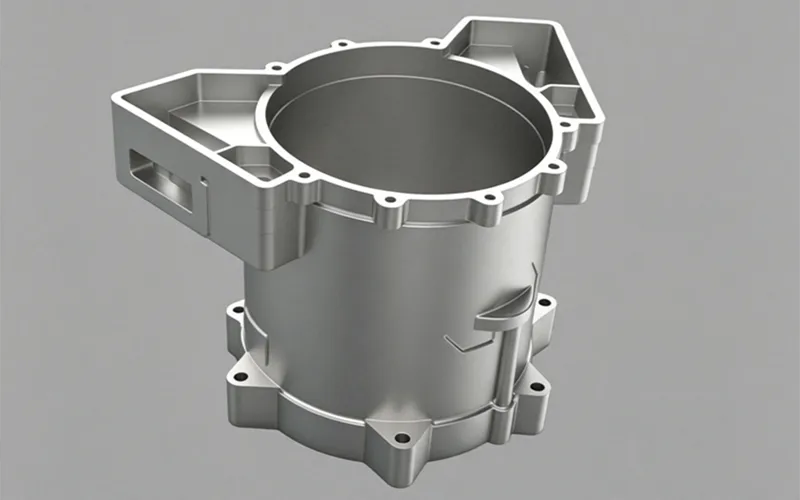
New Energy Vehicle Traction Motors: The Main Application for Die-Cast Aluminum Alloys
New energy vehicle traction motors operate at high speeds and high power densities while frequently dealing with start/stop cycles and changing loads. This creates significant and fluctuating heat dissipation requirements. Motor housings in this application are almost universally produced by die casting, because die casting can form complex internal cooling-channel structures in a single manufacturing process while meeting the high-volume and cost requirements of the automotive industry.
Common alloys include ADC12 and A380. Both offer good fluidity and stable casting performance, making them suitable for thin-walled, complex structural components produced in large quantities.
After die casting, the strength of the housing itself is generally sufficient for most operating conditions. If certain areas require higher mechanical performance, such as mounting flanges or load-bearing sections, some manufacturers may use subsequent solution treatment and aging (T6 condition) to further improve strength and hardness. However, this is not a standard process for every die-cast housing and should be determined according to the specific load requirements.
The key consideration when selecting materials for new energy vehicle motor housings is finding the right balance between lightweight design and high-volume manufacturing cost. This is one of the main reasons why die-cast aluminum alloys, rather than extruded profiles, are the mainstream solution in this application.
Wind Power Generators: Material Selection for Long Service Life and Fatigue Resistance
Water-cooled motor housings for wind power generators face a completely different set of requirements. These motors operate at high power levels, usually have relatively more available space within the nacelle, but require extremely high long-term reliability.
Wind turbines are typically designed for a service life of more than 20 years, and many are installed at significant heights or offshore, where maintenance is expensive and difficult. Once a housing failure occurs, the cost of repair can far exceed the value of the motor housing itself.
Common materials for this application include A356 and 6061 aluminum alloys. A356 is a typical cast aluminum-silicon alloy. After solution treatment and aging (T6 condition), it can provide a good balance of strength and ductility, making it suitable for components exposed to repeated vibration loads during wind turbine operation.
6061 is a heat-treatable extrusion alloy that provides stable overall mechanical properties after T6 treatment and is also used for structural sections of wind turbine motor housings.
For wind power applications, fatigue resistance carries significantly more weight in material selection than lightweight design. This differs from the material selection logic for automotive traction motors. A wind turbine is generally less concerned about adding a few kilograms to the motor housing, but it is highly concerned about whether the housing can withstand decades of vibration without developing fatigue cracks.
Industrial Servo Motors: Dimensional Stability Comes First
Industrial servo motors are commonly used in automated production lines, robot joints, and precision transmission systems. Their operating characteristics include continuous loads and frequent speed adjustments. The primary requirement for the motor housing is therefore dimensional stability.
If the housing deforms because of thermal expansion and contraction or long-term mechanical loading, it can directly affect the assembly accuracy of the rotor and stator and consequently the control accuracy of the servo system.
6061 and A356 are commonly used in this application. There is some overlap with wind power applications, but the emphasis is different. Servo motors place greater importance on the dimensional repeatability and long-term stability achieved after solution treatment and aging, rather than simply focusing on strength.
The ability of the housing to maintain its machining accuracy after manufacturing is therefore an important factor that needs to be controlled during material selection and process design for servo motor housings.
CNC Machine Tool Spindle Motors: Controlling Thermal Deformation to the Minimum
CNC machine tool spindle motors typically operate at much higher speeds than conventional industrial motors, resulting in some of the most demanding requirements among the five applications.
This is because thermal deformation of the spindle motor housing can directly affect machining accuracy. Even housing deformation on the order of a few tenths of a micrometer can potentially cause problems in precision machining applications and lead to scrapped workpieces.
For this application, 6061-T6 aluminum alloy is a preferred choice, while some high-end spindles with higher rigidity requirements may consider forged aluminum alloys.
The "T6" temper is particularly important here. 6061 is a heat-treatable alloy, and only through proper solution treatment and aging can the strengthening phases precipitate sufficiently to achieve the desired strength and hardness. Proper heat treatment also helps ensure that the housing does not undergo excessive deformation caused by residual stress release during subsequent precision machining.
In other words, material selection for a spindle motor housing is essentially about selecting not only the alloy grade, but also whether the required heat-treatment process can be properly controlled.
High-Power Motors in Data Centers: Consistency Matters More Than Individual Performance
High-power motors and compressors used in data centers, such as those found in chilled-water systems and large pumping equipment, are characterized by long-term full-load operation and very limited downtime.
The key requirements for their housings are reliability and production consistency. Data centers often purchase large quantities of equipment at once, so any batch-to-batch quality variation can create significant operational and maintenance risks.
ADC12 and A380 die-cast aluminum alloys are commonly used in this application. The material selection logic is similar to that of new energy vehicle motors, but the emphasis shifts from "lightweight design" to "stable batch production."
The repeatability of the die-casting process and consistency of the alloy composition from batch to batch are therefore important factors when evaluating materials and suppliers for this application.
Housing Sealing Structure and Welding Processes
In many water-cooled motor housings, the cooling channels are not completely enclosed during the initial forming process. Instead, an open cooling-channel structure is first manufactured, and the channels are then sealed by welding a cover plate/end plate onto the housing.
The quality of this process directly determines whether the housing will develop coolant leakage after several years of operation.
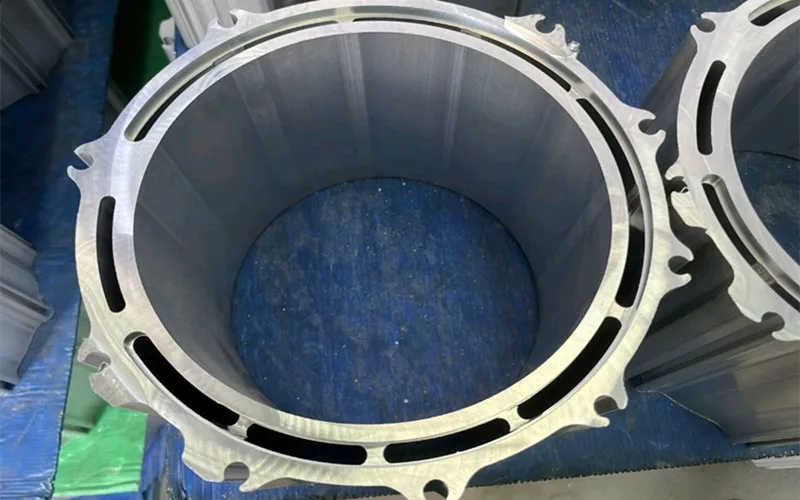
A typical design may use an extruded profile for the main motor housing, such as 6061-T6 aluminum alloy. The extrusion can form the housing profile, internal cavity, and main cooling-channel structure. CNC machining is then used to create mounting holes, coolant inlet and outlet ports, channel connection holes, and other features.
The cover plates at both ends of the housing can be manufactured from rolled aluminum sheet, such as 5052-H32, and precision-cut to the required profile.
Finally, friction stir welding (FSW) can be used to weld and seal the cover plates to the housing, completing the enclosed cooling-channel system.
Friction stir welding is a mainstream process for this type of application because it is a solid-state joining process. The materials do not melt during welding. Compared with conventional fusion welding processes such as MIG and TIG, FSW can effectively reduce common welding defects such as porosity and hot cracking, resulting in denser and more reliable welds.
This is particularly important for a sealed cooling structure where coolant leakage must be avoided.
This also explains why water-cooled motor housings often use two different aluminum alloys for the housing body and cover plate. The housing material can be selected primarily for extrusion formability and structural strength, while the cover plate material can be selected for rolled-sheet thickness consistency and welding compatibility. Each material serves a different purpose within the overall structure.
Frequently Asked Questions
Does a Water-Cooled Motor Housing Have to Be Made of Aluminum Alloy?
In most applications, aluminum is the preferred choice. The overall balance of thermal conductivity, weight, manufacturability, and cost makes aluminum difficult to replace with other materials in most applications.
Only a limited number of high-end or highly specialized applications with particularly demanding corrosion-resistance requirements may consider other metals.
How Should I Choose Between Die Casting and Extrusion?
Die casting is more suitable for complex structures that require high-volume production and where unit cost is an important consideration, such as new energy vehicle motors and data center equipment.
Extruded profiles are more suitable for applications requiring higher housing strength and tighter subsequent machining requirements, such as wind power and precision industrial equipment. In these cases, welding is typically required to seal the cooling channels.
Can a Water-Cooled Motor Housing Corrode and Develop Coolant Leakage?
Yes. The main risks come from two aspects.
The first is galvanic corrosion. If the aluminum housing comes into contact with copper windings or fasteners made from other metals without effective electrical isolation or protective treatment, electrochemical corrosion may occur over long periods in humid or coolant environments.
The second is coolant compatibility. If the coolant, typically an ethylene glycol-water solution, has an unsuitable formulation or pH value, it may cause pitting corrosion of the aluminum alloy. Over time, this corrosion can develop into leakage, particularly around welds or thin sections of the cooling channels.
Common preventive measures include anodizing, protective surface coatings, and proper control of the coolant formulation and replacement intervals.
When selecting housing materials and suppliers, these factors should be included in the evaluation rather than focusing solely on the initial mechanical strength of the material.
What Is the Difference Between ADC12 and A380 Die-Cast Aluminum Alloys?
Both are commonly used aluminum-silicon die-casting alloys with broadly similar overall performance.
In practice, the choice often depends more on the specific equipment manufacturer's process standards and established manufacturing experience. During procurement, it is recommended to confirm the exact alloy grade specified on the drawing and verify the supplier's ability to maintain stable die-casting quality.
The key requirements for water-cooled motor housings vary significantly by application. New energy vehicle motors prioritize lightweight design and high-volume production cost; wind power and industrial servo motors emphasize long-term stability and dimensional accuracy; CNC spindle motors place the greatest emphasis on controlling thermal deformation; and data center equipment places greater importance on batch-to-batch consistency.
Material selection, heat treatment, manufacturing processes, and sealing structure should therefore be considered together according to the actual operating conditions, rather than simply applying one "universal alloy" to every application.