Aluminum Alloy 2024 7050 7075 Data Sheet
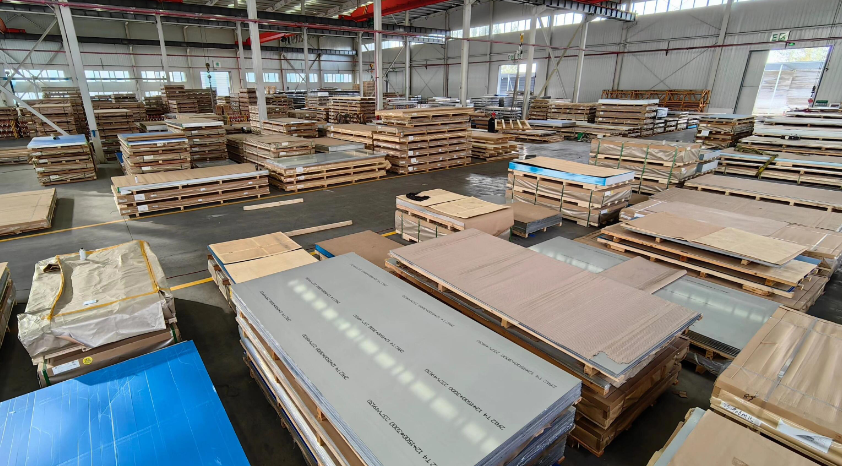
2024 Aluminum Alloy Data Sheet
2024 aluminum alloy is a high-strength Al-Cu-Mg alloy widely used in aerospace structural applications due to its excellent fatigue resistance. While it offers a high strength-to-weight ratio, additional surface treatment is typically required to improve corrosion resistance.
| Category | Details |
|---|---|
| Alloy Type | Al-Cu-Mg series high-strength aluminum alloy |
| Main Composition | Copper (3.8-4.9%), Magnesium (1.2-1.8%), Manganese (0.3-0.9%) |
| Common Tempers | T3, Solution heat-treated, cold-worked, naturally aged T4 Solution heat-treated, naturally aged |
| Density | 2.78 g/cm³ |
| Melting Point | 500 - 635 °C |
| Tensile Strength | 470 - 520 MPa (T3 temper) /440–480 MPa(T4 temper) |
| Yield Strength | 325 - 400 MPa (T3 temper) /275–350 MPa(T4 temper) |
| Elongation | 10 - 20% (T3 temper) / 15–20%(T4 temper) |
| Hardness | 120 - 140 HB (T3 temper) /105–125 HB(T4 temper) |
| Elastic Modulus | 73 GPa |
| Shear Strength | 280 MPa |
| Fatigue Strength | 140 MPa |
| Thermal Conductivity | 121 W/(m·K) |
| Electrical Conductivity | 30% IACS |
| Thermal Expansion Coefficient | 23.2 × 10⁻⁶ /K |
2024 Aluminum Corrosion Resistance
2024 aluminum alloy is more likely to corrode galvanically and intergranularly when exposed to moisture or corrosive environments. So compared with 5xxx- and 6xxx-series aluminum alloy, it has higher copper content, poorer inherent corrosion resistance.
Surface protection is important for durability improving, type II anodizing and type III hard anodizing can provide a dense oxide layer that enhances wear resistance and offers moderate corrosion protection for industrial applications.
For aerospace applications, 2024 Alclad aluminum sheet is the industry standard. Its high-purity aluminum cladding provides sacrificial galvanic protection while preserving the strength of the 2024 alloy core. Aircraft structures typically combine Alclad material with an epoxy primer and polyurethane topcoat for enhanced corrosion resistance. Direct contact with dissimilar metals should be avoided or properly isolated. In marine or continuously humid environments, a complete coating system is required for long-term durability.
Aluminum 2024 Applications
Aerospace Structures
2024 aluminum alloy is one of the most widely used aerospace materials because of its excellent strength-to-weight ratio and fatigue resistance. Aircraft manufacturers rely on it for fuselage skins, wing tension members, shear webs, bulkheads, and other primary structures exposed to cyclic loading.
Aircraft and Precision-Machined Components
High-strength fittings, brackets, fasteners, landing gear supports, and other precision-machined aerospace parts are commonly produced from 2024 T3 T4 aluminum bar. Its mechanical properties make it well suited for demanding structural applications.
Hydraulic and Structural Tubing
2024 aluminum t3 t4 tube serves in aircraft hydraulic systems, structural frames, and support members. The alloy combines high strength with low weight, making it a practical choice for load-bearing applications.
Defense and Military Equipment
Military vehicles, defense systems, and armored components often incorporate 2024 aluminum. Its strength and fatigue resistance help ensure reliable long-term performance.
Industrial and Transportation Applications
Beyond aerospace, 2024 aluminum finds use in truck wheels, performance automotive components, screw machine products, and other precision-engineered parts. Good machinability and high strength make it attractive for a wide range of industrial applications.
7050 Aluminum Alloy Data Sheet
7050 aluminum alloy is a high-strength Al-Zn-Mg-Cu alloy known for its excellent fracture toughness and stress corrosion resistance, especially in thick sections. It is commonly used in critical aerospace components requiring superior structural reliability.
| Category | Details |
|---|---|
| Alloy Type | Al-Zn-Mg-Cu series ultra-high-strength aluminum alloy |
| Main Composition | Zinc (5.7-6.7%), Magnesium (1.9-2.6%), Copper (2.0-2.6%), Zirconium (0.08-0.15%) |
| Common Tempers | T74(Solution heat-treated + artificially aged T76 (Over-aged condition) |
| Density | 2.82 g/cm³ |
| Melting Point | 475 - 635 °C |
| Tensile Strength | 510 - 540 MPa (T74 temper) |
| Yield Strength | 450 - 490 MPa (T74 temper) |
| Elongation | 10 - 12% (T74 temper) |
| Hardness | 150 - 160 HB (T74 temper) |
| Elastic Modulus | 71 GPa |
| Shear Strength | 330 MPa |
| Fatigue Strength | 160 MPa |
| Thermal Conductivity | 130 W/(m·K) |
| Electrical Conductivity | 33% IACS |
| Thermal Expansion Coefficient | 23.6 × 10⁻⁶ /K |
7050 Aluminum Machinability
7050 aluminum alloy has good machinability, but its relatively high hardness compared with 2xxx or 6xxx series alloys requires more controlled machining parameters.
Sharp carbide tools are recommended to maintain cutting stability and surface quality. Cutting forces are higher than medium-strength aluminum alloys, so rigid fixturing is important to prevent vibration and dimensional deviation.
Coolant is strongly recommended to reduce tool wear and prevent heat accumulation. Chip control should also be carefully managed, especially during deep-hole drilling and precision milling operations.
Aluminum 7050 Weldability
7050 aluminum alloy is generally considered poor for conventional fusion welding (MIG/TIG). The high alloying content leads to a strong tendency for hot cracking and significant degradation of mechanical properties in the heat-affected zone.
For structural applications, welding is typically avoided. Instead, mechanical fastening methods such as high-strength bolts, rivets, or interference-fit assemblies are preferred.
In aerospace structural design, welded joints are rarely used for 7050 components due to reliability concerns.
7050 Alloy Aluminum Corrosion Resistance
7050 aluminum alloy offers better stress corrosion cracking (SCC) resistance compared to 7075, especially in thick plate sections and critical load-bearing components. This makes it more suitable for high-reliability aerospace structural applications, like 7050 t7451 aluminum plate is commonly used.
However, like most high-strength Al-Zn-Mg-Cu alloys, its general corrosion resistance is still limited. Surface protection is typically required in service environments.
7050 Aluminum Applications
Aerospace Structural Components
7050 aluminum alloy is widely used in aerospace structural plates and forgings, especially where thick-section performance and resistance to stress corrosion cracking are critical. Typical applications include fuselage frames, wing spars, bulkheads, and structural ribs.
Aircraft Plate and Forging Products
7050 aluminum plate is one of its most important product forms, commonly used in large aircraft structural panels, thick load-bearing skins, and machined structural blocks. These plates are preferred in applications requiring high toughness and dimensional stability.
7050 aluminum forgings are used for high-strength structural connectors, landing gear components, and heavy-duty aerospace fittings that must withstand complex loading conditions.
Precision Machined Components
7050 aluminum bar is widely used for aerospace machined parts such as brackets, structural mounts, hydraulic system components, and high-load fasteners. It provides a good balance between strength and machinability for precision engineering applications.
Defense and High-Reliability Systems
The alloy is also used in military aircraft structures, missile components, and armored system parts where resistance to stress corrosion and long-term fatigue reliability are essential.

7075 Aluminum Alloy Data sheet
7075 aluminum alloy is one of the strongest commercial aluminum alloys, valued for its outstanding tensile strength. It is widely used in aerospace and high-performance applications where maximum strength is required.
| Category | Details |
|---|---|
| Alloy Type | Al-Zn-Mg-Cu series ultra-high-strength aluminum alloy |
| Main Composition | Zinc (5.1-6.1%), Magnesium (2.1-2.9%), Copper (1.2-2.0%), Chromium (0.18-0.28%) |
| Common Tempers | T6 (solution heat-treated and artificially aged) |
| Density | 2.81 g/cm³ |
| Melting Point | 475 - 635 °C |
| Tensile Strength | 510 - 570 MPa (T6 temper) |
| Yield Strength | 430 - 480 MPa (T6 temper) |
| Elongation | 5 - 11% (T6 temper) |
| Hardness | 150 - 160 HB (T6 temper) |
| Elastic Modulus | 71 GPa |
| Shear Strength | 330 MPa |
| Fatigue Strength | 160 MPa |
| Thermal Conductivity | 130 W/(m·K) |
| Electrical Conductivity | 33% IACS |
| Thermal Expansion Coefficient | 23.6 × 10⁻⁶ /K |
Alloy 7075 Aluminum Machinability
7075 aluminum alloy has good machinability among high-strength aluminum alloys, but its high hardness and strength require stable machining conditions.
Carbide cutting tools are recommended to ensure tool life and surface finish quality. Compared with lower-strength alloys, cutting forces are higher, so rigid machine setups are essential to avoid vibration and dimensional deviation.
Flood coolant is commonly used to reduce heat buildup and improve chip evacuation. Proper process control is especially important in precision aerospace and automotive components.
Aluminum 7075 Weldability
7075 aluminum alloy is generally considered unsuitable for conventional fusion welding (MIG/TIG). The high alloy content leads to severe hot cracking susceptibility and significant degradation of mechanical properties in the heat-affected zone.
For structural applications, welding is rarely used. Instead, mechanical fastening methods such as high-strength bolts, rivets, or interference-fit assemblies are preferred to ensure structural reliability.
7075 Aluminum Corrosion Resistance
7075 aluminum alloy has relatively poor corrosion resistance compared to other structural aluminum alloys, especially in environments with moisture, salts, or galvanic coupling conditions.
Its resistance to general corrosion and stress corrosion cracking is limited in the T6 condition, which is why surface protection is essential for most real-world applications.
In aerospace applications, 7075 Alclad aluminum sheet is commonly used to improve durability. A thin layer of high-purity aluminum is metallurgically bonded to the 7075 core, providing sacrificial protection while preserving the high strength of the base alloy.
Additional protection methods such as anodizing, chromate conversion coating, and epoxy primer systems are widely used in aircraft structures and exposed components.
Direct contact with dissimilar metals such as steel or copper alloys should be avoided unless proper insulation is applied, as galvanic corrosion can significantly reduce service life.
7075 Aerospace Alloy Applications
Aerospace Structural Components
7075 aluminum alloy is widely used in aerospace high-strength structural components, particularly where maximum strength is more important than corrosion resistance. Typical applications include aircraft wing spars, fuselage structural members, bulkheads, and highly loaded connectors.
High-Strength Plate Products
7075 aluminum plate is one of the most widely used product forms. It is commonly applied in aerospace tooling plates, structural panels, and precision-machined blocks requiring high rigidity and strength.
Bars, Rods and Machined Parts
7075 aluminum bar/rod is extensively used for aerospace fasteners, structural brackets, hydraulic system components, and high-load mechanical parts. It is especially suitable for precision machining applications requiring excellent strength performance.
Forged Components
7075 aluminum forgings are used in critical aerospace and defense applications such as landing gear components, structural joints, and load-bearing connectors where maximum strength and reliability are required.
Defense, Automotive and Sporting Applications
Outside aerospace, 7075 is widely used in military equipment, armored components, high-performance automotive parts, bicycle frames, and sports equipment where lightweight and high strength are critical design factors.
Although aluminum 2024, 7050, 7075 all aircraft alloy, but there are a lot of differences between them, the comparison table will show the key differences in order.
2024 vs 7050 vs 7075 Aluminum Alloys
| Property | 2024 Aluminum Alloy | 7050 Aluminum Alloy | 7075 Aluminum Alloy |
|---|---|---|---|
| Alloy System | Al-Cu-Mg | Al-Zn-Mg-Cu | Al-Zn-Mg-Cu |
| Design Purpose | High fatigue life structural material | High toughness + stress corrosion resistant structural material | Maximum strength structural material |
| Core Advantage | Excellent fatigue resistance | Excellent fracture toughness + superior SCC resistance (especially in thick sections) | Highest strength among commercial aluminum alloys |
| Strength Level | Medium-high | High | Very high (highest) |
| Fracture Toughness | Medium | High | Medium to low |
| Stress Corrosion Cracking (SCC) Resistance | Poor | Good | Poor (sensitive in T6 condition) |
| General Corrosion Resistance | Poor | Medium | Poor |
| Thick Section Performance | Moderate | Excellent | Moderate |
| Fatigue Performance | Excellent | Excellent | Good |
| Weldability | Not recommended | Not recommended | Not recommended |
| Machinability | Good | Good (slightly harder) | Good (harder material) |
| Typical Product Forms | 2024 aluminum sheet / bar / tube | 7050 aluminum plate / forging / bar | 7075 aluminum plate / bar / forging |
| Alclad Versions | 2024 Alclad sheet widely used | 7050 Alclad plate (aerospace applications) | 7075 Alclad sheet (aerospace use) |
| Typical Applications | Wing skins, shear structures, fatigue-critical parts | Fuselage frames, thick structural plates, landing gear structures | High-strength connectors, wing spars, military and sports equipment |