How to tell the difference between copper and brass?
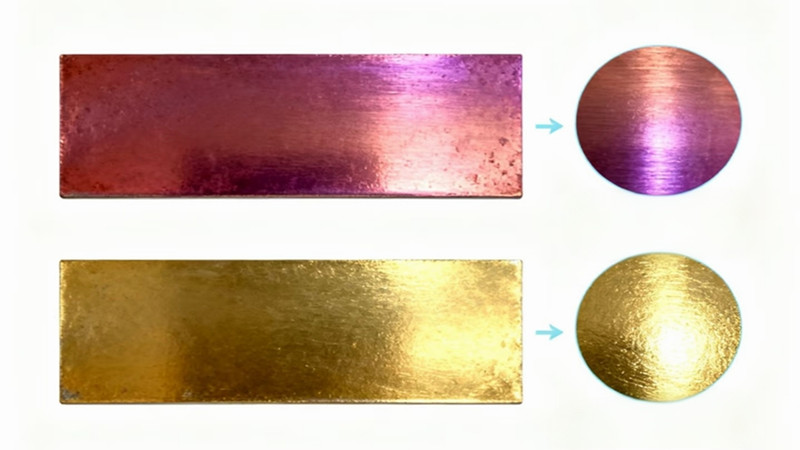
Copper and brass look very similar, and in many cases, they are difficult to tell apart—especially after oxidation or surface treatment.
However, they are fundamentally different materials. Copper is a pure metal, while brass is a copper-zinc alloy, and this difference leads to significant variations in performance, machinability, and applications.
In this guide, we will break down the key differences between copper and brass from composition, properties, and real-world uses, and show you practical ways to identify them—even without relying on color.
1. Composition: Pure Metal vs Alloy
The fundamental difference starts at the material level.
Copper (Pure Copper)
Copper is a nearly pure metal, typically containing ≥99.5% copper. It may include trace impurities, but its structure is essentially elemental copper.
This high purity is what gives copper its excellent conductivity and corrosion resistance.
Brass (Copper-Zinc Alloy)
Brass is an alloy made primarily of:
Copper
Zinc
Depending on the grade, it may also include:
Lead (for machinability)
Aluminum
Iron
Typical copper content in brass ranges from 55% to 70%.
Key takeaway:
Copper = pure metal
Brass = engineered alloy for performance balance
2. Appearance: Visual Differences
Copper
Color: Reddish or rose-red
Oxidation: Turns dark brown or develops a green patina over time
Brass
Color: Yellow to golden
Appearance: Brighter, more “gold-like”
However, color is not always reliable, especially:
After oxidation
With coated surfaces
Under poor lighting
We'll cover better identification methods later.
3. Hardness and Strength
Copper
Very soft
Highly ductile (easy to bend and stretch)
Lower mechanical strength
Brass
Harder and stronger
Better wear resistance
Maintains shape under stress
This is why brass is widely used in mechanical and structural components, while copper is preferred where flexibility is required.
4. Electrical and Thermal Conductivity
Copper
One of the best electrical conductors among metals
Excellent thermal conductivity
Used in:
Electrical wiring
Busbars
Power transmission systems
Brass
Conductivity is significantly lower than copper
Still acceptable for non-critical applications
Rule of thumb:
If conductivity matters → choose copper
5. Corrosion Resistance
Copper
1, Excellent resistance to:
Atmosphere
Freshwater
2, Forms protective oxide layers
Brass
Generally corrosion-resistant
But may suffer from:
Dezincification (zinc leaching in humid or marine environments)
For long-term reliability in harsh environments, copper is often safer.
6. Machinability and Fabrication
Copper
Easy to:
Weld
Forge
Poor machinability:
Sticky during cutting
Tool wear issues
Brass
Excellent machinability
Ideal for:
CNC machining
Turning
Milling
Drilling
This is why brass is the go-to material for precision machined parts.
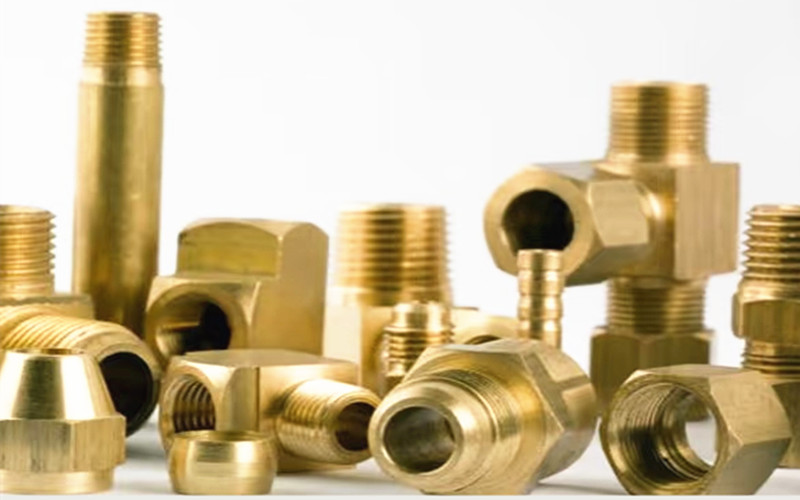
7. Applications: Where Each Metal Is Used
Understanding applications is the fastest way to identify a material in real scenarios.
Copper Applications
Electrical wires and cables
Busbars and grounding systems
Heat exchangers
Radiators
Plumbing pipes
Brass Applications
Valves and fittings
Screws, nuts, bolts
Gears and bearings
Locks and hardware
Bathroom fixtures
Decorative parts
Quick identification tip:
Electrical system → likely copper
Mechanical hardware → likely brass
8. Price Differences
In most cases:
Copper > Brass (in cost)
Reasons:
Higher purity
Higher raw material value
Better conductivity
Brass is more cost-effective because zinc reduces the overall material cost.
9. Practical Ways to Tell Copper vs Brass (Without Relying on Color)
If you cannot rely on color (for example, due to oxidation or color blindness), here are practical field-tested methods:
1. Weight Comparison
Copper is denser than brass.
Same size → copper feels heavier
2. Sound Test
Tap the material lightly:
Copper → softer, dull sound
Brass → sharper, ringing sound
3. Magnet Test
Both are non-magnetic.
If it sticks to a magnet → it’s NOT copper or brass
4. Scratch Test
Lightly scratch an inconspicuous area:
Copper → reddish beneath surface
Brass → yellowish
5. Machining Behavior
During cutting:
Copper → sticky, stringy chips
Brass → clean, brittle chips
6. Spark Test (Advanced / Industrial Use)
Under grinding:
Copper → almost no sparks
Brass → very minimal sparks
10. When to Choose Copper vs Brass
Choose Copper if you need:
Maximum electrical conductivity
Excellent thermal transfer
High corrosion resistance
Flexibility and ductility
Choose Brass if you need:
Strength and rigidity
Machinability
Wear resistance
Cost efficiency
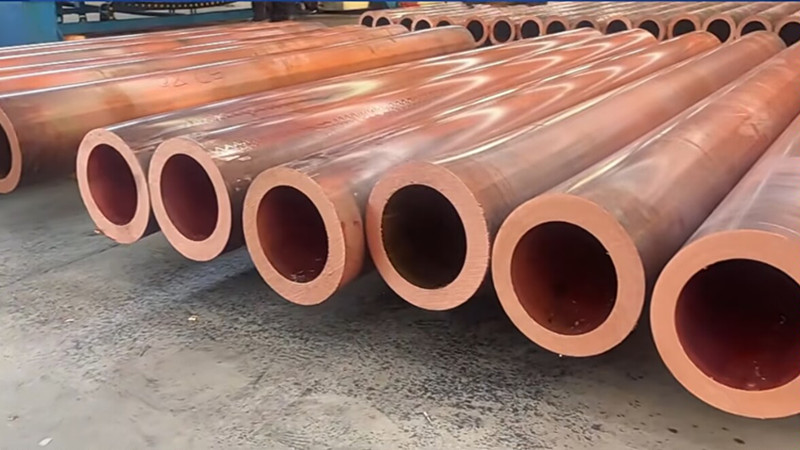
11. Product Forms: Copper vs Brass
Both copper and brass are available in a wide range of product forms, but their typical supply formats often reflect their primary applications and processing characteristics.
Copper Product Forms
Copper is mainly used in applications that require high electrical and thermal conductivity, so it is commonly supplied in forms suitable for fabrication and energy transfer systems:
Copper coils and strips
Copper busbars and conductors
These forms are widely used in electrical systems, heat exchangers, and plumbing applications, where performance and reliability are critical.
Brass Product Forms
Brass is preferred for machining and mechanical components, so it is typically available in forms optimized for processing and shaping:
Brass rods and bars (round, hex, square)
Brass tubes and pipes
Brass wires
Precision brass profiles
Brass materials are commonly used in valves, fittings, fasteners, and precision machined parts due to their excellent machinability and strength.
FAQ
1. Is brass and copper the same thing?
No, brass and copper are not the same.
Copper is a pure metal
Brass is an alloy of copper and zinc
They differ in composition, strength, conductivity, and applications.
2. What metal should not touch copper?
Metals that should not directly contact copper include:
Aluminum
Steel (especially carbon steel)
Zinc
Reason:
When dissimilar metals touch in the presence of moisture, galvanic corrosion can occur.
To prevent this:
Use insulation materials
Apply coatings
Use compatible alloys
3. What happens if you mix copper and brass?
In most cases, copper and brass are compatible, since brass already contains copper.
However:
Slight galvanic differences can still exist
In aggressive environments (saltwater, humidity), corrosion may occur over time
Best practice:
Avoid direct contact in critical environments
Use proper engineering isolation if needed
4. How to tell brass or copper without using color (for colorblind users)?
If color is not reliable, use these methods:
Weight → copper is heavier
Sound → brass rings, copper sounds dull
Scratch test → check underlying material
Machining chips → brass breaks cleanly, copper is sticky
Conductivity → copper performs significantly better
These methods are widely used in workshops and industrial environments.
Final Thoughts
Copper and brass may look similar, but they are designed for completely different engineering purposes.
Copper excels in conductivity and corrosion resistance
Brass dominates in machinability and mechanical strength
Understanding these differences not only helps you identify materials correctly but also ensures you choose the right metal for the right application, improving performance and reducing costs.