What is 7000 series aluminum | alloy grade 7050 7055 7075 7150 7475 7449 7160
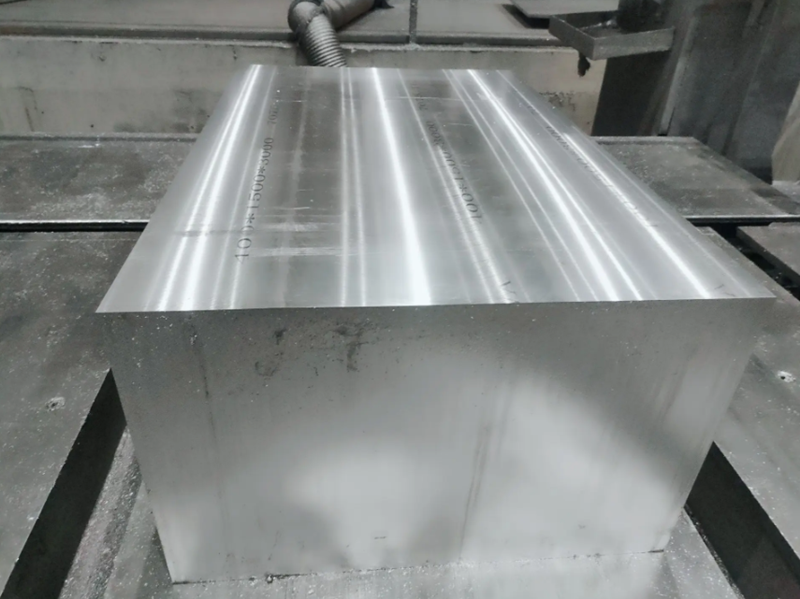
Aluminum Alloys: 7050, 7055, 7075, 7150, 7475, 7449, 7160
7000 series aluminum refers to a family of high-strength aluminum alloys primarily alloyed with zinc, and often enhanced with magnesium and copper. The “7xxx” classification comes from the international aluminum alloy designation system, where the first digit indicates the major alloying element—7 stands for zinc-based heat-treatable alloys. Common grades include 7050, 7055, 7075, 7150, 7475, 7449, and 7160, each optimized for specific strength, toughness, and fatigue-resistance requirements in aerospace and high-performance engineering applications.
These alloys are known for exceptionally high strength-to-weight ratio, excellent fatigue resistance, and good machinability. Certain tempers, such as T6, T73, or T7451, offer improved stress-corrosion cracking resistance, making them suitable for critical structural components. Typical applications include aircraft wing spars, fuselage frames, bulkheads, landing-gear components, high-load aerospace fittings, defense equipment, high-performance sporting goods, precision mechanical parts, and transportation structural components that demand maximum strength with reduced weight.
Internationally, 7000 series aluminum alloys comply with widely recognized standards such as ASTM B209/B221, AMS specifications (e.g., AMS4050, AMS 4045, AMS 4342, AMS 4078, AMS 4047) depending on the form and alloy, as well as EN 485/573 and ISO alloy designation systems for wrought products. These standards ensure consistent chemical composition, mechanical properties, and performance for aerospace-grade and engineering-grade materials.
Chemical composition comparison – 7000 vs 2000 vs 6000 series aluminum
| Alloy Series | Main Alloying Elements | Typical Composition Range |
|---|---|---|
| 7000 Series (7075 / 7050 / 7150) | Zn, Mg, Cu | Zn: 5.0–8.0%; Mg: 1.5–3.0%; Cu: 1.2–2.3%; trace Cr/Zr |
| 2000 Series (2024 / 2017 / 2219) | Cu, Mg, Mn | Cu: 3.8–6.8%; Mg: 0.3–1.8%; Mn: 0.3–1.0%; small amounts of Si/Fe |
| 6000 Series (6061 / 6082 / 6063) | Mg + Si (forming Mg₂Si) | Mg: 0.6–1.2%; Si: 0.4–1.3%; trace Cu/Cr |
7000 series alloys are Zn-based heat-treatable grades with the highest strength levels, commonly used in aerospace structures.
2000 series alloys are Cu-based, offering high strength and thermal resistance but relatively lower corrosion resistance.
6000 series alloys rely on Mg₂Si and offer excellent extrudability, weldability, and formability, making them widely used in construction, automotive, and general structural applications.
7000 series aluminum mechanical properties
| Alloy | Tensile Strength (MPa) | Yield Strength (MPa) | Elongation |
|---|---|---|---|
| 7050 Aluminum | 540–570 | 485 | 8–10% |
| 7055 Aluminum | 550–580 | 480–510 | 10–12% |
| 7075 Aluminum | 570–635 | 505–550 | 7–10% |
| 7150 Aluminum | 570–620 | 500–540 | 8–10% |
| 7475 Aluminum | 540–590 | 485–520 | 8–10% |
| 7449 Aluminum | 500–570 | 460–510 | 10–12% |
| 7160 Aluminum | 570–620 | 500–550 | 7–10% |
Machinability of 7000 series aluminum
7000 series aluminum alloys generally offer good machinability, especially in tempers such as T6, T651, and T7351. They exhibit favorable chip-breaking behavior and predictable tool wear, making them suitable for aerospace structural parts, precision components, and molds.
Due to their high strength and hardness, machining typically requires carbide tooling, proper cooling/lubrication, and optimized cutting parameters to ensure efficiency and surface quality.
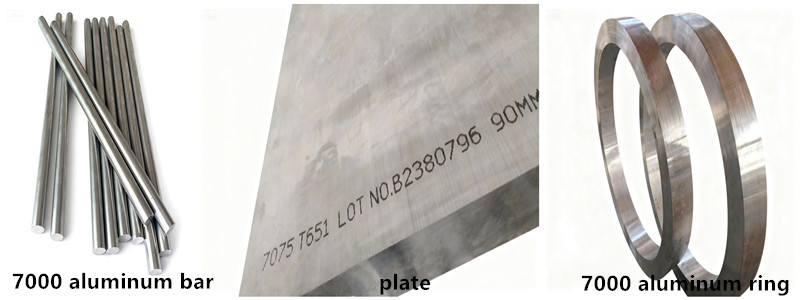
Shenzhen Chinalco Metal offer 7000 series aluminum products
7050 Aluminum — high strength, excellent toughness, good SCC resistance, aerospace-grade
7050 aluminum forgings
7050 aluminum T6 plate
7150 Aluminum — ultra-high strength, optimized for aerospace, improved corrosion resistance
7150 T7751 aluminum bar
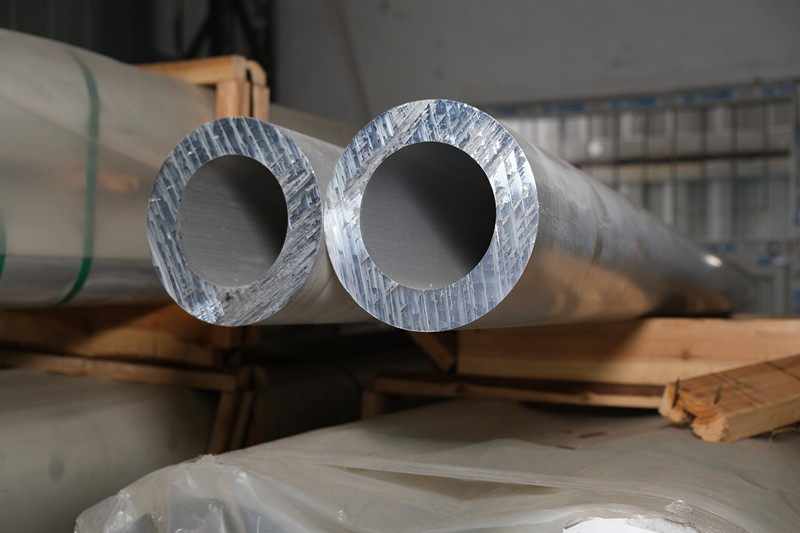
7150 aluminum tube
7475 Aluminum — superior fracture toughness, high fatigue resistance, low impurity control
7475-O aluminum sheet
7475-T761 aluminum sheet
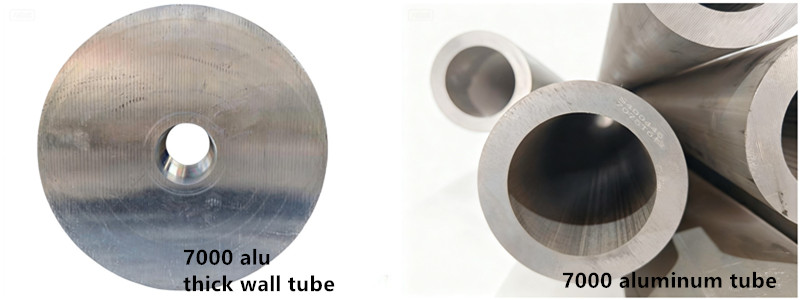
7449 Aluminum — high strength-to-weight ratio, good damage tolerance, aerospace structural grade
7449 aluminum products (plates, bars, and forgings upon request)
7160 Aluminum — lightweight, enhanced strength, modern aerospace alloy
7160 aluminum products (plates, bars, and tubes available)
7075 Aluminum — very high strength, excellent machinability, widely used in aerospace and tooling
7075 aluminum forgings
7075 aluminum bar
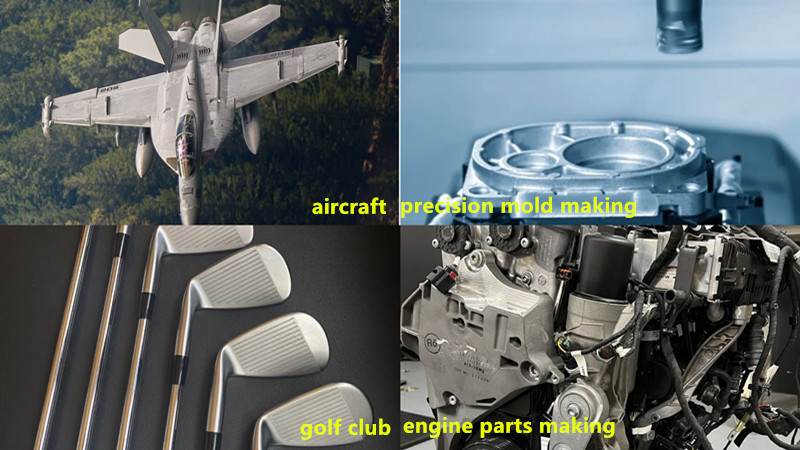
What is 7000 series aluminum used for?
Aerospace and Aviation Applications
7000 series aluminum is widely used in the aerospace sector for building aircraft components that demand reliability and lightweight efficiency. These alloys appear in wing structures, fuselage frames, bulkheads, ribs, fittings, and landing-gear parts, where designers need materials that support advanced flight performance and precise engineering requirements. Their stability under demanding service conditions makes them a preferred choice for both commercial airliners and military aircraft programs.
From the application of aluminum 7050 t7451 plate AMS4050, we could tell the how important role the 7000 series aluminum play in aviation.
Transportation and Mobility Engineering
Beyond aviation, 7000-grade aluminum is also utilized in high-performance transportation systems, including premium automotive platforms, motorsport components, lightweight railway equipment, and marine hardware. These industries value materials that contribute to weight reduction, energy efficiency, and responsive structural performance. As a result, the 7xxx family is commonly found in suspension parts, chassis elements, structural brackets, and other engineered components that benefit from reduced mass and improved efficiency.
Industrial Manufacturing and Sporting Equipment
In industrial and commercial manufacturing, 7000 series alloys are frequently selected for precision-machined parts, tooling plates, molds, and robotic equipment that require dimensional stability and consistency during machining. They are equally popular in premium sporting goods, such as bicycles, tent poles, climbing gear, archery equipment, and performance frames, where dependable material behavior is essential. Across these sectors, 7000 series aluminum serves as a versatile material that supports advanced product design, high accuracy, and reliable functionality.
7000 series aluminum FAQ
Q1: Can you weld 7000 series aluminum?
Welding is possible but challenging. It can crack easily, so specialized methods like Friction Stir Welding (FSW) or TIG with proper filler are recommended.
Q2: How hard is 7000 series aluminum?
7000 series alloys are very hard and strong, especially in T6, T651, or T7451 tempers, harder than most 2000 or 6000 series aluminum.
Q3: What is the price of 7000 series aluminum?
Prices vary depending on alloy grade, temper, form, and quantity. Contact Shenzhen Chinalco Metal for accurate and up-to-date quotations.
Q4: How to anodize 7000 series aluminum?
7000 series aluminum can be anodized, usually with chromic acid or sulfuric acid processes, to improve corrosion resistance and surface finish.