ERTi Series Titanium Filler Welding Wire for TIG Welding
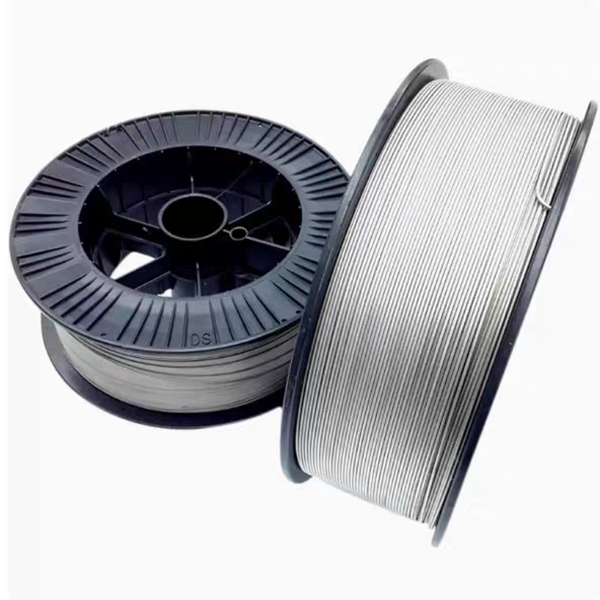
Titanium welding wire is a solid filler metal used for TIG and other fusion welding processes involving commercially pure titanium and titanium alloys. The filler wire is selected according to the base metal grade, required weld properties, corrosion resistance, and service conditions. We supply titanium and titanium alloy welding wire in different grades and diameters for fabrication, repair, and joining applications.
For general welding, filler metal is normally selected to match the base metal grade, while corrosion-enhanced grades may be selected when improved resistance to localized corrosion is required. AWS A5.16/A5.16M:2023 provides a classification system for titanium and titanium-alloy welding electrodes, solid wires, and rods, with classifications based primarily on chemical composition.
Titanium Welding Wire Specifications
| Item | Specification |
|---|---|
| Product | Titanium & Titanium Alloy Welding Wire |
| Diameter | Φ0.1–Φ5 mm* |
| Common Welding Grades | ERTi-1, ERTi-2, ERTi-3, ERTi-4, ERTi-5, ERTi-7, ERTi-9, ERTi-12* |
| Material Types | Commercially Pure Titanium and Titanium Alloys |
| Welding Process | TIG / GTAW and other suitable fusion welding processes |
| Standards | AWS A5.16/A5.16M; ASTM B863* |
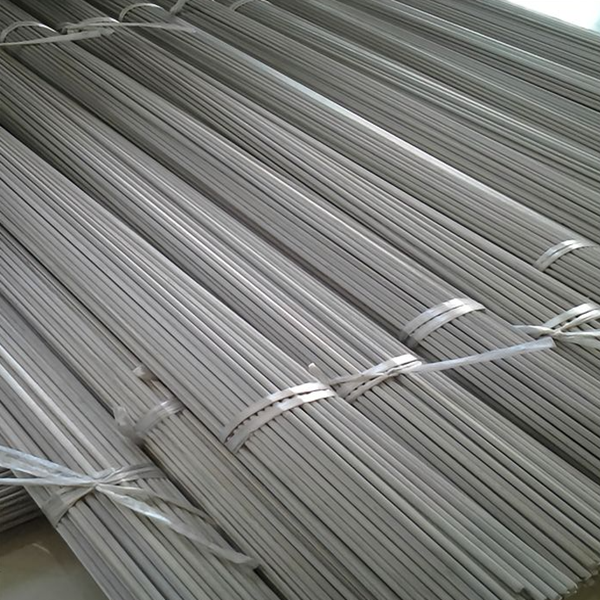
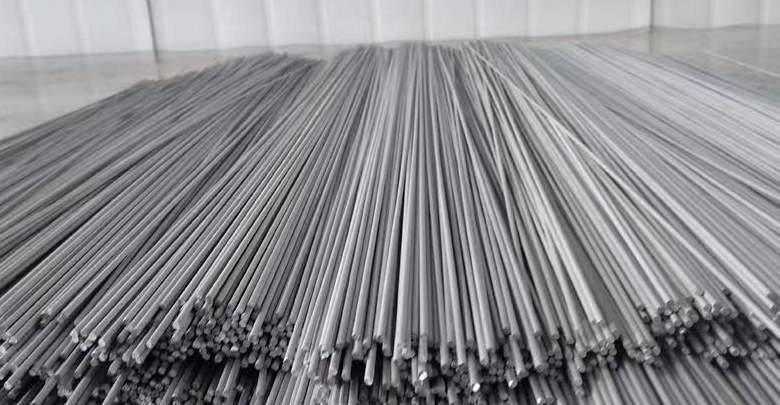
| Supply Form | Straight Wire / Coils / Spools* |
| Custom Options | Custom grades, diameters, lengths, and packaging available upon request |
*Available grades, dimensions, supply forms, and applicable standards are subject to the specific product and order requirements.
AWS A5.16/A5.16M:2023 is used for the classification of titanium and titanium-alloy welding electrodes, solid wires, and rods. ASTM B863 covers titanium and titanium alloy wire as a material product specification. These standards serve different purposes and should not be treated as interchangeable.
How to Select Titanium Welding Wire
For most titanium welding applications, the filler wire is selected to provide chemical and metallurgical compatibility with the base metal while achieving the required weld strength, ductility, and corrosion resistance.
| Titanium Base Metal | Common Filler Wire |
|---|---|
| Grade 1 | ERTi-1 |
| Grade 2 | ERTi-2 |
| Grade 3 | ERTi-3 |
| Grade 4 | ERTi-4 |
| Grade 5 / Ti-6Al-4V | ERTi-5 |
| Grade 7 | ERTi-7 |
| Grade 9 / Ti-3Al-2.5V | ERTi-9 |
| Grade 12 | ERTi-12 |
For general fabrication, a filler metal with a composition compatible with the parent material is often preferred. However, specific applications may call for a different filler composition to improve corrosion resistance or achieve other desired weld characteristics. The final selection should therefore consider the base metal grade, welding process, service temperature, corrosive environment, joint design, and applicable welding procedure.
AWS Titanium Filler Metal Classification and Recommended Base Metal Matching
AWS Classification | UNS Number | Recommended Matching Base Metal (Chinese Standard) | Recommended Matching Base Metal (ASTM) | C | O | N | H | Fe | Al | V | Pd | Ru | Ni | Mo | Notes on Other Elements |
|---|---|---|---|---|---|---|---|---|---|---|---|---|---|---|---|
ERTi-1 | R50100 | TA1 | Gr1 | 0.03 | 0.03–0.10 | 0.012 | 0.005 | 0.08 | — | — | — | — | — | — | — |
ERTi-2 | R50120 | TA2 | Gr2 | 0.03 | 0.08–0.16 | 0.015 | 0.008 | 0.12 | — | — | — | — | — | — | — |
ERTi-3 | R50125 | TA3 | Gr3 | 0.03 | 0.13–0.20 | 0.020 | 0.008 | 0.16 | — | — | — | — | — | — | — |
ERTi-4 | R50130 | TA4 | Gr4 | 0.03 | 0.18–0.32 | 0.025 | 0.008 | 0.25 | — | — | — | — | — | — | — |
ERTi-5 | R56400 | TC4 | Gr5 | 0.03 | 0.12–0.20 | 0.030 | 0.015 | 0.22 | 5.5–6.75 | 3.5–4.5 | — | — | — | — | — |
ERTi-7 | R52401 | TA9 | Gr7 | 0.03 | 0.08–0.16 | 0.012 | 0.008 | 0.12 | — | — | 0.12–0.25 | — | — | — | — |
ERTi-9 | R56321 | TA18 | Gr9 | 0.03 | 0.06–0.12 | 0.012 | 0.005 | 0.20 | 2.5–3.5 | 2.0–3.0 | — | — | — | — | — |
ERTi-11 | R52251 | TA9/TA9-1 | Gr7 / Gr11 | 0.03 | 0.08–0.16 | 0.012 | 0.005 | 0.08 | — | — | 0.12–0.25 | — | — | — | — |
ERTi-12 | R53401 | TA10 | Gr12 | 0.03 | 0.08–0.16 | 0.015 | 0.008 | 0.15 | — | — | — | — | 0.6–0.9 | 0.2–0.4 | — |
Notes
1. In this table, AWS ERTi designations are filler metal classifications, while the Gr series and TA/TC designations are base metal grades. These belong to two independent standards systems, and there is no mandatory one-to-one equivalence between them. The “Recommended Matching Base Metal” entries represent customary industry engineering selection practices, with preference given to pairing filler metals and base metals with the same numerical designation for welding.
2. The deposited metal composition ranges of ERTi-7 and ERTi-11 are basically identical. Both can be used for welding corrosion-resistant palladium-containing titanium base metals Gr7 (TA9) and Gr11 (TA9-1). They do not follow the “one-to-one numerical correspondence” rule and are a typical exception.
4. General principle for welding material selection: Give priority to filler wires whose composition matches that of the base metal to ensure compatibility in corrosion resistance and mechanical properties between the weld metal and the base metal.
5. The content of all elements is expressed as mass percentage (wt%). “—” indicates that no specified range is established for the element and that no addition is required.
Applications of Titanium Welding Wire
Titanium welding wire is used for joining titanium components where the corrosion resistance, low density, and high strength-to-weight ratio of titanium need to be maintained across welded joints and fabricated assemblies.
Typical applications include:
Chemical processing equipment — tanks, piping, vessels, and other corrosion-resistant equipment
Heat exchangers — titanium tubes, plates, and fabricated components exposed to aggressive fluids
Marine and seawater equipment — components requiring excellent resistance to seawater and chloride-containing environments
Aerospace components — welded structures and components manufactured from titanium alloys such as Ti-6Al-4V
Industrial titanium fabrication — frames, piping systems, vessels, and customized titanium assemblies
Repair and maintenance — restoration and joining of titanium components where compatible filler metal is required
For critical applications, filler metal selection should follow the applicable welding procedure and material specifications rather than relying solely on the nominal alloy designation.
Request a Quote for Titanium Welding Wire
Please provide the base metal grade, required filler wire grade, wire diameter, welding process, applicable standard, quantity, and packaging requirements when requesting a quotation. We can supply titanium and titanium alloy welding wire according to your application and specification requirements, with customized dimensions and documentation available for qualified orders.