What is 7175 Aluminum Alloy?
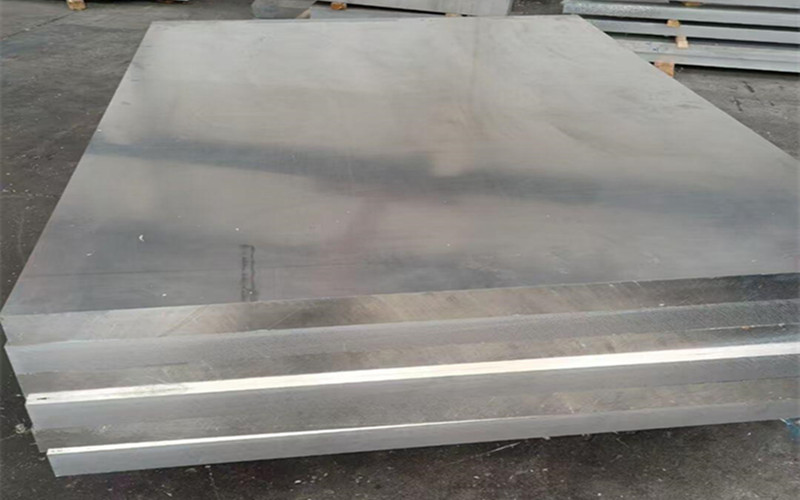
7175 aluminum alloy is an aerospace-grade ultra-high-strength aluminum alloy, often considered an optimized upgrade of 7075 aluminum alloy. While the two are closely related, they differ significantly in composition control, mechanical performance, processing, and application scope.
Thanks to its exceptional balance of strength, toughness, and stress corrosion resistance, 7175 has become a preferred material for critical aerospace structural components such as landing gear, wing spars, and fuselage frames.
1. Definition and Development Background
7175 aluminum alloy belongs to the Al-Zn-Mg-Cu series of ultra-high-strength wrought aluminum alloys. It is a high-purity evolution of 7075, specifically engineered for aerospace applications requiring high reliability under extreme conditions.
The alloy is strengthened through solution heat treatment followed by multi-stage aging, delivering:
Very high strength
High fracture toughness
Excellent resistance to stress corrosion cracking (SCC)
Unlike standard industrial aluminum alloys, 7175 is produced under strict aerospace-quality controls. From raw material purity to final heat treatment, every step ensures minimal impurities, uniform microstructure, and consistent mechanical properties.
Why was 7175 developed?
In the 1950s–60s, the aerospace industry faced a major limitation with 7075-T6:
High strength but poor SCC resistance
Low fracture toughness
Risk of sudden structural failure in harsh environments
To solve this, Alcoa developed 7175 by:
Reducing Fe and Si impurities
Optimizing Zn-Mg-Cu ratios
Improving heat treatment processes
The result was a new alloy that maintains high strength while significantly improving durability and safety.
2. Chemical Composition
Typical composition (wt%):
| Element | Zn | Mg | Cu | Cr | Fe | Si | Ti | Al |
|---|---|---|---|---|---|---|---|---|
| Content | 5.6–6.1 | 2.4–2.9 | 1.2–1.6 | 0.18–0.28 | ≤0.20 | ≤0.15 | ≤0.10 | Balance |
Key Roles of Elements:
Zn + Mg → form MgZn₂ strengthening phase (main strength source)
Cu → enhances strength and machinability
Cr → improves corrosion resistance and toughness
Fe & Si → minimized to avoid brittle phases
Ti → refines grain structure
3. Mechanical Properties and Key Features
Common Heat Treatment Conditions
Tensile strength: 510–580 MPa
Yield strength: 440–510 MPa
Elongation: 7–12%
7175-T736 (forgings, bars)
Tensile strength: 520–600 MPa
Yield strength: 450–520 MPa
Elongation: 7–11%
7175-T74 (balanced condition)
Tensile strength: 540–610 MPa
Yield strength: 470–540 MPa
Elongation: 8–13%
Key Performance Advantages
1. High specific strength
With a density of only ~2.8 g/cm³, 7175 offers steel-like strength at much lower weight, making it ideal for lightweight aerospace structures.
2. Excellent stress corrosion resistance
Overaged tempers (T73/T74) prevent continuous grain boundary precipitation, greatly improving SCC resistance in humid and saline environments.
3. High fracture toughness and fatigue resistance
Fracture toughness: 24–30 MPa·m½
Fatigue strength (10⁷ cycles): ≥150 MPa
4. Good machinability and formability
Suitable for forging, rolling, and precision machining with excellent dimensional stability.
4. Heat Treatment Comparison: T7351 vs T736 vs T74
T7351 & T736 (T73 family)
Deep overaging treatment
Maximum SCC resistance and toughness
Slightly lower strength
Used in high-risk environments
Difference:
T7351 → plates (stretch stress relief)
T736 → forgings/bars (compressive stress relief)
T74 (balanced temper)
Higher strength than T73
Slightly lower corrosion resistance
Better dimensional stability
Ideal for precision forgings
Quick Selection Guide
Harsh environments + critical load → T7351 / T736
Balanced performance → T74
Plates → T7351
Forgings → T736
5. 7175 Aluminum Alloy Standards (AMS Specifications)
In aerospace applications, 7175 aluminum alloy must comply with strict material standards. The most commonly used specifications are part of the AMS (Aerospace Material Specifications) system.
Key AMS Standards for 7175
AMS 4149
Covers 7175 aluminum alloy in the T7351 temper, typically for plate and sheet products.
Emphasizes high strength combined with excellent resistance to stress corrosion cracking.AMS 4201
Applies to 7175 alloy forgings, usually in T736 or related tempers.
Designed for high-load structural components requiring superior toughness and reliability.
Why AMS Standards Matter
AMS standards define:
Chemical composition limits
Mechanical property requirements
Heat treatment processes
Inspection and quality control criteria
For aerospace manufacturers, compliance with AMS ensures:
Consistent material performance
Certification for flight-critical components
Traceability and reliability in service
In practice, specifying the correct AMS standard is just as important as selecting the alloy itself.
6. Core Advantages of 7175 Alloy
Excellent strength–toughness balance
Superior corrosion resistance in harsh environments
Highly uniform microstructure and stable properties
Suitable for large, complex aerospace components
These advantages make it one of the top-performing alloys in the 7xxx series.
7. 7175 aluminum alloy Typical Applications
Military aircraft
Landing gear
Wing spars
Fuselage frames
Rotor components
Commercial aviation
Wing stringers
Structural joints
Reinforcement frames
Space applications
Satellite structures
Rocket components
It is primarily used in critical load-bearing structures where safety and reliability are essential.
8. 7175 Aluminum Equivalent Alloys
When cost or availability is a concern, alternatives include:
7475 Aluminum (best alternative)
Very similar composition
Better fracture toughness and fatigue resistance
Better for thick sections
Excellent SCC resistance
Slightly lower strength
7075-T7351 Aluminum
Lower cost and widely available
Reduced toughness and corrosion resistance
9. Conclusion
7175 aluminum alloy is a premium aerospace material designed to deliver ultra-high strength, excellent toughness, and superior corrosion resistance. By overcoming the limitations of traditional high-strength aluminum alloys like 7075-T6, it has become a critical material for modern aircraft structures.
Its performance directly impacts aircraft safety, durability, and efficiency, making it a cornerstone of advanced aerospace engineering.
Practical Selection Tips
Critical load-bearing parts → 7175-T7351 / T736
Higher toughness requirements → 7475
Thick sections → 7050
Cost-sensitive applications → 7075-T7351
As aerospace technology continues to evolve, 7175 remains a benchmark for high-performance aluminum alloys and a foundation for future material innovations.