Aluminum Plate-fin and Tube-fin Heat Exchanger Applications in Auto and Aerospace Industry
Aluminum heat exchangers are essential components in modern automotive and aerospace thermal management systems. With their light weight, high thermal conductivity, good formability, and excellent corrosion resistance, aluminum alloys are widely used in engine cooling, air-conditioning condensers, fuel and oil cooling systems, and electric vehicle battery thermal control.
This article introduces the engineering applications of aluminum plate-fin and tube-fin heat exchangers from three aspects: structure design, industrial applications, and brazing clad materials.
1. Types of heat exchanger and working principle
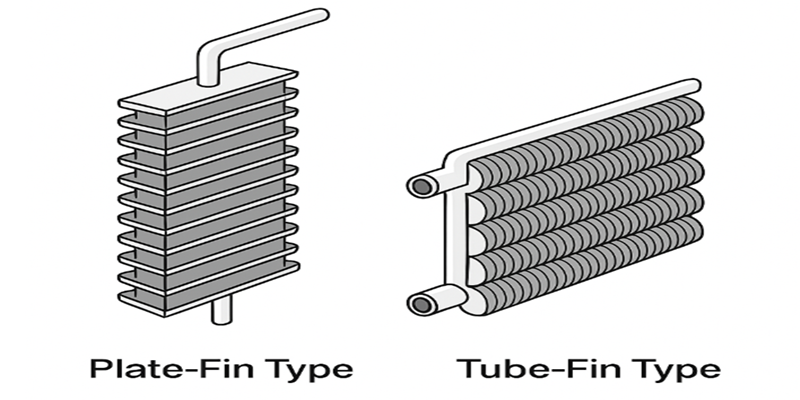
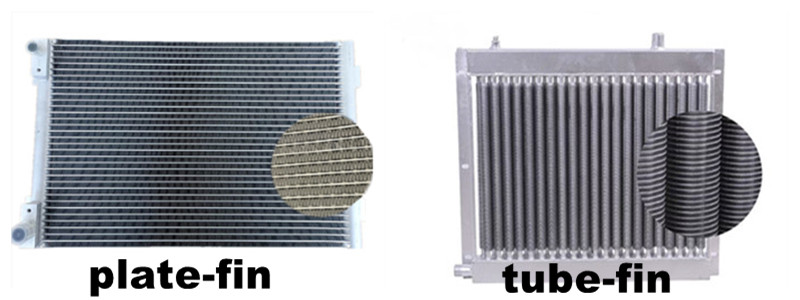
Plate-fin type
The plate-fin heat exchanger is built with stacked layers of thin aluminum plates, corrugated fins, and header plates. These layers are vacuum-brazed to form separate flow channels, where hot and cold fluids pass through alternate passages for efficient heat transfer.
This design is compact, lightweight, and has a large surface area, making it ideal for automotive intercoolers, EV battery cooling plates, and aircraft hydraulic oil coolers.
Tube-fin type
The tube-fin design consists of flat tubes combined with external fins. Air passes through the fins while liquid flows inside the tubes. This structure offers good airflow and mechanical strength. It is widely used in automotive radiators, condensers, evaporators, and aircraft engine cooling systems.
Aluminum foil fins (typically less than 0.1 mm thick) are used to increase fin density and improve heat exchange efficiency. They can be joined to the tubes by mechanical expansion or brazing to ensure both strength and lightness.
2. Applications in the automotive industry
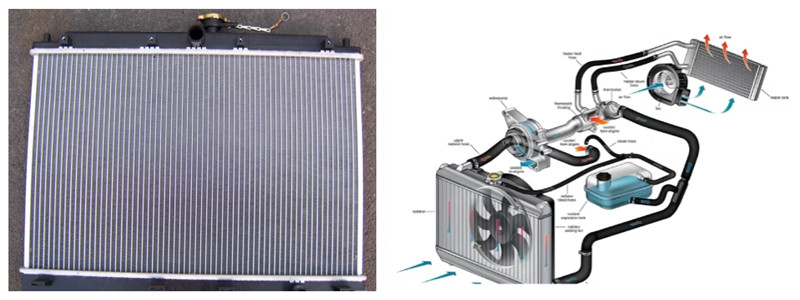
In automotive systems, aluminum heat exchangers manage the thermal loads of engines, transmissions, air conditioning, and battery packs. The two structural types serve different roles:
Plate-Fin Type: used for compact and high-efficiency applications such as intercoolers and e-drive cooling plates.
Tube-Fin Type: used in radiators and condensers where vibration resistance and airflow performance are critical.
As performance requirements increase, traditional solid aluminum sheets have gradually been replaced by clad aluminum brazing materials, which improve corrosion resistance, brazability, and overall reliability. (Details about these materials are introduced later, following the aerospace section for better logical flow.)
3. Applications in the aerospace industry
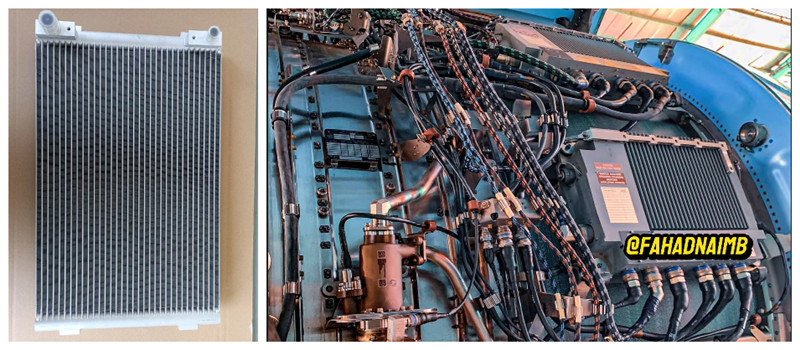
Aerospace heat exchangers face much stricter requirements — they must operate reliably under high altitude, low pressure, large temperature gradients, and tight weight limits.
Aluminum plate-fin heat exchangers are commonly used in aircraft engines and systems because they provide high thermal efficiency with minimal mass.
Typical Aerospace Applications:
Air-to-Air Heat Exchangers: cool compressed air in engines.
Fuel-Cooled Oil Coolers: use fuel as a heat sink to absorb oil heat.
Hydraulic Oil Coolers: maintain stable temperatures in the hydraulic system.
Cold Plates: manage thermal loads in avionics and electronic systems.
Common alloys: 3003, 6061, and 6951 aluminum alloys are typically used for their balance of strength, corrosion resistance, and brazability. In certain high-temperature or corrosive conditions, titanium alloys are applied.
Vacuum brazing is the preferred manufacturing process for complex, high-precision plate-fin exchangers, ensuring joint integrity and overall strength.
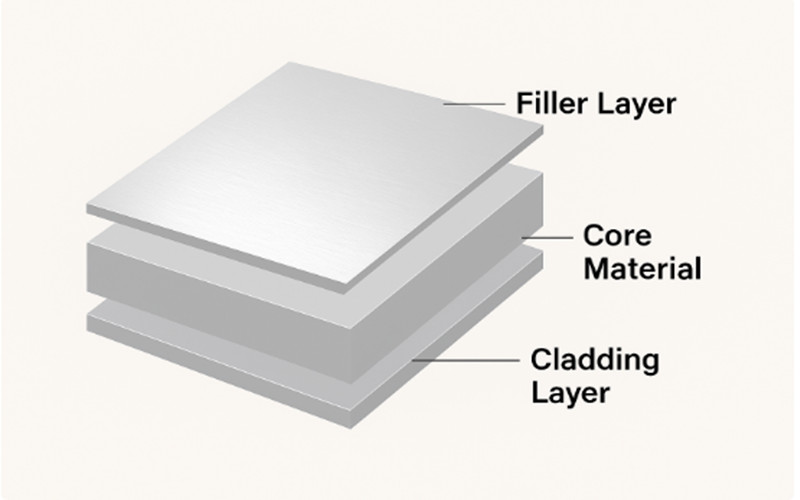
4. Structure of Aluminum Brazing Clad Materials
To ensure long-term reliability, corrosion resistance, and durable brazed joints under harsh automotive and aerospace conditions, manufacturers often use Aluminum Brazing Clad Materials.
These materials are produced by roll bonding, a process that laminates different aluminum alloy layers together — each layer serving a specific function during brazing.
Single-Side vs Double-Side Clad Materials
Core Alloy | Clad Alloy | Purpose |
3003 (Al-Mn) | 4343, 4045 (Al-Si) | General automotive heat exchangers (radiators, condensers). |
3105 (Al-Mn-Mg) | 4343 | Higher strength & corrosion resistance. |
6951 (Al-Mg-Si-Cu) | 4343 | Aerospace heat exchangers (lightweight, high strength). |
7072 (Al-Zn) | 4343, 4045 | Sacrificial cladding for corrosion protection. |
3003/3102 (as multi-layer core) | 4343 outside + 7072 inside | Dual protection: brazability + corrosion resistance. |
The most common systems are 3003/3105/6951 cores with 4343 or 4045 cladding, often with 7072 sacrificial layers for extra corrosion resistance.
It is like Sandwich ,there is one side single clad material ,there is both size double clad material too .Clad rate is from 3%-25%.
Detail size of Aluminum clad brazing material
Product Form | Thickness | Width | Length | Clad Ratio (per side) |
Foil Core alloys: 3003, 3005, 3105, 6951, 6061, etc. | 0.03 mm– 0.30 mm | 10mm – 600 mm (up to 1200 mm special) | Coil only | 5 – 15% Cladding alloys (filler): 4343, 4045, 4047, 4104, 4004, etc. |
Sheet Core alloys: 3003, 3005, 3105, 6951, 6061, etc. | 0.30 mm– 6.0 mm | 100mm – 1500 mm | 1000mm – 4000mm | 5 – 20% Cladding alloys (filler): 4343, 4045, 4047, 4104, 4004, etc. |
Heavy Sheet / Plate Core alloys: 3003, 3005, 3105, 6951, 6061, etc. | 6.0 mm– 25 mm (special order) | 100mm– 1500 mm | 1000mm– 4000mm | 5 – 20% Cladding alloys (filler): 4343, 4045, 4047, 4104, 4004, etc. |
Brazing Process Types:
Vacuum Brazing: flux-free, clean environment, ideal for aerospace components.
N₂-Protected (CAB) Brazing: widely used in automotive radiators, cost-effective and mature.
Performance requirements: uniform filler layer (8–12% of total thickness), excellent wetting, thermal expansion match, and dense, pore-free joints.
These optimized materials and processes significantly enhance brazing quality, corrosion resistance, and service life — making clad aluminum the foundation of modern automotive and aerospace heat exchangers.
5. Conclusion
The continuous innovation of aluminum plate-fin and tube-fin heat exchangers is driving thermal management systems toward higher efficiency, lighter weight, and better sustainability. This performance can't exclude the aluminum clad materials' role. Good Materials surely could increase the efficiency.
Shenzhen Chinalcometal also supply 4104/3003/4104 and 6951/4104 aluminum clad sheets, as a supplier, we contribute to the auto and aerospace industry development in our own method, to offer quality material for customers.