How to Choose Cast Aluminum Tooling Plates?
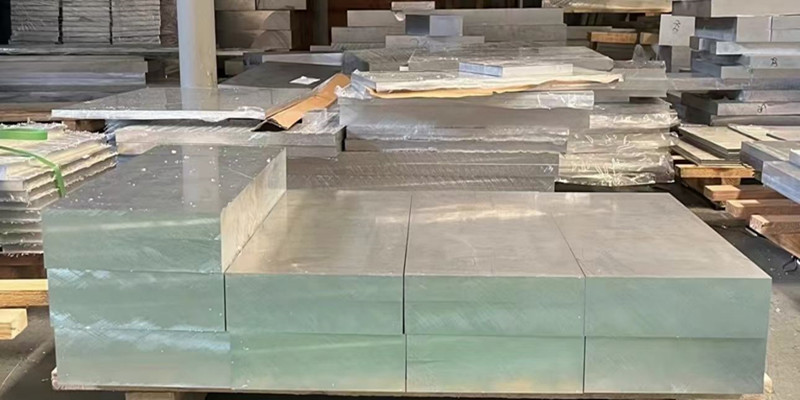
In precision machining, mold manufacturing, and industrial equipment, cast aluminum tooling plates are widely used due to their excellent stability, machinability, and lightweight properties. However, different grades of aluminum alloys vary significantly in composition, performance, and application scenarios. This article provides an in-depth comparison of four common aluminum alloy plates—MIC-6, EN AW 5083, K100S, and ATP-5—and explores the key differences between MIC-6 vs. 6061, as well as the equivalent grades of EN AW-5083, to help you make the best choice.
1. Core Requirements for Cast Aluminum Tooling Plates
When selecting an aluminum tooling plate, consider the following key factors:
✅ Dimensional stability (low thermal expansion, stress-free)
✅ Mechanical properties (strength, hardness, wear resistance)
✅ Machinability (ease of cutting, polishability)
✅ Corrosion resistance (especially in humid or chemical environments)
✅ Cost and availability
2. Comparison of Four Aluminum Tooling Plates (MIC-6 vs. EN AW 5083 vs. K100S vs. ATP-5)
| Property | MIC-6 | EN AW 5083 | K100S | ATP-5 |
|---|---|---|---|---|
| Alloy Type | Cast Al-Si alloy | Rolled Al-Mg alloy | Rolled Al-Mg alloy | High-strength Al-Zn-Mg-Cu alloy |
| Main Composition | Al + 11-13% Si | Al + 4-4.9% Mg | Al + 3-4% Mg | Al + Zn-Mg-Cu (similar to 7075) |
| Strength (Tensile) | Low (≈160 MPa) | Medium (≈270-320 MPa) | Medium (≈200-250 MPa) | High (≥500 MPa) |
| Thermal Stability | Excellent (low expansion) | Poor (high expansion) | Moderate | Poor (high expansion) |
| Machinability | Excellent (stress-free, ready for fine milling) | Good (weldable) | Good (easy to form) | Poor (requires heat treatment) |
| Corrosion Resistance | Moderate (Si prone to oxidation) | Excellent (seawater-resistant) | Good (chemically resistant) | Moderate (requires surface treatment) |
| Typical Applications | Semiconductor equipment, optical platforms, vacuum chambers | Marine, chemical tanks, welded structures | Medical devices, food machinery | Aerospace, high-load molds |
3. MIC-6 vs. 6061: Which Is Better for Mold Applications?
| Property | MIC-6 | 6061-T6 |
|---|---|---|
| Alloy Type | Cast Al-Si alloy | Rolled Al-Mg-Si alloy |
| Strength | Low (≈160 MPa) | Medium (≈310 MPa) |
| Thermal Stability | Excellent (≈19×10⁻⁶/°C) | Moderate (≈23×10⁻⁶/°C) |
| Machinability | Stress-free, ready for mirror-finish milling | Requires stress relief, good machinability |
| Typical Mold Uses | High-precision optical molds, vacuum equipment | General injection molds, fixtures, prototypes |
| Cost | Higher | Lower |
4. Equivalent Grades of EN AW-5083
EN AW-5083 is a European standard (EN) Al-Mg alloy, with international equivalents including:
AA 5083 (Aluminum Association standard, USA)
AlMg4.5Mn (German DIN standard)
A95083 (UNS numbering)
Material Selection Guide
To choose the most suitable cast aluminum tooling plate, a balanced consideration of application scenarios, budget constraints, and performance requirements is essential:
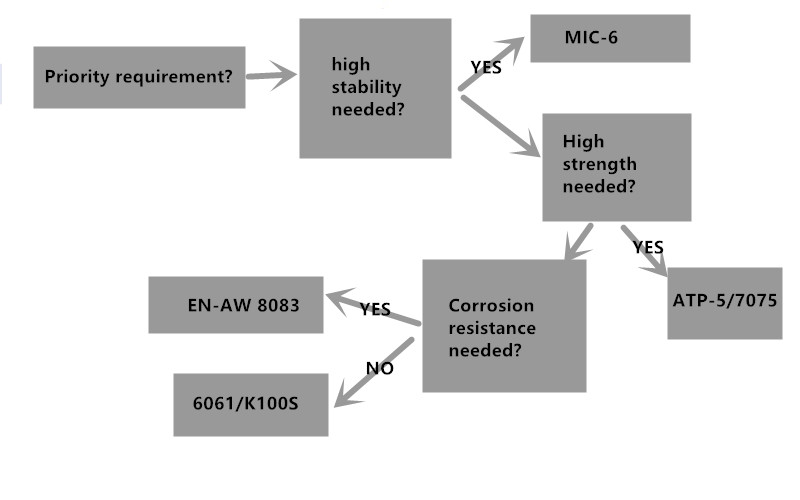
Ultra-high stability + stress-free machining → MIC-6 (The "gold standard" for precision industries, but higher cost)
Corrosion resistance + welding needs → EN AW 5083 / AA 5083 (Preferred for marine/chemical applications)
Medical/food-grade molds → K100S (Similar to 5754, balancing hygiene standards and machinability)
High-load molds (e.g., stamping dies) → ATP-5 / 7075 (Strength comparable to steel, but thermal deformation must be managed)
Cost-effective general-purpose molds → 6061-T6 (Best value for short-term prototyping or trial molds)
Key Trade-offs:
MIC-6, with its near-zero deformation, dominates in semiconductor and optical molds, while 6061 is the economical choice for rapid prototyping.
5083 and K100S excel in corrosion resistance or compliance-driven applications (e.g., medical, marine engineering), whereas ATP-5 is tailored for high-strength, wear-resistant uses but requires thermal management design.
Final Recommendation:
Verify material certifications (e.g., ASTM, EN standards) based on actual working conditions and prioritize testing critical properties (e.g., thermal expansion, surface polishability).