Aluminum Alloy: 50 Frequently Asked Questions (FAQ)
Daily Questions:
Q1: What is aluminum alloy? How is it different from pure aluminum?
Aluminum alloy is aluminum mixed with elements like magnesium, silicon, or zinc to increase strength and hardness, making it more durable and suitable for windows, luggage, and car parts.
Q2: Does aluminum alloy rust?
It doesn't rust like iron; instead, it forms a protective oxide layer, which allows it to last even in outdoor environments.
Q3: Are aluminum alloy cookware safe? Do they harm food?
Certified products are safe because the oxide layer or coating prevents reactions with food, but avoid using strong acid or alkaline cleaners.
Q4: Which is better, aluminum alloy or stainless steel?
Aluminum alloy is lighter and non-magnetic, while stainless steel is harder and heat-resistant, so cookware often uses stainless steel while luggage often uses aluminum alloy.
Q5: Why are aluminum alloys used in airplanes and cars?
Because they are light yet strong, saving fuel and energy, which directly reduces emissions and operating costs.
Q6: Is aluminum alloy really lightweight compared to steel or copper?
Yes, it weighs about one-third of steel and half of copper, which is why aluminum reduces weight in vehicles and luggage.
Q7: Is aluminum alloy impact-resistant?
It is strong but not very elastic, so it may dent under strong impact, which explains why aluminum suitcases get dents.
Q8: Does aluminum alloy provide thermal insulation?
Aluminum conducts heat quickly, so it's not insulating by itself, but “thermal break” designs make aluminum windows good at insulation.
Q9: Can aluminum alloys be recycled?
Yes, aluminum alloys are 100% recyclable, making them one of the most eco-friendly metals.
Q10: Are aluminum alloy windows better than PVC windows?
Yes, they are stronger, more durable, and weather-resistant, especially for high-rise buildings and coastal areas.
Q11: Why are aluminum alloy suitcases expensive?
They are more durable, resistant to impact, and have a premium look, which is why luxury brands prefer them.
Q12: What's good about aluminum alloy phone cases?
They feel premium, dissipate heat well, and look sleek, but they scratch more easily than plastic.
Q13: What's the difference between aluminum alloy and steel wheels?
Aluminum wheels are lighter and look better, which improves fuel economy, while steel wheels are cheaper but heavier.
Q14: Is an aluminum ladder better than an iron ladder?
Aluminum ladders are lighter, rust-free, and non-magnetic, making them more convenient for households and electricians.
Q15: Are aluminum alloy lunch boxes safe?
Yes, those with food-grade coatings are safe, and they won't release harmful metals if properly made.
Q16: Why does aluminum alloy turn white?
It's because of natural oxide film formation, which is normal and not a defect.
Q17: Does aluminum alloy scratch easily?
Yes, since it's softer than steel, so anodizing or coating is often added to improve scratch resistance.
Q18: Will aluminum alloy furniture deform?
Normally no, because it's strong and weather-resistant, often lasting longer than wooden furniture.
Q19: Do aluminum alloy windows leak air?
Good ones with proper seals won't, but cheap ones may, so quality and installation matter.
Q20: Are aluminum alloy radiators effective?
Yes, aluminum has excellent thermal conductivity, so it's widely used in CPU coolers and LED lamp housings.
Q21: Is an aluminum bike frame good?
Yes, it's lightweight, stiff, and cheaper than carbon fiber, making it the most popular mid-range option.
Q22: Can aluminum alloy pans go in dishwashers?
Not recommended, because alkaline detergents may damage the coating, so hand washing is safer.
Q23: How long do aluminum alloy windows last?
Usually over 20 years, longer than PVC or wood windows.
Q24: Why are balconies often made with aluminum alloy?
Because it's corrosion- and weather-resistant, perfect for outdoor use.
Q25: What's the difference between aluminum and magnesium alloys?
Aluminum alloys are stronger, while magnesium alloys are lighter but less corrosion-resistant, so magnesium is more common in electronics housings.
Professional Questions:
Q26: How are aluminum alloys classified?
Into wrought alloys (rolled, extruded) and casting alloys, each for different industrial applications.
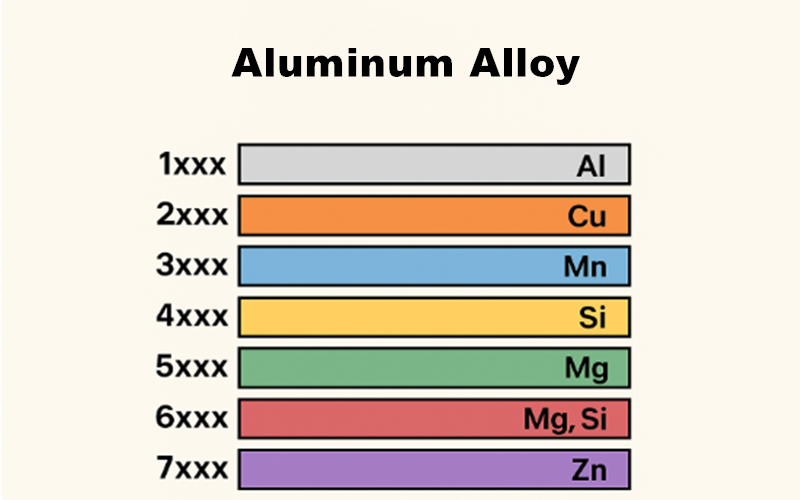
Q27: What are the characteristics of 1xxx–7xxx aluminum alloys?
1xxx is pure and corrosion-resistant, 2xxx high strength, 3xxx corrosion-resistant, 5xxx marine grade, 6xxx versatile, 7xxx ultra-strong, and each is chosen for specific use cases.
Q28: What's the difference between heat-treatable and non-heat-treatable alloys?
Heat-treatable alloys strengthen through quenching and aging, while non-heat-treatable alloys rely on work hardening, such as 6061 (heat-treatable) vs. 5052 (non-heat-treatable).
Q29: What do aluminum temper codes mean?
O = annealed, H = work-hardened, T6 = solution treated + aged; the temper directly affects strength and machinability.
Q30: Which is stronger, 6061 or 7075?
7075 is stronger, while 6061 has better weldability and corrosion resistance, which is why aircraft use 7075 and general machinery uses 6061.
Q31: Which is better for sheet metal: 3003, 5052, or 6061?
3003 forms well, 5052 resists corrosion, and 6061 is stronger, so the choice depends on the application.
Q32: What do “super hard aluminum” and “anti-rust aluminum” mean?
“Super hard” usually refers to 7xxx series, and “anti-rust” to 5xxx series, which are industry nicknames.
Q33: How corrosion-resistant are aluminum alloys?
Generally very resistant, but in chloride environments they need extra protection, especially near the sea or in chemical plants.
Q34: Why is anodizing necessary?
To improve corrosion and wear resistance while adding decorative finishes, including coloring.
Q35: Which aluminum alloys weld well?
5xxx series weld the best, while 7xxx weld poorly, so choosing the right welding method is critical.
Q36: What's the difference between extruded and cast aluminum alloys?
Extrusions are denser and stronger, while castings can form complex shapes, such as car wheels.
Q37: What are common die-casting aluminum alloys?
ADC12, A380, etc., known for good fluidity and widely used in auto and electronics housings.
Q38: How strong can aluminum alloys get?
High-strength 7xxx alloys can reach 600 MPa, close to some steels.
Q39: What about the fatigue strength of aluminum alloys?
Lower than steel, but still sufficient for aircraft and cars that face repeated loads.
Q40: How does aluminum compare with titanium and stainless steel?
Aluminum is lightest, titanium is stronger, and stainless steel is hardest, so each suits different uses.
Q41: How are aluminum alloys used in construction?
For windows, curtain walls, and roofing, because they're lightweight, durable, and low-maintenance.
Q42: How are aluminum alloys used in cars?
For body panels, engine parts, and wheels, helping to reduce overall vehicle weight.
Q43: How are aluminum alloys used in aerospace?
For fuselages, wings, and fuel pipes, making them essential aerospace materials.
Q44: What should be considered when using aluminum alloys in coastal areas?
Anodizing or coating is recommended to prevent pitting corrosion from salt.
Q45: How thick is anodized aluminum oxide film?
Decorative films are 5–20 μm, industrial films 20–50 μm; thicker films resist corrosion better.
Q46: What other surface treatments can aluminum alloys have?
Options include painting, electrophoretic coating, and hard anodizing, depending on durability needs.
Q47: Do aluminum alloys conduct electricity well?
Yes, second only to copper, so high-voltage power lines often use aluminum.
Q48: Do aluminum alloys conduct heat well?
Yes, making them ideal for heatsinks, like in laptops and LED lighting.
Q49: How much more expensive are high-strength alloys than regular ones?
Typically 2–3 times higher, with aerospace alloys being the most expensive.
Q50: Can aluminum alloys be 3D printed?
Yes, with powders like AlSi10Mg, widely used for aerospace parts and prototypes.