How to stretch aluminum pipe and bar?
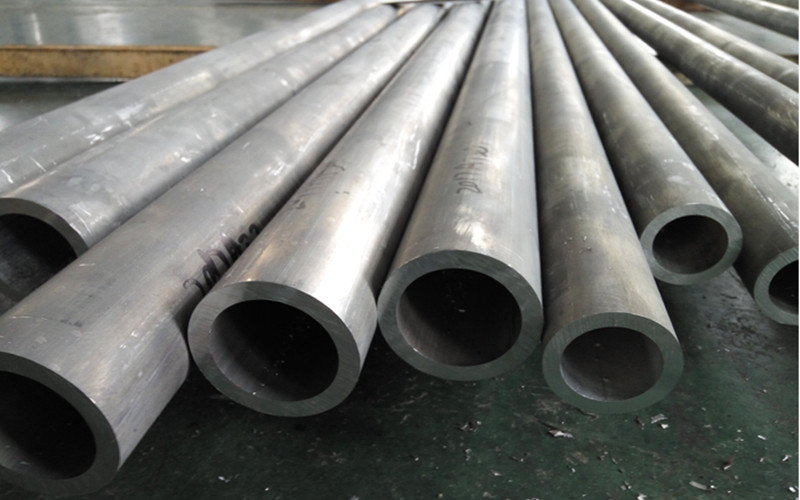
Stretching is mainly done for heat-treatable wrought alloys (2xxx and 7xxx series, sometimes 6xxx), because after solution heat treatment and quenching, they develop residual stresses that can cause distortion or cracking during machining. But not all aluminum alloys (in pipe and bar form) are stretched.
Aluminum Alloys require stretching in tube pipe & bar
2xxx series (Al-Cu alloys):
2024, 2219, 2618 In bar & thick section, they are often supplied as T351 / T3511 (solution heat treated, stress-relieved by stretching, then naturally aged).
7xxx series (Al-Zn-Mg-Cu alloys):
7075, 7050, 7055, 7475, 7175 Commonly supplied as T651 / T6511 (solution heat treated, stress-relieved by stretching, then artificially aged).Some aerospace grades (7050, 7475) also appear in T7651, T7351 etc.
6xxx series (Al-Mg-Si alloys):
6061, 6082, 6463 In extruded bar/pipe form, they are often T6511 (stress-relieved by stretching) to improve machining stability.
Why do aluminum tubes and bars need stretching?
Improve mechanical properties: The stretching process changes the internal structure of aluminum alloys, refining the grains and making the fiber structure more uniform. This increases tensile strength and yield strength while also improving elongation, giving the material better strength and toughness to withstand greater pressure and pulling forces.
Enhance surface quality: Stretching helps eliminate surface defects such as pits and scratches. After stretching, the surface of the aluminum becomes smoother, less prone to oxidation or corrosion, and has improved appearance and durability.
Precise control of size and shape: The process allows aluminum tubes and bars to be formed into specific dimensions and shapes according to product requirements. This is especially important in industries like automotive and aerospace, where precise specifications are needed for parts manufacturing.
Relieve internal stress: During production, residual stress may remain in aluminum alloys due to processing methods. Stretching followed by annealing can reduce these stresses, improving stability and reliability, and preventing deformation or cracking during use.
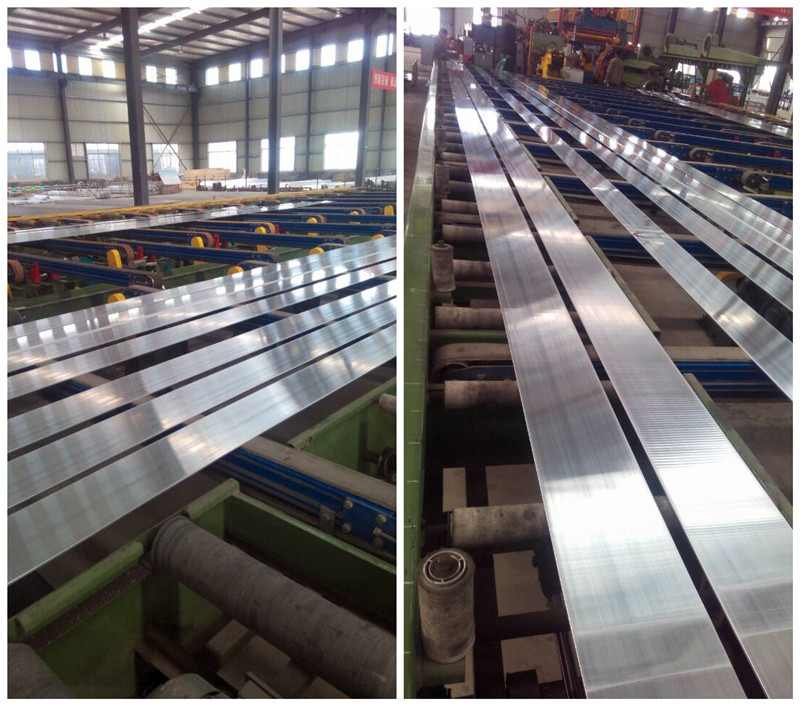
How to stretch aluminum pipe and bar?
1. Basic Steps of the Stretching Process
Billet Preparation
Select aluminum tube/bar billets that meet requirements, and calculate billet dimensions (length, diameter, etc.) based on final product size.
Clean the billet surface by removing oil, oxide scale, and other impurities. Acid pickling or grinding may be applied when necessary to ensure smooth surfaces and prevent scratches during stretching.
Preheating: Some aluminum alloys (such as hard alloys) must be heated to a certain temperature (typically 100–250 °C) to reduce hardness, improve plasticity, and facilitate stretching.
Die Selection and Installation
Design and prepare stretching dies according to product specifications (outer/inner diameters for tubes, diameter for bars). Dies are usually made of high-strength alloy steels (e.g., tungsten steel) to ensure wear resistance and precision.
Mount the die on the stretching machine and align its center with the billet axis to prevent eccentric deformation.
Stretching Operation
Clamping: Fix one end of the billet to the machine's gripping system, while the other end passes through the die.
Applying Force: The stretching machine applies axial tensile force, pulling the billet through the die opening. The material undergoes plastic deformation, reducing its cross-sectional area while increasing its length.
Parameter Control: Adjust stretching speed (typically 0.5–5 m/min) and reduction rate (generally less than 30% to avoid fracture) according to alloy grade (e.g., 6061, 7075).
Post-Treatment
Annealing: Stretching causes residual stress. Annealing (heating to a specific temperature followed by slow cooling) relieves this stress, restores toughness, and prevents cracking during subsequent processing.
Straightening and Cutting: Straighten the stretched products to ensure alignment, then cut them into required lengths.
Surface Treatment: Processes such as polishing or anodizing may be applied to further enhance surface finish and corrosion resistance.
2. Key Equipment
Stretching Machines: Horizontal machines are most common, available in different tonnages (from tens to hundreds of tons).
Die Systems: Includes stretching dies (defining product dimensions) and guiding dies (ensuring smooth billet entry).
Auxiliary Equipment: Furnaces for preheating or annealing, straightening machines, cutting equipment, etc.
3. Important Considerations
Die Lubrication: Apply lubricants (such as graphite-based emulsions) to reduce friction, minimize die wear, and prevent surface scratches.
Stretching Ratio Control: Adjust according to alloy plasticity. Softer alloys can tolerate higher reductions, while harder alloys require lower reductions. For multiple stretching passes, intermediate annealing is needed to eliminate work hardening.
Quality Inspection: Check final products for dimensional accuracy (diameter, wall thickness), mechanical properties (tensile strength, elongation), and surface quality to ensure compliance with standards.
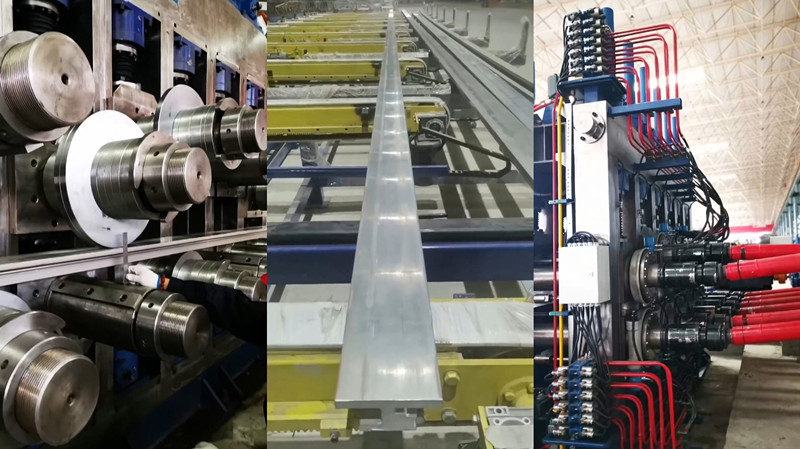
What is Stress-Relieving Stretching Machine?
This is a specialized piece of equipment designed to eliminate residual stresses inside aluminum materials, especially extruded bars,tube,pipe,and profiles. Stress relief is critical for ensuring dimensional stability during subsequent machining processes (such as CNC milling and turning) and for enhancing the final mechanical performance of the product.
Stress-relief tempers and applications of aluminum pipe and bar
TXX51 Used for rolled plates that have undergone solution heat treatment and then stress-relief stretching. The permanent elongation amount is 1.5%–3%. This temper improves machining dimensional stability. It is not suitable for products requiring sharp bends.
TXX510 Used for thick plates. After solution heat treatment, stress relief is achieved by compression (instead of stretching). Permanent compression deformation is about 1%–5%. This temper improves machining dimensional stability.
TXX52 Used for forgings that have undergone solution heat treatment and then stress-relief compression (not stretching). Permanent compression deformation is about 1%–5%. This temper improves machining dimensional stability.
TXX511 Used for extruded profiles and bars that have undergone solution heat treatment and then stress-relief stretching. Permanent tensile deformation is about 1%–3%. This temper improves machining dimensional stability.
TXX52 Used for forgings after solution heat treatment. Stress-relief compression deformation is about 1%–5%. Improves dimensional stability during machining.
TXX54 Used for die forgings that have undergone solution heat treatment. Stress relief is performed by cold working. Improves dimensional stability during machining.
Quality aluminum products only can be made out by right processes, Shenzhen Chinalcometal supply 2xxx, 6xxx and 7xxx series stretched and stress reliefed aluminum pipe and bar, which could be used for automotive and aerospace parts machining. Contact us for your detailed inquiry.