Three Types of Hollow Conductors for Nuclear Power Steam Turbine Generators
Electrical energy is the core energy source supporting global industrial production and social development. Against the backdrop of the global transition toward low-carbon energy, nuclear power, with its unique advantages of zero carbon emissions, stable output, large single-unit capacity, and high annual utilization hours, has become a core clean energy source for countries around the world to optimize their energy structures, ensure electricity supply, and achieve carbon neutrality goals. It therefore offers extremely high application value and broad development prospects.
Among the commercially operated nuclear reactor types worldwide, the pressurized water reactor (PWR) is the most mature, most widely deployed, and most versatile mainstream reactor type. According to statistics from authoritative international organizations, pressurized water reactors account for more than 70% of nuclear power units currently in operation worldwide. They are widely used in the vast majority of countries with nuclear power technologies and represent the dominant reactor type in the global nuclear power industry.
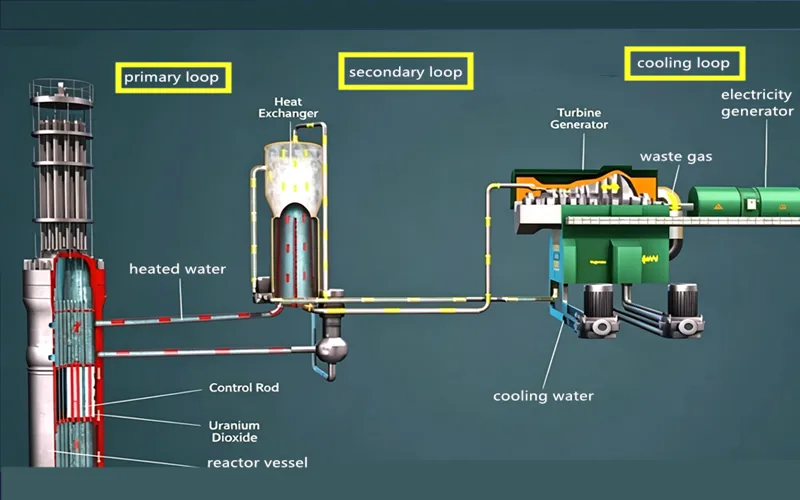
A typical PWR nuclear power plant is generally divided into two major functional areas: the nuclear island and the conventional island. Each performs its own function while working together to complete the overall energy conversion process from nuclear energy to electricity. The nuclear island is the core thermal energy generation unit of the nuclear power plant. It mainly consists of key equipment such as the reactor, steam generator, and primary-loop system. Through a controlled chain reaction of nuclear fuel, enormous amounts of heat are released. The primary-loop coolant transfers this heat to the steam generator, where high-temperature, high-pressure saturated steam is produced, completing the conversion of nuclear energy into thermal energy.
The conventional island is the electricity generation unit and is essentially a large-scale thermal power generation system. It receives high-temperature, high-pressure steam from the nuclear island, drives the steam turbine to rotate at high speed, and converts thermal energy into mechanical energy. The mechanical energy then drives the steam turbine generator to operate synchronously, ultimately converting mechanical energy into electrical energy for stable power transmission.
The outer-square-inner-round rotor hollow conductor, outer-square-inner-square rotor hollow conductor, and stator hollow conductor discussed in this article are all key specialized conductive and heat-dissipation components of large nuclear power steam turbine generators. They are installed entirely inside the steam turbine generators in the conventional island and are not involved in the reactor or radioactive primary-loop systems of the nuclear island. They are critical materials for ensuring the long-term, high-load, safe, and stable operation of large-capacity nuclear power units.
I. Core Structure of Nuclear Power Steam Turbine Generators and the Water-Cooling Principle
Mainstream million-kilowatt-class nuclear power steam turbine generators worldwide feature large single-unit capacity and are designed for baseload operation and continuous full-load operation throughout the year. During operation, the generator windings carry extremely high working currents and continuously generate large amounts of Joule heat. If this heat cannot be removed efficiently and promptly, it can cause winding overheating, accelerate insulation aging, and lead to equipment performance degradation. In severe cases, it may result in unit failure and shutdown, affecting the overall operational reliability of the nuclear power plant.
Therefore, mainstream large-capacity nuclear power steam turbine generators generally adopt winding water-cooling technology. Hollow specialized copper conductors are incorporated into the generator windings, and high-purity closed-loop deionized water is circulated through the conductors. By cooling directly inside the conductors, heat is rapidly removed from the core heat-generating areas. This cooling efficiency and temperature uniformity are significantly better than those of conventional air-cooling and hydrogen-cooling solutions, making the technology highly suitable for the high-load and long-term operating conditions of nuclear power units.
The mechanical structure of a steam turbine generator consists of two core components: the stationary stator and the high-speed rotating rotor. Direct current is supplied to the rotor to establish a stable rotating magnetic field, while the stator windings continuously cut the rotating magnetic flux to induce three-phase alternating current, thereby completing electricity generation and power transmission.
Depending on installation position, motion state, mechanical load, and operating environment, generators use two major types of core conductors: rotor hollow conductors and stator hollow conductors. According to differences in fluid-system design, rotor water-cooled windings are further divided into two mainstream hollow conductor structures: outer-square-inner-round and outer-square-inner-square.
II. Specific Applications and Working Principles of the Three Types of Hollow Conductors
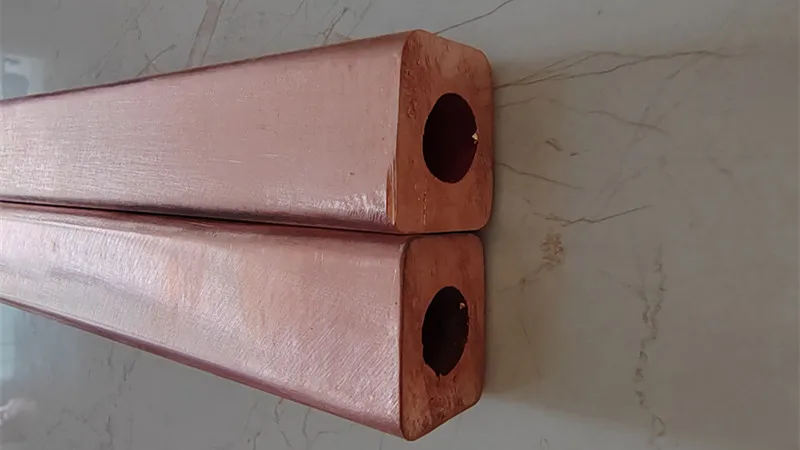
(1) Outer-Square-Inner-Round Rotor Hollow Conductor
1. Application Position
This conductor is a dedicated conductor for the rotor excitation windings of double-water-cooled nuclear power generators. It is neatly stacked and embedded into the slots of the rotor body, with multiple conductors arranged in each slot and joined by welding to form complete rotor excitation coils. It is suitable for the rotor assembly configurations of mainstream PWR nuclear power steam turbine generators worldwide.
The conductor has a square external cross-section, allowing it to closely fit the rotor slots, achieve orderly arrangement, and maximize space utilization. The circular internal hole serves as a standardized cooling-water flow channel, providing a conventional structure and stable flow field.
2. Working Principle
During unit operation, the conductor continuously carries the high DC excitation current of the rotor and establishes the constant rotating magnetic field required by the generator, serving as the magnetic-field source for electricity generation.
Low-pressure closed-loop deionized water flows continuously through the circular internal passage of the conductor, removing Joule heat generated by the high current in real time. At the rated rotor speed of 3,000 rpm, the rotor rotates at high speed, and centrifugal force assists the stable circulation of the cooling water, further enhancing heat dissipation. This keeps the temperature rise of the rotor windings within a safe range and ensures long-term stable operation of the excitation system.
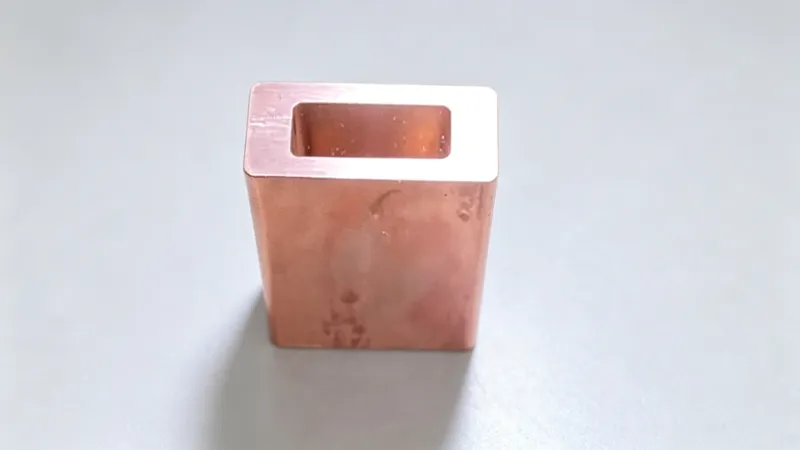
(2) Outer-Square-Inner-Square Rotor Hollow Conductor
1. Application Position
The installation position, operating conditions, service environment, and application of the outer-square-inner-square rotor hollow conductor are exactly the same as those of the outer-square-inner-round rotor hollow conductor. It is likewise installed inside the rotor slots of double-water-cooled nuclear power generators and serves as a core conductor for the rotor excitation water-cooled windings.
The only difference between the two is the internal cooling-channel structure. The external profile remains square to fit the rotor slots, while the internal passage has a square/rectangular cross-section. It is therefore a structurally differentiated product designed for the same operating conditions.
2. Working Principle
Its electrical current-carrying function, water-cooling principle, and overall operating mechanism are essentially identical to those of the outer-square-inner-round rotor hollow conductor.
The square internal passage allows greater flexibility in adjusting the cross-sectional area available for water flow, optimizing the water-flow distribution, and accurately matching the pressure-drop and cooling-flow parameters of different generator models. It therefore meets the customized cooling-system requirements of nuclear power generators from different countries and manufacturers and serves as a supplementary structural form of mainstream rotor hollow conductors.
(3) Stator Hollow Conductor
1. Application Position
Stator hollow conductors are entirely arranged inside the slots of the stationary generator stator core and serve as the core strand units forming the stator three-phase generator bars.
In engineering applications, multiple hollow conductors are arranged together with corresponding solid conductors. Through series and parallel combinations, they form the complete stator generator windings and serve as the core carriers of the main electrical power output of nuclear power generators. They are widely used in various PWR nuclear power generator units worldwide.
2. Working Principle
During normal operation, the stator windings cut the rotating magnetic field generated by the rotor and induce a three-phase, extremely high alternating current, completing electricity generation and power transmission.
The enormous amount of heat generated by the operating current is rapidly removed through the continuous flow of deionized water inside the hollow conductors. The stator is a fixed and stationary structure without high-speed rotational loads. Its operating conditions are relatively stable, and its primary functions are current carrying, heat dissipation, and electrical power output.
III. Material Selection Criteria for the Three Types of Hollow Conductors
1. Two Types of Rotor Hollow Conductors: CuAg0.1 Copper-Silver Alloy
Both outer-square-inner-round and outer-square-inner-square rotor hollow conductors use CuAg0.1 copper-silver alloy, with a silver content of 0.08%–0.12%. This material selection is determined by the extremely demanding service conditions of the rotor.
Nuclear generator rotors rotate at high speed for extended periods and continuously withstand extremely high centrifugal loads, alternating thermal stresses caused by repeated start-ups, shutdowns, and load fluctuations, as well as long-term high-temperature operating conditions.
Ordinary pure copper has a relatively low softening temperature. Under long-term combined high-temperature and high-stress conditions, it is susceptible to plastic creep, conductor elongation and deformation, and winding displacement. These issues can subsequently cause insulation damage, turn-to-turn short circuits, and other serious equipment risks, making ordinary pure copper unsuitable for the 30- to 40-year service life requirements of nuclear power units.
By adding a small amount of silver to the copper matrix, the recrystallization temperature, resistance to high-temperature softening, creep resistance, and thermal-fatigue resistance of the copper can be significantly improved with almost no sacrifice in electrical conductivity. This greatly enhances the dimensional stability of the winding structure and enables the conductor to withstand the complex and severe operating conditions of the rotor over long periods. As a result, CuAg0.1 is the generally preferred material for rotor water-cooled conductors in the global nuclear power industry.
2. Stator Hollow Conductor: Cu-OF High-Purity Oxygen-Free Copper
Stator hollow conductors in the global nuclear power industry generally use high-purity oxygen-free copper(Cu-OF), without the addition of silver.
The stator is a stationary fixed component without centrifugal loads or significant creep-deformation risks, and its operating conditions are relatively stable and controllable. The core material requirements for stator windings are extremely high electrical conductivity, very low electrical losses, good resistance to water-related corrosion, and good welding and processing characteristics.
Cu-OF hollow tube provides excellent electrical conductivity, helping minimize power-generation losses. It is also suitable for the corrosive environment associated with long-term water circulation and offers better cost and processing compatibility.
The high-temperature and creep-resistant characteristics of copper-silver alloys provide little practical benefit under the stationary and relatively stable operating conditions of the stator, while the material cost is higher. Therefore, pure oxygen-free copper conductors are generally standardized for stator water-cooled windings in nuclear power applications.
IV. Key Differences Among the Three Types of Hollow Conductors
1. Differences in Operating Conditions and Motion State
The outer-square-inner-round rotor hollow conductor and outer-square-inner-square rotor hollow conductor are used in high-speed rotating components and continuously withstand centrifugal forces and alternating thermal stresses. Their operating conditions are severe, with extremely demanding design-life requirements.
The stator hollow conductor is used in a stationary component. It experiences relatively simple mechanical loads and stable operating conditions.
2. Differences in Material Properties
The two types of rotor hollow conductors use CuAg0.1 copper-silver alloy, prioritizing mechanical stability, creep resistance, high-temperature resistance, and fatigue resistance while maintaining good electrical conductivity.
The stator hollow conductor uses high-purity oxygen-free copper, prioritizing high electrical conductivity, low electrical losses, resistance to water-related corrosion, and ease of processing and welding.
3. Differences in Structural Configuration
The outer-square-inner-round rotor conductor features a square exterior and circular internal passage. It provides uniform flow resistance and a stable flow field and represents the mainstream general-purpose structure for nuclear power generator rotors worldwide.
The outer-square-inner-square rotor conductor features a square exterior and square internal passage. It offers greater flexibility in adjusting the flow area and is suitable for customized cooling parameters required by specific generator models.
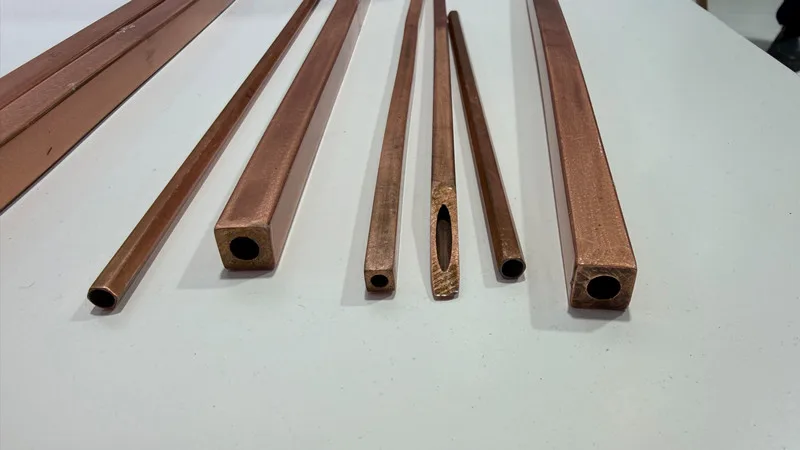
The stator hollow conductor mainly adopts an outer-square-inner-round structure. Its wall thickness, internal passage diameter, and overall dimensions differ completely from those of rotor conductors. Multiple conductors are integrated and used in grouped configurations.
4. Differences in Electrical Function
The two types of rotor hollow conductors carry DC excitation current and establish the rotating magnetic field of the generator, serving as the excitation source for electricity generation.
The stator hollow conductor carries the three-phase main AC current and completes the final conversion from mechanical energy to electrical energy and the transmission of generated power.
V. Conclusion
Overall, mainstream PWR nuclear power plants worldwide rely on a standardized energy-conversion system in which the nuclear island generates heat and the conventional island generates electricity. The three types of hollow conductors in the generator each perform their respective functions and are precisely matched to different operating conditions.
The high-speed rotating rotor uses copper-silver alloy hollow conductors, whose excellent high-temperature mechanical stability and creep resistance enable them to withstand severe operating environments. The stationary stator uses high-purity oxygen-free copper hollow conductors, whose superior electrical conductivity ensures efficient and low-loss power generation.
The structural differences, material differences, and performance priorities of the three types of conductors are all precisely determined by their installation positions, operating conditions, load characteristics, and equipment functions. Together, they constitute an important core material system supporting the safe, efficient, and long-term stable operation of PWR nuclear power steam turbine generators worldwide.