What is 2024 Grade Aerospace Aluminum?
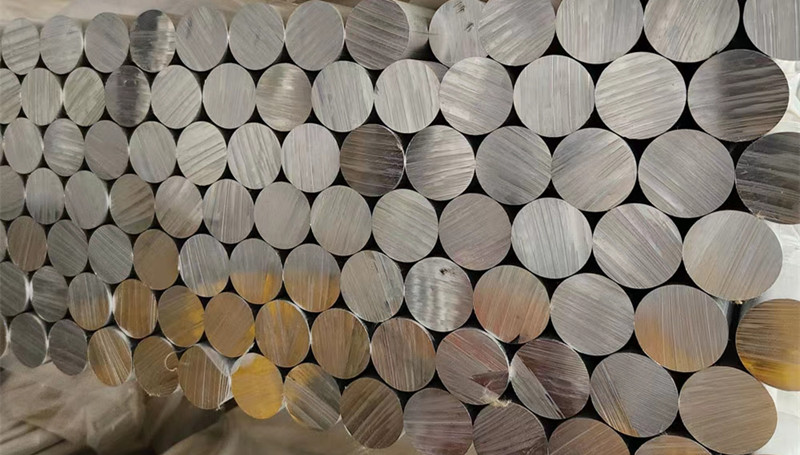
2024 aluminum alloy is one of the most widely used high-strength aluminum materials in the aerospace industry. Known for its excellent fatigue resistance, high strength-to-weight ratio, and long history of proven service, 2024 aluminum remains a benchmark alloy for aircraft structural applications—even as newer alloys and composite materials continue to emerge.
This article provides a comprehensive technical overview of what 2024 aluminum alloy is, how its composition and properties define its performance, the role of different tempers, and why it has become a cornerstone material in aerospace engineering.
What Is 2024 Aluminum Alloy?
2024 aluminum alloy belongs to the 2xxx series aluminum alloys, which are primarily alloyed with copper (Cu) as the main strengthening element.
What Does “2024” Mean in Aluminum Alloys?
The “2024” designation follows the Aluminum Association (AA) alloy numbering system:
2xxx series: Aluminum–copper (Al–Cu) alloys
Copper provides high strength through precipitation hardening
The specific number “2024” identifies a standardized chemical composition and performance profile
Unlike casual assumptions, “2024” does not refer to a year or aerospace specification—it is a fixed alloy designation recognized globally under ASTM, AMS, and EN standards.
Chemical Composition of 2024 Aluminum Alloy
2024 aluminum is a heat-treatable Al–Cu–Mg–Mn alloy, carefully balanced to achieve high strength and fatigue resistance.
Typical Chemical Composition (wt%)
| Element | Content (%) |
|---|---|
| Aluminum (Al) | Balance |
| Copper (Cu) | 3.8 – 4.9 |
| Magnesium (Mg) | 1.2 – 1.8 |
| Manganese (Mn) | 0.3 – 0.9 |
| Iron (Fe) | ≤ 0.5 |
| Silicon (Si) | ≤ 0.5 |
| Zinc (Zn) | ≤ 0.25 |
How Composition Affects Performance
Copper (Cu) is the primary source of strength but reduces corrosion resistance
Magnesium (Mg) enhances precipitation hardening and improves fatigue behavior
Manganese (Mn) refines grain structure and contributes to fracture toughness
This composition makes 2024 aluminum exceptionally strong, but also more sensitive to corrosion than non-copper alloys such as 6xxx series.
Mechanical Properties of 2024 Aluminum Alloy
Strength and Fatigue Performance
In typical aerospace tempers, 2024 aluminum offers:
High ultimate tensile strength
High yield strength
Outstanding fatigue resistance, a critical requirement for aircraft subjected to cyclic loading
Fatigue performance is one of the primary reasons 2024 aluminum has historically been selected for wing skins, fuselage structures, and load-bearing aircraft components.
Density and Strength-to-Weight Ratio
Density: ~2.78 g/cm³
Offers a superior strength-to-weight ratio compared to many structural metals
Enables lighter airframes without compromising structural integrity
Fracture Toughness and Damage Tolerance
Aircraft structures must tolerate micro-cracks and localized damage without catastrophic failure. Compared with ultra-high-strength alloys, 2024 aluminum demonstrates:
Slower crack propagation
Better damage tolerance in riveted assemblies
Predictable failure behavior
These characteristics align well with conservative aerospace design philosophies.
Hardness and Machinability
2024 aluminum alloy also demonstrates a favorable hardness level for aerospace manufacturing. Depending on the heat treatment condition, its Brinell hardness typically ranges from HB120 to HB140. This level of hardness allows the material to withstand significant cutting forces during machining while maintaining good dimensional stability.
As a result, 2024 aluminum is well suited for precision CNC machining, drilling, and riveted structural components, where consistent hole quality and surface integrity are critical. Combined with its relatively low density of approximately 2.78 g/cm³, the alloy supports lightweight structural designs without sacrificing mechanical robustness.

Common Tempers of 2024 Aluminum Alloy
Heat treatment plays a critical role in achieving the desired balance of strength, hardness, and ductility in 2024 aluminum alloy. As a heat-treatable Al–Cu–Mg alloy, its mechanical properties are primarily enhanced through solution heat treatment followed by natural or artificial aging.
These processes promote controlled precipitation of strengthening phases within the aluminum matrix, significantly improving strength and hardness while preserving sufficient plasticity and fracture toughness. By selecting appropriate heat treatment conditions and tempers, engineers can tailor 2024 aluminum to meet the specific performance requirements of different aerospace components.
The mechanical properties of 2024 aluminum vary significantly depending on temper.
2024-T3
Solution heat-treated
Cold worked
Naturally aged
Most commonly used temper for aerospace sheet and plate, offering an excellent balance of strength, fatigue resistance, and formability.
2024-T351 / T3511
Similar to T3
Stress-relieved by stretching
This temper is preferred for machined aerospace components, as it improves dimensional stability and reduces distortion during machining.
2024-T4 / T42
Solution heat-treated and naturally aged
Lower strength than T3
Improved formability
Commonly used for complex-shaped parts that require forming before final aging.
2024-O (Annealed)
Fully annealed condition
Lowest strength
Maximum ductility and formability
2024-O is typically used for deep forming or bending operations, after which the material is re-heat-treated to a higher-strength temper.

Key Characteristics of 2024 Aluminum Alloy
High Strength with Excellent Fatigue Resistance
2024 aluminum performs exceptionally well under repeated cyclic stress, making it ideal for aircraft structures exposed to long-term vibration and loading.
Good Machinability for Aerospace Structures
The alloy machines cleanly and predictably, which is essential for:
Precision structural parts
Riveted assemblies
Tight-tolerance aerospace components
Limitations: Corrosion Resistance and Weldability
Corrosion resistance is relatively poor due to high copper content
Weldability is limited and generally not recommended for primary structures
These limitations are typically addressed through surface protection and mechanical fastening rather than welding.
Standards and Specifications of 2024 Aluminum Alloy
2024 aluminum is governed by a mature and widely accepted standards system, which contributes to its continued use in aerospace programs.
Common Aerospace Standards
ASTM B209 – Sheet and plate
AMS 4037 / AMS 4038 – Aerospace plate and sheet specifications
EN AW-2024 – European standard designation
These standards define composition limits, mechanical properties, heat treatment conditions, and inspection requirements.
Qualified Product Forms
Sheet
Plate
Bar
Forging stock
The availability of standardized forms simplifies qualification and supply-chain integration for aircraft manufacturers.
Surface Protection: Alclad 2024 Aluminum
What Is Alclad 2024?
Alclad 2024 consists of a high-strength 2024 core material clad with a thin layer of commercially pure aluminum.
The cladding acts as a sacrificial corrosion barrier
Significantly improves corrosion resistance without sacrificing core strength
When Alclad Is Used
Aircraft skins
External structural panels
Components exposed to humid or marine environments
Alclad 2024 is a long-established solution for mitigating the corrosion limitations of copper-rich alloys.
FAQ – 2024 Aluminum Alloy in Aerospace
2024 Aluminum vs 6061:
2024 offers significantly higher strength and fatigue resistance
6061 provides better corrosion resistance and weldability
Aerospace primary structures favor 2024; secondary or welded parts often use 6061
2024 Aluminum vs 7075:
7075 provides higher ultimate strength
2024 offers better fatigue resistance and damage tolerance
2024 is often preferred for fatigue-critical aircraft structures
Can 2024 Aluminum Be Welded?
While technically weldable, 2024 aluminum is not recommended for welded aerospace structures due to strength loss and cracking risks. Riveting and mechanical fastening remain standard practice.
Is 2024 Aluminum Still Used in Modern Aircraft?
Yes. Despite increased use of composites, 2024 aluminum continues to be used in:
Structural reinforcements
Repairs and legacy platforms
Military and training aircraft
Its reliability, predictability, and certification history keep it relevant.
Conclusion: When to Choose 2024 Aluminum Alloy
2024 aluminum alloy continues to play a vital role in aerospace structures because it delivers a well-balanced combination of high structural strength, excellent fatigue resistance, and long-term service reliability. Its performance characteristics have been validated over decades of aircraft operation, supported by a mature and widely accepted system of global aerospace standards.
Rather than competing purely on ultimate strength, 2024 aluminum excels in applications where cyclic loading, damage tolerance, and predictable failure behavior are critical design considerations. When welding is not required and mechanical fastening is preferred, the alloy provides a dependable solution for primary and secondary aircraft structures.
For engineers and designers seeking a proven, certifiable material for fatigue-critical, non-welded aerospace components, 2024 aluminum alloy remains a technically sound and industry-trusted choice.