What is the difference between 7175 and 7075 Aluminum?

7175 VS 7075 aerospace aluminum alloy
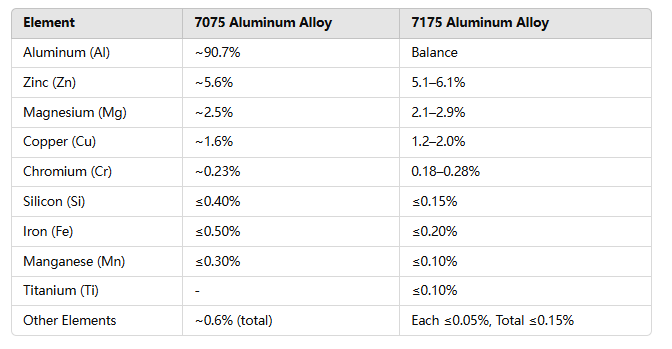
Both 7175 and 7075 are high-strength aluminum alloys widely used in the aerospace industry, but they have some important differences that can affect performance and reliability. 7075 is well-known for its peak strength and broad availability, making it a popular choice for many structural parts. On the other hand, 7175 has been specially optimized to offer better toughness, improved corrosion resistance, and greater stability under stress. Understanding these differences helps engineers and designers choose the right material for critical aerospace components, from landing gear struts to wing root joints.
Chemical composition comparison
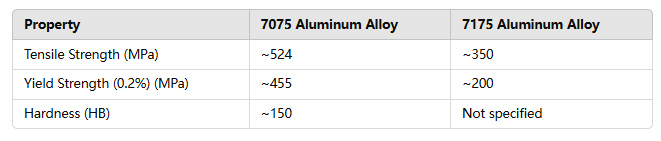
Physical properties comparison

7075 vs 7175 mechanical properties
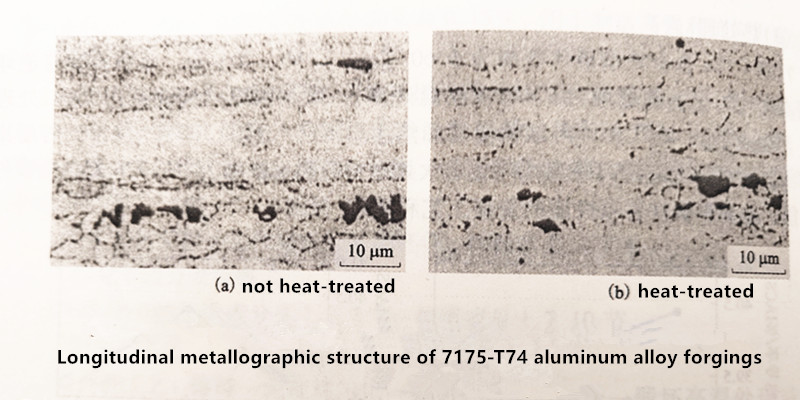
Simple metallographic interpretation 7075 vs 7175
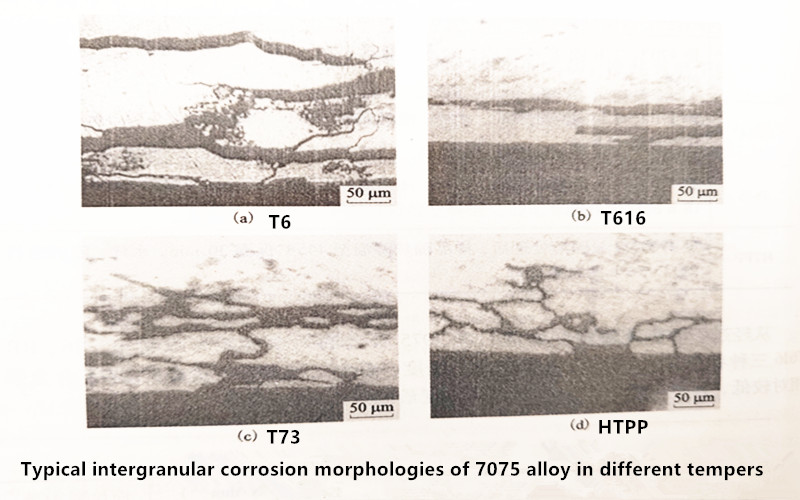
7075 aluminum
In simple terms, the “internal structure” of 7075 aluminum contains metal grains that are not perfectly uniform in size or distribution. The strengthening elements inside the alloy (such as zinc and magnesium) form precipitate particles, but these particles grow naturally during processing, so their size and placement can be somewhat irregular. This gives 7075 its high strength, but also means:
Some tiny areas can accumulate stress more easily
Stress-corrosion resistance is affected by these uneven regions
Overall stability is good, but not the most uniform among high-strength alloys
In short: 7075 is very strong, but its internal structure has a slightly “naturally formed texture”—excellent strength, but not the highest in uniformity or consistency.
7175 aluminum
7175 can be understood as an “optimized version” of 7075. Through more precise manufacturing control (especially optimized heat treatment), the metal grains inside the material grow in a more uniform and orderly pattern. The strengthening precipitates are finer and more evenly distributed, reducing weak spots within the material.
As a result:
The internal structure is more uniform and stable
Stress-corrosion resistance and fatigue performance are better than 7075
The material offers higher reliability for critical aerospace components
In short: 7175 has a more refined and consistent internal structure—fewer weak points, better uniformity, and more stable performance. It is essentially a higher-grade, more reliable version of 7075.
Specific applications in aerospace
7075 Aluminum Alloy:
Commonly used for aerospace structures and mechanical components, such as:Aircraft fuselage frames
Wing spars and trusses
Boarding stairs and lightweight aerospace parts
7175 Aluminum Alloy:
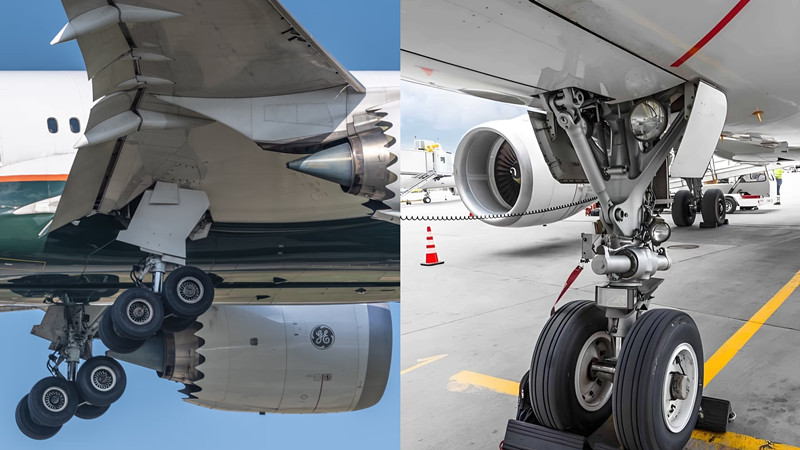
Specially designed for critical components requiring high strength and fatigue performance, such as:Landing gear struts
Key load-bearing components (e.g., wing root joints)
Fasteners and other critical high-safety parts
Material Selection Guidance
Choosing 7075:
Opt for 7075 when high strength is required, environmental load is moderate, and lightweight design is a priority. Suitable for general aerospace structures and mechanical components.Choosing 7175:
Select 7175 in high-fatigue environments or where fracture toughness is critical (e.g., dynamic loads or long-term service). Ideal for core load-bearing structures in aircraft.