Applications of Aluminum Alloys in the Building and Construction Industry
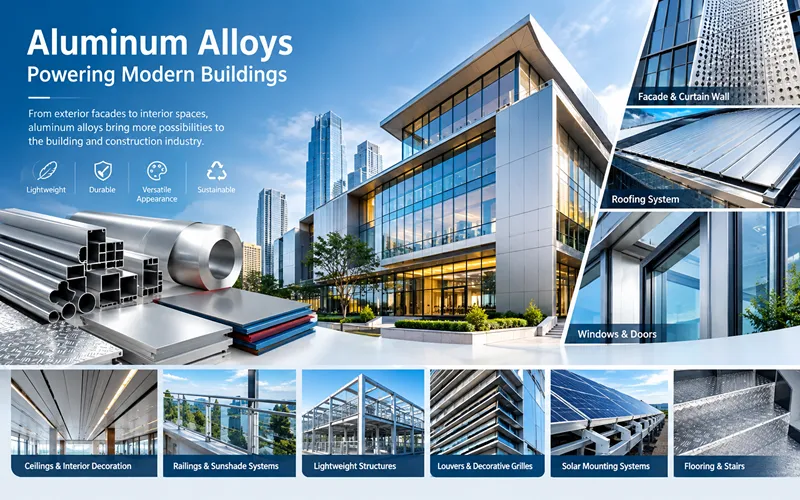
Aluminum alloys are widely used in modern buildings for exterior walls, roofing, windows and doors, interior decoration, shading systems, and selected structural and auxiliary components. Thanks to their relatively low density, good atmospheric corrosion resistance, formability, and versatility in surface finishing, aluminum alloys can be supplied in different forms, including sheets, coils, tubes, bars, and extruded profiles, to meet a wide range of architectural and construction requirements.
In building projects, aluminum is more than a decorative metal. It can serve as the raw material for curtain wall panels, roofing sheets, and ceiling panels. Through extrusion, bending, roll forming, cutting, and machining, it can also be processed into window and door frames, sunshade louvers, railings, connectors, and other building components.
Different parts of a building have different material requirements. Exterior panels generally require good weather resistance, surface quality, and formability. Window, door, and curtain wall frames place greater emphasis on profile design, dimensional accuracy, and structural performance. Roofing systems must account for drainage, weather resistance, formability, and connection methods. Therefore, selecting aluminum alloys for construction requires consideration of the specific application, product form, alloy grade, temper, and service environment.
1. Applications of Aluminum Alloys in Building Facades and Curtain Walls
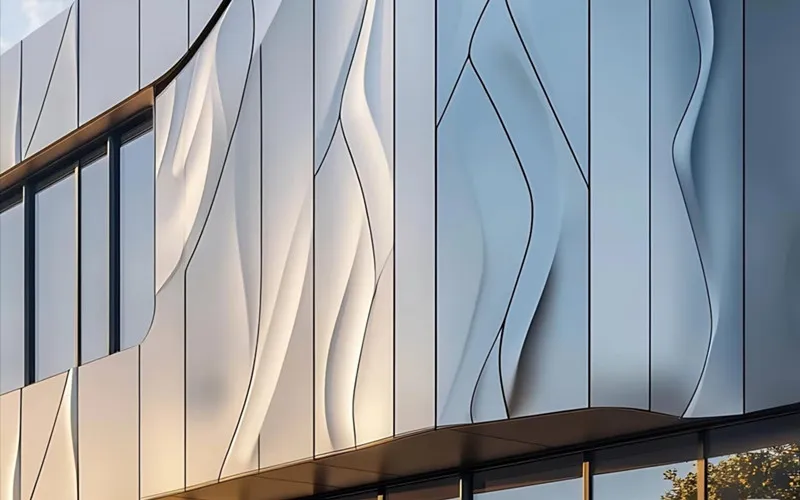
Building facades are among the most common application areas for aluminum alloys. Aluminum can be used for exterior wall panels, curtain wall frames, architectural facade features, and components of building envelope systems. Different products serve different functions: some primarily create the desired appearance, while others contribute to panel fixing, support, or framing.
1.1 Solid Aluminum Sheets and Aluminum Cladding Panels
Solid aluminum sheets can serve as the raw material for architectural exterior panels. After cutting, bending, punching, welding, or other sheet metal fabrication processes, the sheets can be finished by spraying, anodizing, or other suitable surface treatments to produce aluminum cladding panels in different shapes.
Common applications include:
Exterior cladding for commercial buildings, office buildings, and public buildings;
Cladding around building entrances, canopies, eaves, and facade features;
Decorative lines, edge trims, and closure components on building facades;
Selected interior wall panels, column covers, and decorative panels.
Aluminum sheets for exterior cladding are selected according to panel dimensions, bending geometry, installation methods, environmental corrosion conditions, and surface finishing requirements. Common sheet alloys include 3003, 3105, and 5052. The appropriate grade depends on forming requirements, strength requirements, coating systems, and project specifications.
It is important to distinguish between solid aluminum sheet and an aluminum cladding panel. Aluminum sheet is the base material, while an aluminum cladding panel is generally a fabricated product intended for architectural decoration or enclosure systems.
1.2 Prepainted Aluminum Sheets and Coils
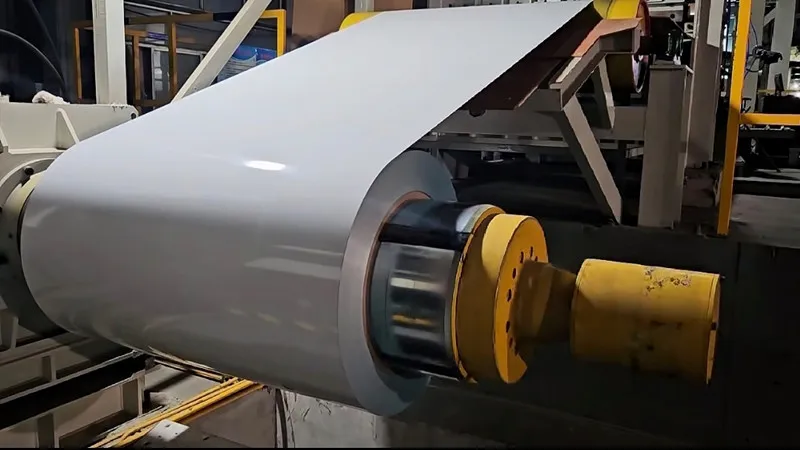
Prepainted aluminum sheets and coils have organic coatings that provide different colors, gloss levels, and surface finishes. Their applications extend beyond exterior facades to roofing, wall decoration, ceilings, and selected building accessories.
Depending on the intended use, prepainted aluminum can be used for:
Exterior decorative panels;
Metal roofing and profiled wall panels;
Interior decorative panels and ceiling panels;
Eaves, coping, edge trims, and other closure components;
Selected prefabricated building envelope systems.
Prepainted aluminum coils are particularly suitable for continuous roll forming and high-volume processing. After decoiling, forming, and cutting, the coils can be converted into roofing sheets, wall panels, and associated components with different profiles and lengths.
When selecting prepainted aluminum, buyers should consider not only the alloy and thickness but also the coating type, coating thickness, color consistency, weather resistance, and coating adhesion during forming. For exterior applications with prolonged outdoor exposure, the coating system should be selected according to local climate, ultraviolet exposure, humidity, and pollution levels.
1.3 Perforated Aluminum Panels
Perforated aluminum panels are produced by creating regularly arranged or custom-designed holes in aluminum sheets. They are commonly used in architectural applications that combine decorative effects with ventilation, light transmission, or acoustic design.
Typical applications include:
Exterior decorative facades and secondary facade layers;
Sunshade screens and ventilation louvers;
Building entrances and outdoor decorative features;
Interior ceilings and decorative partitions;
Selected acoustic ceiling and wall systems.
Perforation changes the effective cross-section and stiffness of the panel. Hole diameter, spacing, open area, sheet thickness, and support arrangements must therefore be considered together. For large exterior panels, wind loads, panel deflection, and connection strength also require evaluation.
1.4 Aluminum Honeycomb Panels and Aluminum Composite Panels
Aluminum honeycomb panels and aluminum composite panels are composite products with layered structures. They should not be treated as equivalent to ordinary solid aluminum sheets.
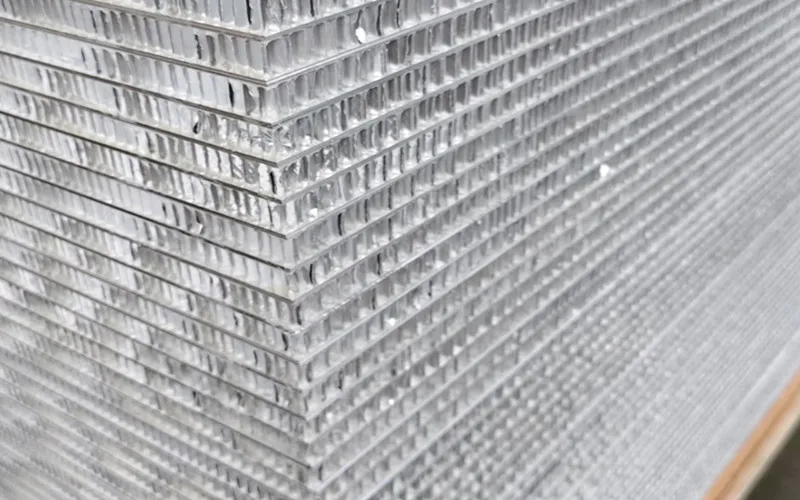
Aluminum honeycomb panels typically consist of two aluminum face sheets bonded to a honeycomb core. This structure can provide high bending stiffness at a relatively low panel weight. Applications include building facades, interior walls, ceilings, and other areas where flatness and weight are important considerations.
Aluminum composite panels generally consist of two aluminum face sheets bonded to a core material. They can be used for building facades, interior decoration, and selected display structures. Their performance depends on face-sheet thickness, core type, bonding quality, and fire safety design.
The performance of these products cannot be assessed solely by looking at the alloy grade of the aluminum face sheets. Core materials, fire performance, bond quality, connection methods, and applicable building codes are also important technical considerations.
1.5 Curtain Wall Frames and Decorative Profiles
In addition to panels, aluminum alloys are used to produce curtain wall framing and decorative components, including mullions, transoms, cover caps, pressure plates, and decorative trims.
These components are commonly manufactured from aluminum extrusions. Compared with simple square or rectangular tubes, extruded profiles can incorporate more complex cross-sections to accommodate glass installation, sealing, drainage, connections, and decorative features.
Alloy 6063 is commonly used for architectural curtain wall profiles. The appropriate alloy temper and profile dimensions should be determined according to design loads, spans, connection methods, and applicable standards. Curtain wall safety also depends on support systems, fasteners, sealants, and installation design; it cannot be determined by the profile alloy grade alone.
2. Applications of Aluminum Alloys in Roofing, Building Envelopes, and Ventilation Systems
Roofing and building envelope systems must withstand rain, wind, temperature changes, and prolonged outdoor exposure. Aluminum alloys can be used in different forms, including sheets, coils, and extruded profiles, for roof coverings, wall cladding, drainage, and edge finishing.
2.1 Profiled Aluminum Roofing Sheets and Corrugated Panels
Profiled aluminum sheets are produced by roll forming, pressing, or similar processes to create specific cross-sectional shapes. Common profiles include corrugated, trapezoidal, and other ribbed designs.
Typical applications include:
Roofing for industrial buildings and warehouses;
Exterior walls and metal building envelope systems;
Canopies, entrance covers, and selected lightweight buildings;
Certain roof renovation and replacement projects.
Profiling changes the geometry of the sheet cross-section and increases its stiffness in specific directions and under certain loading conditions. Actual load-bearing capacity still depends on sheet thickness, profile geometry, support spacing, fastening methods, and design loads.
For roofing applications, important considerations include formability, weather resistance, thermal expansion and contraction, roof slope, and joint design. The corrosion resistance of aluminum alone does not eliminate the need to protect joints, fasteners, and areas where dissimilar metals come into contact.
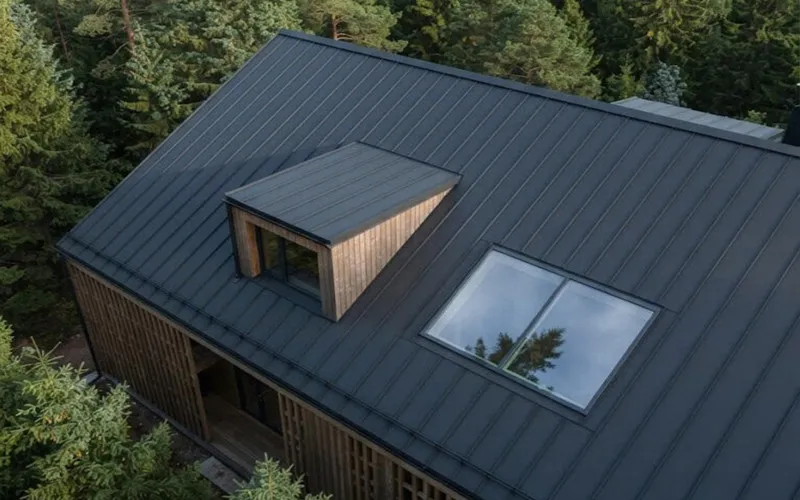
2.2 Standing Seam Roofing and Metal Roofing Systems
Standing seam roofing typically consists of metal panels with specially designed edges that are joined through mechanical seaming or compatible connection systems to form a continuous roof covering.
Aluminum roofing panels are relatively lightweight and offer good atmospheric corrosion resistance, making them suitable for selected commercial buildings, industrial facilities, public buildings, and other metal roofing projects.
Compared with conventional corrugated roofing sheets, standing seam systems depend more heavily on panel geometry, seam design, clips, and the overall roof assembly. Buyers need to confirm panel thickness, forming equipment compatibility, roof span, fastening methods, and local wind load requirements.
Aluminum coil can serve as an upstream material for these systems, but the coil itself is not equivalent to a complete standing seam roofing product.
2.3 Aluminum Roofing Accessories and Drainage Components
A roofing system includes more than large covering panels. It also contains numerous components for drainage, connections, and edge finishing.
Common products include:
Roof flashing and coping sheets;
Eaves, edge trims, and closure panels;
Aluminum gutters and downspout components;
Selected drainage accessories;
Cover and connection components at roof-to-wall junctions.
These products are often fabricated from aluminum sheets or coils through shearing, bending, and forming. Material thickness, bendability, surface finish, and connection methods all affect fabrication quality and service life.
For these applications, aluminum's formability and dimensional adaptability can be just as important as its corrosion resistance.
2.4 Applications of Aluminum Alloys in Building Ventilation Systems
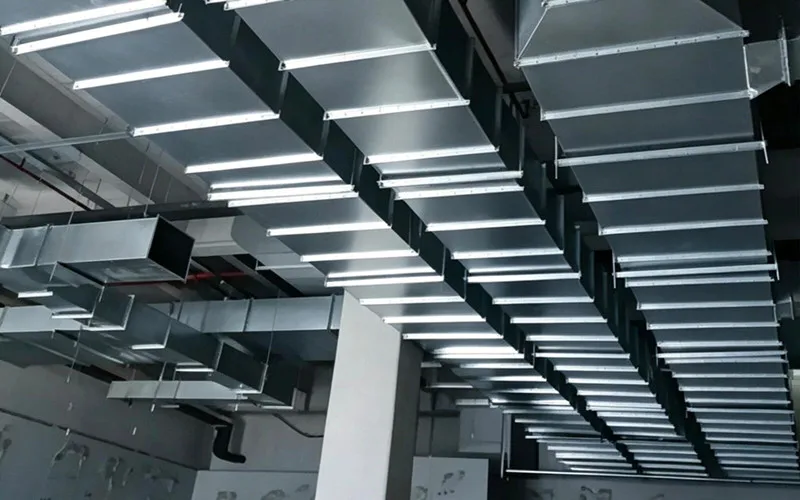
Aluminum alloys can be used in selected building ventilation and air distribution systems, including ventilation ducts, ventilation louvers, air supply and return grilles, and related components. Depending on product design and fabrication requirements, these components can be manufactured from aluminum sheets, coils, or extruded profiles.
Aluminum ventilation ducts are typically fabricated from thin aluminum sheets through shearing, bending, and joining processes. They can be used for air supply, exhaust, and air conveyance in specific building applications. Rectangular and round ducts are selected according to space constraints, airflow requirements, installation conditions, and system design. Aluminum's relatively low weight, corrosion resistance, and processing versatility may make it suitable for certain specialized environments. However, duct selection must also account for stiffness, airtightness, connection methods, and fire safety requirements.
Aluminum ventilation louvers and air grilles are more commonly manufactured from aluminum extruded profiles or thin aluminum sheets. They can be installed on exterior walls, in equipment rooms, at HVAC ventilation openings, and in interior ceiling systems to direct airflow, screen equipment, or provide decorative finishes. Louver angles, blade spacing, free ventilation area, and mounting structures all influence ventilation performance.
In addition, aluminum materials can be used to fabricate selected duct elbows, transitions, air grille frames, and equipment housings. However, aluminum alloys are not suitable as a universal material for every building ventilation system. Material selection should be based on air temperature, humidity, corrosive conditions, pressure requirements, fire safety regulations, and overall system design.
3. Applications of Aluminum Alloys in Windows, Doors, Skylights, and Architectural Profiles
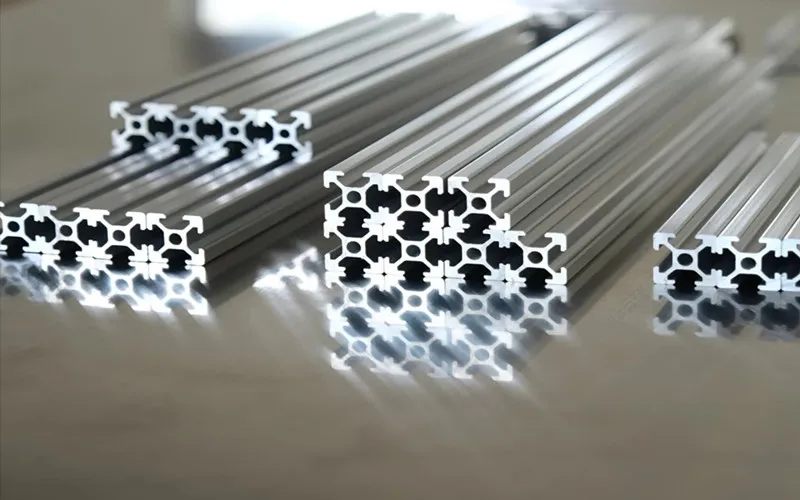
Aluminum extrusions are important materials for modern building windows, doors, glass curtain walls, partitions, and shading systems. Unlike flat products, which are mainly used to form surface layers, extruded profiles can incorporate specific cross-sections to provide framing, connection, sealing, and installation functions.
3.1 Aluminum Window and Door Profiles
Aluminum window and door profiles are generally produced through extrusion and subsequently cut, machined, surface-treated, and assembled into frames, sashes, and related components.
Applications include:
Casement, sliding, and fixed windows;
Casement doors, sliding doors, and commercial entrance doors;
Balcony doors and windows, as well as large glazed door systems;
Selected thermally broken window and door systems.
Alloy 6063 is widely used for architectural window and door extrusions because of its extrudability and suitability for surface finishing. Other alloys may be considered for specific components requiring higher strength, but they must also meet requirements for profile complexity, surface quality, and system design.
Material selection for windows and doors cannot be based on alloy grade alone. Profile wall thickness, cross-sectional design, glass weight, wind pressure, water tightness, air tightness, thermal insulation, and hardware connections all affect the performance of the finished system.
3.2 Glass Curtain Walls, Skylights, and Glass Partitions
Aluminum extruded profiles are also widely used in glass curtain walls, skylights, glass roofs, and interior glass partitions.
Within these systems, profiles may serve to:
Support and secure glass panels;
Connect mullions and transoms;
Accommodate gaskets and pressure plates;
Provide drainage and ventilation channels;
Support decorative covers and edge finishes.
Cross-sectional designs vary significantly between systems. Curtain wall profiles must be selected according to glass dimensions, wind loads, building height, connection methods, and architectural design. Skylights must also account for water accumulation, snow loads, and temperature changes where applicable.
The advantage of complex extruded profiles is that multiple installation and connection functions can be integrated into a single cross-section, potentially reducing additional fabrication steps. However, actual performance still depends on design, alloy temper, and manufacturing quality.
3.3 Sunrooms, Greenhouses, and Architectural Partitions
Aluminum profiles are also used in sunrooms, greenhouses, interior partitions, and modular space systems.
These applications generally require profiles to provide frame support, accommodate glass or panels, simplify connections, and maintain an appropriate appearance. Standard profiles may be suitable for some lightweight systems, while projects with unusual dimensions or complex connection requirements may need custom-designed cross-sections.
Ordinary aluminum square tubes and specialized architectural profiles are not interchangeable in every application. Square tubes are suitable for certain general framing purposes, while architectural profiles can incorporate dedicated mounting slots, sealing channels, and connection features.
4. Applications of Aluminum Alloys in Interior Decoration, Ceilings, and Flooring Systems
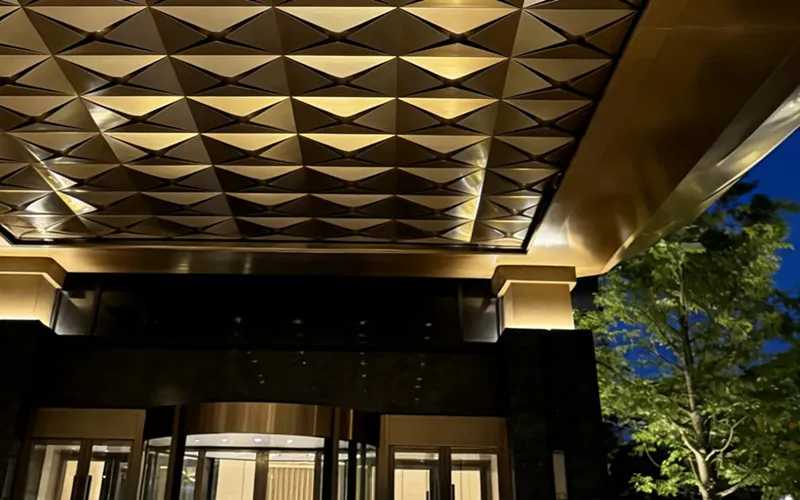
Interior architectural applications include decorative panels, ceiling systems, partitions, trims, and selected flooring and stair components. Compared with exterior walls and roofing, interior applications often place greater emphasis on appearance, dimensional consistency, surface finish, and ease of maintenance.
4.1 Aluminum Ceilings and Suspended Ceiling Systems
Aluminum sheets, coils, and extruded profiles can all be used in ceiling systems.
Common forms include:
Aluminum clip-in ceiling tiles and square ceiling panels;
Linear aluminum ceiling panels;
Aluminum baffle ceilings and grille ceilings;
Aluminum honeycomb ceiling panels;
Perforated aluminum ceiling panels;
Ceiling frames, connectors, and edge trims.
These products differ in structure and manufacturing process. Flat ceiling panels may be fabricated from aluminum sheets or coils, while linear and grille products may be produced through roll forming or extrusion.
For ceilings requiring sound absorption, perforated panels can be combined with acoustic materials and a backing cavity. However, perforated aluminum sheet does not automatically provide a specific level of sound absorption. Actual performance must be evaluated according to the hole pattern, open area, backing material, and overall system design.
4.2 Decorative Panels and Architectural Finishing Components
Aluminum alloys can be finished through coating, anodizing, brushing, polishing, and other suitable processes to achieve different surface appearances.
Applications include:
Interior wall and column cladding;
Door frames, window surrounds, and skirting boards;
Elevator lobbies and public interior spaces;
Building corners, edges, and finishing components;
Selected aluminum components in furniture and fixed decorative systems.
Material selection for these applications should consider appearance, formability, wear resistance, and maintenance requirements. Anodized aluminum, coated aluminum sheet, and machined aluminum components have different characteristics in terms of appearance, durability, and suitability for subsequent processing. They should not be treated as interchangeable in every application.
4.3 Aluminum Checker Plates and Anti-Slip Flooring
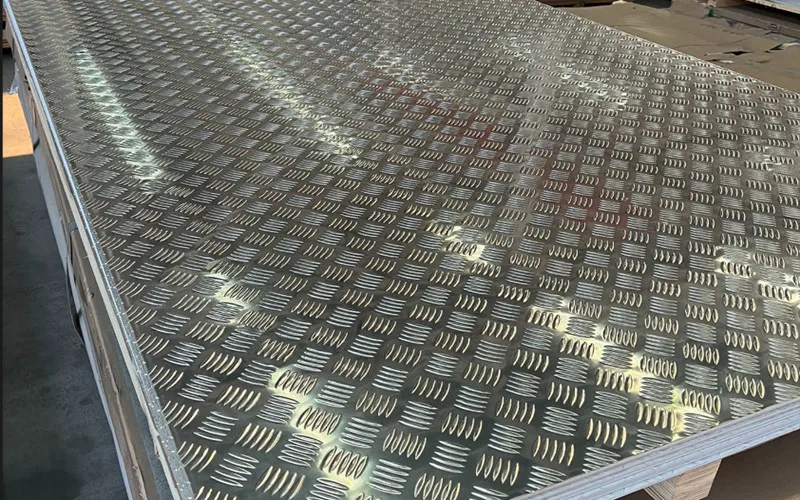
Aluminum checker plate, also known as aluminum tread plate, typically has a raised surface pattern produced through rolling or similar processes. It can be used for certain building and facility components where slip resistance or surface durability is required.
Common applications include:
Stair treads and selected platform panels;
Maintenance walkways and equipment service areas;
Floors in equipment rooms and certain industrial buildings;
Vehicle ramps and other suitable anti-slip areas;
Selected protective panels, kick plates, and edge guards.
When selecting aluminum checker plate, buyers should consider thickness, pattern, panel dimensions, support spacing, and service loads. Areas used for pedestrian access also require consideration of wet-condition slip resistance, drainage, and operating environments.
A raised pattern does not guarantee sufficient slip resistance under all conditions. Actual design should be evaluated according to the intended use and relevant safety requirements.
5. Applications of Aluminum Alloys in Railings, Shading Systems, Lightweight Frames, and Building Components
Beyond large panels and window systems, aluminum alloys are frequently used in the many smaller components found throughout buildings. Aluminum tubes, bars, and extruded profiles serve different purposes in this area.
5.1 Aluminum Square Tubes, Rectangular Tubes, and Round Tubes
Aluminum tubes can be produced in square, rectangular, round, and other cross-sectional shapes through different manufacturing processes. Common architectural applications include:
Balcony railings and stair handrails;
Sunshade frames and decorative grilles;
Canopies, entrance structures, and lightweight frames;
Fences, partitions, and selected outdoor components;
Sign frames and display structures;
Selected equipment supports and building frames.
Square and rectangular tubes have regular cross-sections that facilitate cutting, drilling, welding, and mechanical connections, making them suitable for many general framing applications. Round tubes are commonly used for handrails, support rods, and components that require a circular cross-section.
However, whether an aluminum tube is suitable for a load-bearing component cannot be determined by its shape and dimensions alone. Alloy grade, temper, wall thickness, cross-sectional dimensions, connection methods, and loading conditions all affect structural performance.
5.2 Aluminum Bars, Flat Bars, Angles, and Channels
Aluminum round bars, flat bars, and other bar products can be used for building accessories, machined components, connectors, support parts, and components requiring further processing.
For example, round bars can be turned, drilled, or otherwise machined into specific components. Flat bars, aluminum angles, and channels may be used for selected connections, decorative features, supports, and edge components.
In construction, bars are generally not direct substitutes for window profiles or curtain wall profiles. Their value lies more in machining, custom component manufacturing, and the production of selected structural or auxiliary parts.
It is also important to distinguish aluminum bars from aluminum extruded profiles. A bar is a basic material with a specific cross-section, whereas an extrusion can be designed with a complex non-circular cross-section to provide specific installation, connection, and structural functions.
5.3 Sunshade Louvers and Exterior Decorative Grilles
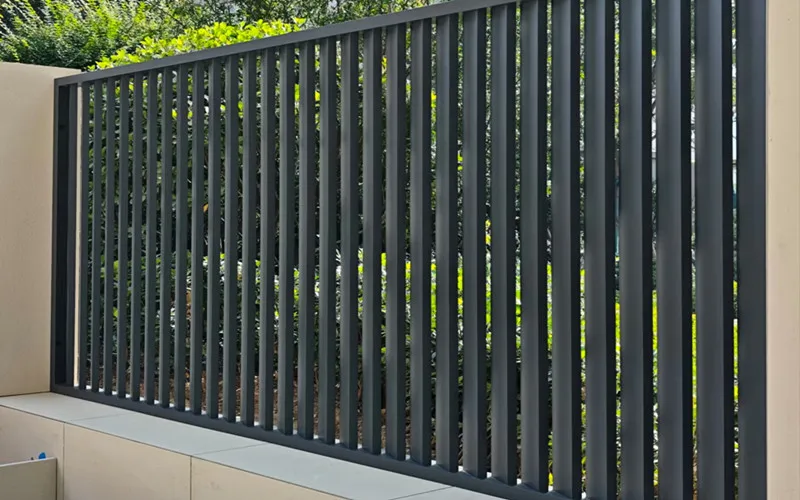
Sunshade louvers and decorative grilles can be manufactured from aluminum extruded profiles, tubes, or fabricated aluminum sheets.
Applications include:
Exterior building shading;
Horizontal or vertical window louvers;
Decorative features for entrances and balconies;
Screening and ventilation around equipment areas;
Exterior facade grilles and visual screens.
These products affect not only building appearance but also solar radiation, natural lighting, and ventilation. Profile geometry, louver angle, spacing, surface color, and installation orientation can all influence the final result.
For large outdoor louver systems, wind loads, connection strength, thermal expansion and contraction, and long-term surface durability must also be considered.
6. Applications of Aluminum Alloys in Building Structures, Industrial Facilities, and Solar Installations
Aluminum alloys can also be used in selected lightweight structures, modular buildings, and building equipment systems. These applications require particular attention to design standards and structural calculations. Not all aluminum tubes, bars, or profiles can automatically be treated as suitable materials for load-bearing structures.
6.1 Lightweight Structures and Modular Buildings
Aluminum profiles and tubes can be used in selected lightweight frames, modular buildings, canopies, equipment platforms, and other building components.
Compared with conventional steel, aluminum alloys have a lower density, which can help reduce component weight. However, aluminum alloys also have a lower elastic modulus than steel, so their stiffness and deflection behavior differ when components have the same geometry.
For actual load-bearing structures, designers must consider strength, stiffness, stability, connection methods, fatigue, temperature changes, and applicable standards. The weight advantage of aluminum cannot replace structural design and safety verification.
6.2 Industrial Buildings and Equipment Frames
Selected auxiliary components in industrial facilities and commercial buildings may also be made from aluminum sheets, tubes, or extruded profiles.
Typical applications include:
Equipment housings and access covers;
Selected lightweight support frames;
Protective components around equipment;
Local platforms, walkways, and auxiliary frames;
Ventilation, screening, and decorative components.
It is important to distinguish between load-bearing structures, equipment frames, and non-load-bearing decorative components. Their requirements for strength, stiffness, surface finish, and connections may differ substantially.
6.3 Solar Mounting Systems and Building-Integrated Photovoltaics
Aluminum alloys also play an important role in solar-related building systems. Common products include photovoltaic module frames, mounting rails, selected support profiles, and connecting components.
In rooftop solar installations, aluminum extruded profiles can be used for mounting rails and parts of the installation structure. Their cross-sectional design must accommodate installation requirements, connection methods, and structural loads.
Building-integrated photovoltaics (BIPV) combine photovoltaic components with building envelopes or other architectural elements. Aluminum may be used for selected frames, mounting structures, or building connection components, depending on the system design.
It is important to distinguish photovoltaic module frames, mounting rails, and structural support brackets. These are different product categories with different technical requirements and functions.
7. How to Select Aluminum Alloys for Construction: Product Forms, Alloy Grades, and Processing Requirements
Selecting aluminum alloys for construction cannot be based solely on the name of the application. Even when two materials are used on the same building facade, they may require different alloys and tempers because of differences in forming methods, surface requirements, and structural functions.
7.1 Typical Applications of Different Aluminum Product Forms
| Aluminum Product Form | Common Building Applications | Main Considerations |
|---|---|---|
| Aluminum sheet and plate | Curtain wall panel materials, perforated panels, decorative panels, checker plates | Thickness, flatness, formability, surface finish |
| Aluminum coil | Prepainted panels, profiled roofing sheets, wall panels, edge trims | Coating system, coil width, formability, thickness consistency |
| Aluminum tubes | Railings, handrails, sunshade frames, selected lightweight structures | Cross-sectional dimensions, wall thickness, alloy temper, connection methods |
| Aluminum bars and flat bars | Machined parts, selected supports and connectors | Diameter or cross-sectional dimensions, strength, machinability |
| Aluminum extruded profiles | Windows, doors, curtain walls, louvers, partitions, decorative components, solar mounting rails | Profile design, wall thickness, dimensional accuracy, surface quality |
| Aluminum honeycomb and composite panels | Facades, interior decoration, ceilings, and related applications | Panel structure, core material, fire performance, connection systems |
These are common relationships between material forms and applications, not fixed rules that make every product suitable for every building project. Final selection must take design conditions and product specifications into account.
7.2 Common Aluminum Alloy Grades Used in Construction
Construction applications involve several aluminum alloy series. The following table lists representative grades and their common application areas.
| Alloy Grade | Common Application Areas | Key Selection Considerations |
|---|---|---|
| 1050, 1060 | Selected decorative sheets and applications requiring high purity or formability | Relatively limited strength; suitability must be verified for the intended use |
| 3003 | Selected building panels, roofing materials, and decorative sheets | Formability, corrosion resistance, and surface finish |
| 3004, 3105 | Selected coated sheets, roofing, and building envelope materials | Coating compatibility, formability, and weather resistance |
| 5005 | Selected architectural decorative panels and applications requiring specific surface finishes | Anodized appearance and surface consistency |
| 5052 | Selected architectural panels, fabricated sheets, and specific outdoor components | Strength, formability, and environmental resistance |
| 6063 | Windows, doors, curtain walls, and other architectural extrusions | Extrudability, surface quality, and profile design |
| 6061 | Selected higher-strength profiles, tubes, and machined components | Strength, machinability, and connection design |
| 6005A | Selected structural profiles requiring a combination of strength and extrudability | Profile design, strength requirements, and project standards |
This table provides typical application directions rather than a fixed allocation of alloy grades to products. Actual selection requires verification of the applicable standard, supply temper, mechanical properties, surface finish, and engineering specifications.
For example, 6061 and 6063 are both 6xxx-series aluminum alloys, but they cannot be treated as directly interchangeable in architectural profile applications simply because they belong to the same alloy series.
For exterior walls, roofing, and other components exposed to outdoor conditions over long periods, long-term suitability should also be evaluated in relation to environmental corrosion, coating systems, fastener materials, dissimilar-metal contact, and maintenance requirements.
7.3 Surface Finishing and Subsequent Processing
Architectural aluminum often requires additional processing or surface finishing, depending on the intended application.
Common processes include:
Coating and prepainting: Provide color and surface protection for sheets, coils, and selected profiles.
Anodizing: Commonly used for architectural decorative profiles and selected sheets to produce a specific appearance and a durable oxide layer.
Cutting and bending: Used for sheet sizing, panel forming, and the fabrication of edge components.
Punching and roll forming: Used for perforated panels, profiled roofing sheets, and other products with specific cross-sections.
Extrusion: Used to manufacture profiles with complex cross-sections for windows, curtain walls, shading systems, and other applications.
Drilling, milling, and other machining operations: Used for connectors, supports, and custom components.
Different processes impose different requirements on material condition and properties. For example, sheet bending requires consideration of bend radius and elongation; complex profile extrusion depends on the alloy's extrusion characteristics; and the appearance of anodized aluminum can be affected by alloy composition, surface condition, and processing parameters.
Therefore, when confirming purchasing specifications, buyers should define not only product dimensions but also the intended downstream processing and final surface requirements.
8. What Factors Should Be Considered When Selecting Aluminum Alloys for Construction?
Construction applications involve several stages, including material selection, fabrication, installation, and long-term service. The following factors should be considered during material selection and procurement.
First, define the function of the component. Distinguish between decorative panels, building envelope materials, framing components, and load-bearing components. Each function has different requirements for strength, stiffness, formability, and safety.
Second, determine the product form and dimensions. Select sheets, coils, tubes, bars, or extruded profiles according to the intended application. Specify thickness, width, length, cross-sectional dimensions, and dimensional tolerances. For complex profiles, cross-sectional drawings and critical dimensions may be necessary.
Third, confirm the alloy grade and temper. Alloy composition and temper affect strength, elongation, formability, and processing behavior. Material should not be selected based solely on the product name or a single mechanical property.
Fourth, evaluate surface finishing and environmental conditions. Exterior buildings, coastal areas, industrial environments, and interior decorative applications may have different requirements for surface quality and durability. Coatings, anodizing, dissimilar-metal contact, and maintenance conditions should all be considered.
Fifth, account for subsequent processing and installation. Cutting, bending, welding, drilling, extrusion, and mechanical connections can influence material selection. For large panels, roofing systems, and complex profiles, equipment compatibility and installation methods should be confirmed in advance.
Sixth, verify standards and project requirements. Construction projects may specify particular material standards, mechanical properties, surface finish grades, dimensional tolerances, fire performance, or structural calculations. Procurement should follow project drawings, technical specifications, and applicable regulations rather than relying solely on general alloy recommendations.
Conclusion
Aluminum alloys are used throughout the building and construction industry, including facades, curtain walls, roofing, windows, doors, interior decoration, shading systems, railings, lightweight frames, and solar-related building components.
Different building applications require different aluminum product forms and processing methods. Aluminum sheets and coils are suitable for fabricating a wide range of panels and building envelope products. Aluminum tubes and bars can be used for selected frames, supports, and machined components, while extruded profiles play an important role in windows, curtain walls, shading systems, and connection assemblies.
Understanding the differences between these products helps ensure more accurate material selection. In practice, aluminum alloys should be selected according to the function of the component, with consideration given to alloy grade, temper, dimensions, surface finish, processing methods, and engineering requirements, rather than treating one aluminum alloy as a universal material for all construction applications.
As building designs increasingly emphasize lightweight construction, aesthetic versatility, fabrication flexibility, and long-term durability, aluminum alloys will continue to play an important role in building envelopes, decorative systems, architectural profiles, and a wide range of auxiliary components. Appropriate material selection and system design are essential to achieving the desired performance from aluminum alloys.