Why Are Electrical Busbars Tin Plated?
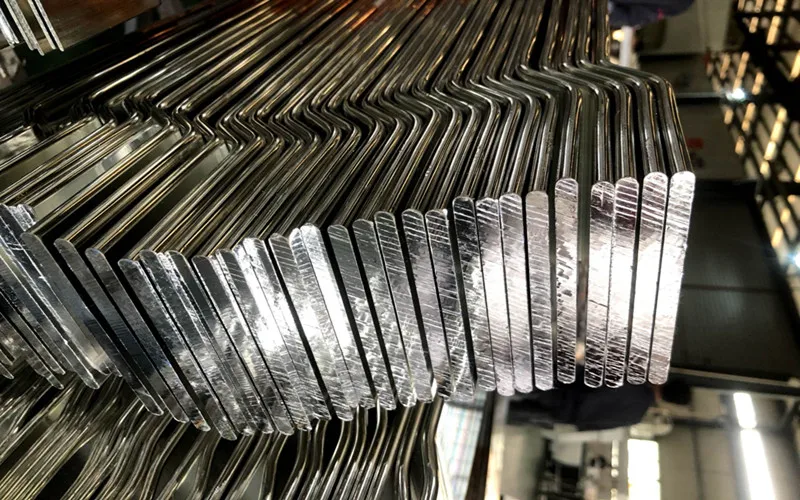
1. Introduction: Why Is Tin Plating Used on Electrical Busbars?
Electrical busbars are widely used in distribution cabinets, switchgear, substations, and industrial power systems to transmit and distribute electrical power. Copper and aluminum are the two most common materials used for busbars. Both offer good electrical conductivity, but the electrical performance of a busbar depends not only on the material itself but also on its surface condition and connection quality.
During long-term operation, busbar surfaces may be affected by oxidation, moisture, and corrosive environments. At bolted connections, surface oxides, insufficient contact pressure, or unstable contact interfaces can increase contact resistance, leading to localized heating.
For this reason, tin plating is a common surface treatment for both copper and aluminum busbars.
Tin plating provides a relatively stable metallic contact surface, helps improve electrical contact conditions, and enhances surface protection. It can be particularly useful for copper-aluminum connections, humid environments, and electrical equipment that requires long-term operational stability.
However, copper and aluminum have different material characteristics, so the specific reasons for tin plating them are not exactly the same.
2. Four Main Benefits of Tin Plating on Busbars
Whether applied to copper or aluminum busbars, tin plating mainly improves electrical contact, oxidation protection, corrosion resistance, and solderability.
2.1 Improving Electrical Contact and Reducing Contact Resistance
Busbars themselves have good electrical conductivity, but current transmission at connection points is also affected by the condition of the contact interface.
When two busbars are bolted together, electrical conduction does not occur across the entire contact surface. Instead, it takes place mainly through the microscopic contact points formed by surface irregularities. If oxides, contaminants, or other substances prevent direct metal-to-metal contact, contact resistance may increase.
Tin plating forms a metallic tin layer on the busbar surface, providing a relatively stable contact interface. Tin is relatively soft and can undergo microscopic plastic deformation under appropriate contact pressure, helping improve the actual contact area.
The heat generated by contact resistance can be calculated using the following formula:
P = I²R
Where:
P: Power loss generated by contact resistance (W)
I: Current passing through the connection (A)
R: Contact resistance (Ω)
For example, if a connection carries a current of 1000 A and has a contact resistance of 10 μΩ, the resulting heat generation is:
P = 1000² × 10 × 10⁻⁶ = 10 W
This shows that even a very small contact resistance can generate noticeable localized heat under high-current conditions. Therefore, controlling contact resistance at busbar connections is an important consideration in electrical connection design.
It should be noted that tin plating alone cannot guarantee low contact resistance. Plating quality, contact pressure, connection design, and installation conditions are equally important.
2.2 Reducing Oxidation-Related Contact Problems
Metals can oxidize when exposed to air. However, the electrical properties of the oxides formed vary depending on the metal.
For example, aluminum readily forms a dense aluminum oxide film on its surface, while copper may also develop oxides and other corrosion products. These surface products can affect direct metal-to-metal contact.
Tin plating separates the base metal from the external environment. As a result, the connection interface is no longer directly exposed to bare copper or aluminum surfaces, helping reduce the impact of base-metal oxidation on electrical connections.
This is particularly important for aluminum busbars because aluminum oxide has high electrical resistance and is a major concern in aluminum busbar connections.
2.3 Improving Corrosion Protection
Busbars may be installed in humid environments, industrial facilities, coastal areas, and other locations where moisture, salt, and corrosive substances can gradually affect metal surfaces.
A tin layer acts as a metallic protective coating. When the plating is complete and uniform, it reduces direct contact between the copper or aluminum base metal and corrosive media.
For electrical equipment designed for long-term operation, surface protection affects not only appearance but also the long-term stability of connection interfaces.
However, tin plating is not an absolute barrier against corrosion. If the coating contains pores, scratches, or locally damaged areas, the base metal may still be exposed to corrosion. Therefore, coating integrity and the actual operating environment must both be considered.
2.4 Improving Solderability
Tin has good solderability, making tin-plated busbars suitable for certain applications involving soldered connections.
Compared with untreated copper or aluminum surfaces, a tin coating can provide a surface that is more suitable for subsequent soldering.
However, improved solderability does not mean that every tin-plated busbar can be directly soldered. The actual soldering method still needs to be determined according to the base material, coating, solder alloy, and connection process.
3. Why Are Aluminum Busbars Tin Plated?
Aluminum busbars offer advantages such as low weight, good electrical conductivity, and relatively low material cost. They are widely used in power transmission and distribution equipment.
However, compared with copper, aluminum has one important characteristic that requires special attention in electrical connections: it readily forms a stable aluminum oxide film on its surface.
3.1 Aluminum Oxide Film Affects Electrical Connections
When aluminum is exposed to air, it naturally forms a dense aluminum oxide film. This film protects the underlying aluminum, but its electrical insulating properties can affect the conductivity of the connection interface.
During bolted connections, even when two contact surfaces are firmly pressed together, the oxide film may still interfere with effective metal-to-metal contact.
If contact resistance becomes too high, localized heating may occur during high-current operation. Over time, this can affect connection stability.
Therefore, aluminum busbar connections generally require proper consideration of surface treatment, contact pressure, and connection design.
3.2 Tin Plating Provides a More Suitable Contact Surface
Tin plating forms a metallic tin layer on the aluminum busbar surface, changing the contact interface from bare aluminum to a tin-plated surface.
Tin is relatively soft and can improve microscopic contact conditions under appropriate pressure, helping reduce the impact of aluminum oxide on the connection interface.
In addition, an intact tin coating can reduce direct exposure of the aluminum base metal to air and moisture, providing a certain level of surface protection.
3.3 Reducing Corrosion Risks in Copper-Aluminum Connections
In actual power distribution systems, aluminum busbars may need to connect with copper terminals, copper connectors, or copper busbars.
Copper and aluminum have different electrochemical potentials. When the two metals are in direct contact in the presence of moisture or other electrolytes, galvanic corrosion may occur, with aluminum generally being more susceptible to corrosion.
Tin plating can help separate copper from the aluminum base metal to some extent, reducing corrosion risks at the connection interface.
However, tin plating cannot completely eliminate galvanic corrosion between copper and aluminum. If the coating is discontinuous, damaged, or exposed to prolonged moisture, corrosion may still occur.
For certain high-current copper-aluminum connections, dedicated connection solutions such as copper-aluminum transition busbars can also be considered, rather than relying solely on tin plating.
Tin-Plated Aluminum Busbars
For projects requiring the lightweight characteristics of aluminum busbars together with improved surface protection and connection performance, tin-plated aluminum busbars are available in different dimensions and specifications.
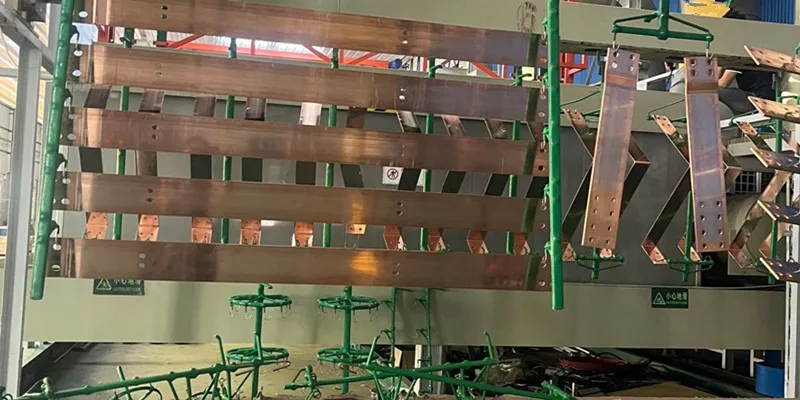
4. Why Are Copper Busbars Tin Plated?
Copper busbars offer high electrical conductivity, good machinability, and excellent connection properties. They are widely used as conductive materials in power distribution systems.
Unlike aluminum busbars, copper busbars are generally not tin plated to address aluminum oxide film issues. Instead, tin plating is mainly used to improve surface protection and connection interface conditions.
4.1 Reducing the Effects of Copper Surface Oxidation
When copper busbars are exposed to air for extended periods, oxides may form on their surfaces. Changes in humidity, temperature, and pollutants can also affect the surface condition.
At electrical connection points, surface oxidation and contamination may affect the contact interface, particularly in equipment designed for long-term operation or where maintenance is difficult.
Tin plating separates the copper base metal from the external environment, reducing direct oxidation of the copper surface and helping maintain a relatively stable connection interface.
4.2 Improving Corrosion Resistance in Different Environments
Although copper has good corrosion resistance, its surface may still be affected by corrosion in humid, salt-laden, and certain industrial environments.
For copper busbars installed in outdoor distribution equipment, coastal facilities, or industrial plants, tin plating can provide additional surface protection.
Compared with bare copper, an intact tin coating reduces direct contact between corrosive media and the copper base metal.
This can be beneficial in electrical connections that require long-term operation and reduced maintenance frequency.
4.3 Providing a Suitable Surface for Electrical Connections
Copper busbars are commonly connected through bolts, connectors, and terminals. For these connection methods, contact interface stability is an important consideration.
The softness of tin can help improve microscopic contact under appropriate connection pressure. However, final connection quality still depends on the busbar surface condition, fastening method, and installation requirements.
Therefore, tin-plated copper busbars are commonly used in electrical systems where surface protection and stable connection performance are important.
4.4 Improving Solderability for Subsequent Processing
For certain copper busbars that require soldered connections or subsequent processing, a tin coating can improve surface solderability.
This is also one of the reasons tin-plated copper busbars are used in some electrical connection components and conductive parts.
For electrical applications requiring surface protection, good solderability, and a stable contact interface, suitable tin-plated copper busbars can be selected according to actual operating conditions.
5. Tin-Plated vs. Untreated Busbars: What Is the Difference?
Tin plating does not change the base material of a busbar. Instead, it adds a metallic coating to the copper or aluminum surface. Therefore, tin plating mainly affects surface properties and connection interfaces rather than the fundamental characteristics of the base material.
The following table highlights the main differences between tin-plated and untreated busbars.
| Comparison | Untreated Busbars | Tin-Plated Busbars |
|---|---|---|
| Surface condition | Exposed copper or aluminum base metal | Covered with a tin coating |
| Surface oxidation | Base metal directly exposed to the environment | Coating helps reduce direct exposure of the base metal |
| Contact interface | Affected by the surface condition of the base metal | Provides a relatively stable metallic contact surface |
| Corrosion resistance | Depends on the base material and environment | Tin coating provides additional surface protection |
| Solderability | Depends on the material and surface treatment | Generally offers better surface solderability |
| Connection performance | Depends on surface condition and connection design | Still requires consideration of coating quality and connection conditions |
It should be noted that tin plating does not increase the bulk electrical conductivity of the busbar. Since tin has lower electrical conductivity than copper and aluminum, its main purpose is to improve surface properties rather than increase the current-carrying capacity of the base material.
Similarly, tin-plated busbars cannot completely eliminate contact resistance, corrosion, or connection loosening. Proper connection design and correct installation remain essential.
6. Is Tin Plating Always Necessary for Electrical Busbars?
Not all electrical busbars require tin plating.
Whether tin plating is necessary depends on the busbar material, operating environment, connection materials, and equipment operating conditions.
6.1 Consider the Base Material
Copper and aluminum have different surface characteristics, so the practical purposes of tin plating also differ.
For aluminum busbars, special attention should be paid to the effects of aluminum oxide film on the connection interface. For copper busbars, the main considerations are generally surface oxidation, corrosion protection, and subsequent processing requirements.
When selecting a surface treatment, the base material and connection application should be identified first.
6.2 Consider the Operating Environment
In ordinary indoor and dry environments, bare copper busbars or properly treated aluminum busbars may already meet the requirements of certain applications.
However, in high-humidity, coastal salt spray, or corrosive environments, surface protection may become more important.
For these applications, coating integrity, connection sealing, and overall corrosion protection should be considered together.
6.3 Consider the Connection Structure
The connection method also affects whether tin plating is required.
For example:
Copper-to-copper connections: Tin plating can be selected according to surface protection, connection requirements, and operating conditions.
Aluminum-to-aluminum connections: Special attention should be paid to oxide films and contact interface treatment.
Copper-to-aluminum connections: Galvanic corrosion must be considered, and connection solutions such as copper-aluminum transition busbars may be appropriate.
For high-current applications, contact pressure, connection area, bolt specifications, and temperature rise requirements must also be considered.
Therefore, tin plating should be regarded as part of the busbar surface treatment solution, rather than a standalone method for solving all electrical connection problems.
7. Conclusion
The main purpose of tin plating electrical busbars is to improve metal surface conditions, provide a relatively stable contact interface for electrical connections, and offer additional surface protection.
For aluminum busbars, tin plating mainly addresses connection problems associated with aluminum oxide films and helps reduce corrosion risks at copper-aluminum interfaces. For copper busbars, tin plating is more commonly used to reduce the effects of surface oxidation, improve corrosion resistance, and enhance solderability.
Whether selecting tin-plated copper busbars or tin-plated aluminum busbars, the final decision should be based on the base material, operating environment, connection structure, and electrical requirements.
Coating quality is just as important as the quality of the busbar material itself. Only by combining suitable materials, surface treatments, and connection designs can different electrical systems meet their requirements for connection performance and long-term operational stability.