What Is Aluminum Homogenization? Process, Purpose and Effects on Aluminum Bars
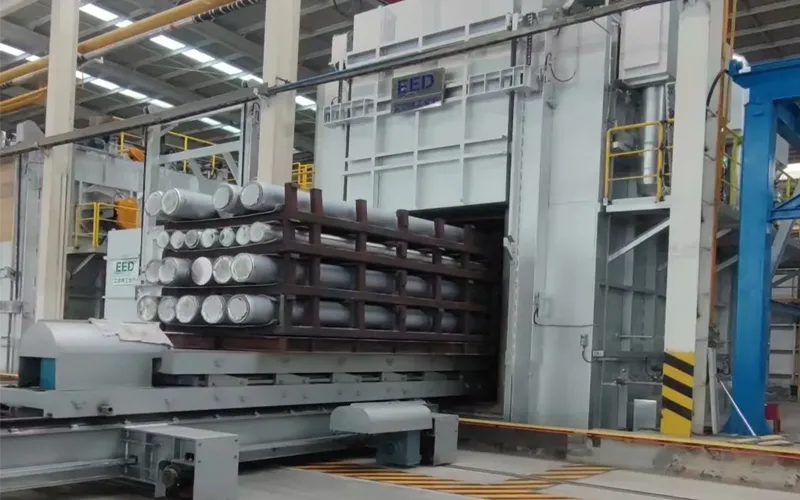
Aluminum homogenization, also called homogenizing treatment, is a heat treatment mainly applied to aluminum alloy cast billets before further processing. It is used to reduce chemical segregation, adjust the distribution of second phases, and improve the microstructural uniformity of the material.
For aluminum bars, whether homogenization is required depends on the alloy, product form, manufacturing route, and intended application. It is particularly relevant to cast billets used for extrusion and other hot-working processes, but it is not a treatment that every finished aluminum bar must undergo before shipment.
1. What Is Aluminum Homogenization?
Aluminum homogenization is a controlled heating and cooling process applied to aluminum alloy cast material.
During casting, alloying elements do not always distribute uniformly throughout the aluminum matrix. Some elements may concentrate in certain areas, while intermetallic compounds and other second phases may form along grain boundaries or between dendrites.
Homogenization is used to reduce these differences in the cast structure and make the material more suitable for subsequent processing.
1.1 Why Is Homogenization Needed?
When aluminum alloy solidifies, the alloying elements and other phases can become unevenly distributed because of the solidification process.
This may result in:
Chemical segregation
Uneven distribution of second phases
Non-uniform microstructure
Less stable hot-working behavior
A suitable homogenization treatment allows diffusion to redistribute alloying elements and modifies the morphology and distribution of some second phases.
1.2 What Happens During Homogenization?
During homogenization, the cast aluminum material is heated to a controlled temperature and held for a specific period.
The exact temperature and holding time depend on the alloy composition, billet size, casting condition, and production requirements.
The main changes include:
Reduction of chemical segregation
Redistribution of alloying elements
Modification or dissolution of certain low-melting-point phases
Adjustment of intermetallic compounds
Improvement of microstructural uniformity
The purpose is not simply to make the aluminum "softer" or "stronger," but to prepare the cast material for more stable downstream processing.
2. Which Step Homogenization is in the Aluminum Bar Production Process?
For products that require homogenization, it normally takes place after casting and before subsequent hot-working processes.
A typical production route can be simplified as:
Melting → Casting → Homogenization (if required) → Subsequent Processing → Final Heat Treatment / Temper Control → Finished Product
2.1 Why Is Homogenization Performed After Casting?
Homogenization is mainly intended to address structural and compositional conditions created during solidification.
Therefore, it is generally carried out after the aluminum alloy has been cast into billets or other cast forms.
After homogenization, the material can enter processes such as:
Extrusion
Forging
Rolling
Other hot-working operations
This is why homogenization is particularly important for aluminum billets intended for extrusion and other hot-working processes.
It is also important to understand that homogenization is not necessarily the final heat treatment performed before shipment.
If homogenization was already carried out at the billet stage, there is normally no need to repeat the same operation simply because the material is later supplied as a finished aluminum bar.
3. Why Aluminum Need Homogenization?
The main purpose of homogenization is to improve the cast-state structure so that the material behaves more consistently during subsequent processing.
3.1 Reduces Cast-State Segregation
During solidification, alloying elements may become concentrated in different regions of the cast structure.
Homogenization promotes diffusion and reduces these composition differences, resulting in a more uniform material.
3.2 Adjusts Second Phases and Intermetallic Compounds
Aluminum alloys contain various intermetallic compounds and second phases.
Their size, morphology, and distribution can affect hot working and subsequent heat treatment.
Homogenization can modify these phases and make their distribution more suitable for downstream processing.
3.3 Improves Downstream Thermal Processing
For extrusion billets, a more uniform microstructure can contribute to more stable extrusion behavior.
This can help reduce problems associated with uneven deformation, localized melting, or unstable material behavior during hot working.
For this reason, homogenization is commonly used for many aluminum extrusion billets, especially in alloy systems where segregation is more significant.
3.4 Provides a More Stable Basis for Subsequent Heat Treatment
For heat-treatable aluminum alloys, the condition of the material before solution treatment and aging can influence the final microstructure and mechanical properties.
Homogenization does not replace solution treatment or aging. Instead, it helps provide a more suitable and consistent starting structure for subsequent processing and heat treatment.
4. Difference: Homogenized vs Non-Homogenized Aluminum
The difference is mainly related to the condition of the cast structure and its suitability for subsequent processing.
| Item | Homogenized Material | Non-Homogenized Material |
|---|---|---|
| Chemical distribution | More uniform | More segregation may remain |
| Second phases | Distribution and morphology are adjusted | Cast-state distribution remains |
| Microstructural uniformity | Improved | Relatively less uniform |
| Hot working | Generally more stable | May be more sensitive to casting condition |
| Extrusion suitability | Commonly preferred for many alloy systems | Depends on alloy and production route |
| Final performance | Provides a more stable basis for subsequent processing | Does not necessarily mean the final product is defective |
A key point is that non-homogenized does not automatically mean poor-quality aluminum.
Whether homogenization is necessary depends on the alloy, product form, manufacturing process, and intended application.
5. Is Every Aluminum Bar Homogenized?
No. Not every aluminum bar needs to undergo a separate homogenization treatment.
Whether homogenization is used depends mainly on:
Alloy grade
Product form
Casting and processing route
Downstream application
Final temper
Applicable standards and customer requirements
5.1 Aluminum Cast Billets for Extrusion and Other Hot Working
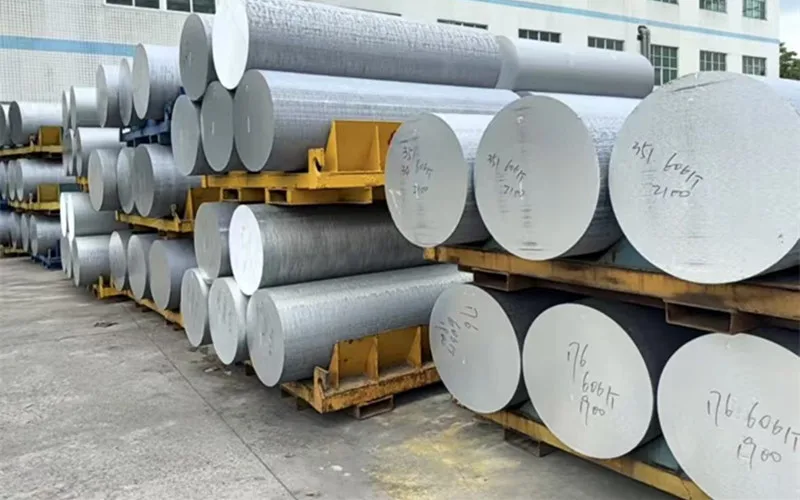
For cast aluminum billets used for extrusion and other hot-working processes, homogenization is commonly used.
For example, 6063, 6061, and 6082 are widely used in aluminum extrusion. Homogenization of the cast billet can help reduce segregation, improve structural uniformity, and provide more stable conditions for extrusion.
You can learn more about these aluminum bar products here:
For high-strength 2xxx and 7xxx series aluminum alloys, homogenization can also be important when the cast billets are intended for demanding extrusion or forging applications because these alloy systems generally contain higher levels of alloying elements and can have more complex cast structures.
The important distinction is that this refers primarily to the cast billet and its production route, rather than meaning that every finished 2xxx or 7xxx aluminum bar must be homogenized immediately before shipment.
5.2 Finished Aluminum Bars
For a finished aluminum bar, homogenization may have taken place much earlier in the production process.
For example, a 6061-T6 aluminum round bar has a final T6 temper. The T6 designation describes the final heat-treated condition of the material; it does not mean that the material has or has not been homogenized.
If the bar was produced from a cast billet that underwent homogenization before extrusion or other processing, that homogenization was already part of the upstream production route.
Therefore, you cannot assume that a finished aluminum bar was never homogenized simply because "Homogenized" is not separately marked on the final product.
5.3 Some Aluminum Alloys May Not Require Homogenization
Not every aluminum alloy requires a separate homogenization step.
For example:
Pure aluminum (1xxx series, such as 1050 and 1060): The composition is relatively simple, with very limited alloy segregation. Many producers use the material directly in the cast condition without a separate homogenization treatment.
The actual production route still depends on the product form, processing method, and application requirements.
6. Difference: Homogenization vs Annealing vs Solution Treatment vs Aging
These four heat-treatment terms are sometimes confused, but they have different purposes.
| Treatment | Main Purpose |
|---|---|
| Homogenization | Reduce cast-state segregation and adjust the distribution of second phases |
| Annealing | Reduce hardness, improve ductility, relieve some internal stress, and adjust the microstructure |
| Solution Treatment | Dissolve soluble alloying elements into the aluminum matrix before aging |
| Artificial Aging | Promote precipitation strengthening and increase mechanical strength |
The most important distinction is:
Homogenization is not the same as T6 heat treatment.
For example, 6061-T6 may have undergone homogenization at the billet stage, followed by extrusion and later solution treatment and artificial aging to achieve the final T6 condition.
7. Does Homogenization Directly Increase the Final Strength of Aluminum?
Not necessarily.
Homogenization mainly improves the condition of the cast material and its suitability for subsequent processing. It is not normally considered the primary strengthening treatment for the final aluminum bar.
The final tensile strength, yield strength, elongation, and other mechanical properties depend on a combination of factors, including:
Alloy composition
Casting condition
Homogenization
Extrusion, rolling, or forging
Solution treatment
Aging
Final temper
Therefore, a homogenized billet does not automatically mean that the finished aluminum bar will have higher strength.
Instead, homogenization helps create a more stable starting condition for the processes that follow.
8. What Do Buyers Need to Know When Purchasing Aluminum Bars?
For buyers, the importance of homogenization depends on what type of aluminum product is being purchased.
For Aluminum Billet or Extrusion Billet
Homogenization is worth asking about, especially when purchasing billets for extrusion or other hot-working processes.
Depending on the alloy and application, buyers may want to confirm:
Casting and processing route
Whether homogenization is included
Alloy chemical composition
Intended downstream process
Applicable standard
Mill Test Certificate (MTC)
For Finished Aluminum Round, Flat, or Rectangular Bars
For finished bars, it is usually more useful to focus on:
Alloy grade
Temper
Applicable standard
Dimensions and tolerances
Mechanical properties
Chemical composition
Mill Test Certificate (MTC)
A finished bar should not be judged only by whether the word "homogenized" appears in the product description.
The more important question is whether the alloy, manufacturing route, final temper, mechanical properties, dimensions, and applicable standard meet the requirements of the intended application.
9. Conclusion
Aluminum homogenization is mainly used to improve the uniformity of the cast structure before further processing.
It is generally performed after casting and before downstream hot working, particularly for billets used in extrusion and forging.
Its main effects include reducing chemical segregation, adjusting second phases and intermetallic compounds, improving microstructural uniformity, and providing a more stable basis for subsequent processing and heat treatment.
However, not every aluminum bar needs a separate homogenization treatment.
For many 6xxx-series extrusion billets, as well as cast billets of certain 2xxx and 7xxx alloys intended for demanding hot-working applications, homogenization is an important part of the production route. Some 1xxx-series products and other production routes may not require a separate homogenization step.
For finished aluminum bars, homogenization may already have been completed at an earlier stage of production. Therefore, buyers should evaluate the material based on the alloy, product form, manufacturing route, final temper, applicable standard, and actual application requirements, rather than treating "homogenized" as a standalone indicator of product quality.