Heat Pipe Evacuation Tube vs. Refrigeration Capillary Tube
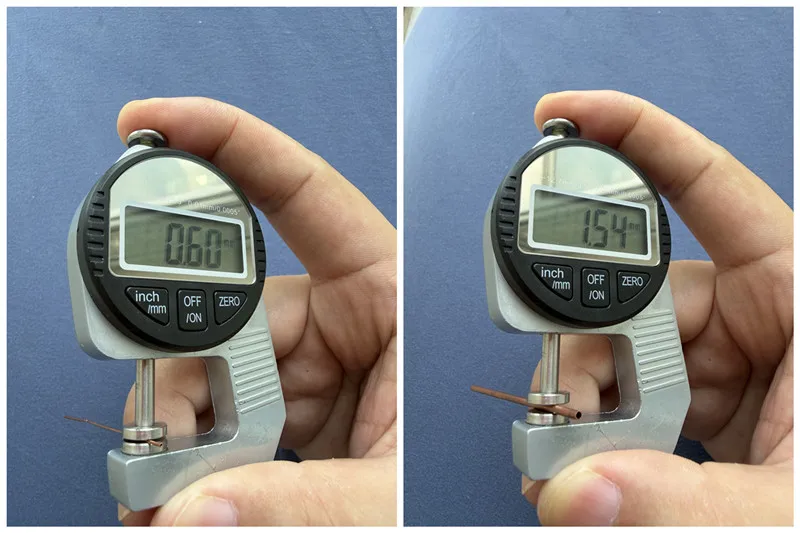
Small-diameter copper tubes are widely used in thermal management and refrigeration industries. Since both heat pipe evacuation tubes and refrigeration capillary tubes may use small, thin-wall copper tubes, they can sometimes be confused during procurement and technical selection.
In fact, although these two types of copper tubes may look similar in terms of appearance and dimensions, they serve completely different functions:
Heat pipe evacuation tubes are mainly used during the manufacturing of heat pipes or vapor chambers for evacuation, degassing, and working-fluid charging; refrigeration capillary tubes, on the other hand, are functional components in refrigeration systems that continuously throttle the refrigerant and control its flow during system operation.
Therefore, they cannot be considered interchangeable simply because they are both "small-diameter copper tubes." The material, dimensions, processing methods, and final operating conditions all need to be determined according to the specific application.
What Is a Heat Pipe Evacuation Tube?
A heat pipe is a thermal management component that transfers heat through the evaporation, vapor migration, condensation, and liquid return of a working fluid.
A typical heat pipe contains:
Evaporation zone
Condensation zone
Working fluid
Vapor space
Wick structure or other liquid-return structure
During heat pipe manufacturing, a suitable vacuum environment needs to be established inside the heat pipe, and a specified amount of working fluid needs to be charged. Therefore, manufacturers usually install a small copper tube on the heat pipe to serve as a passage for evacuation, degassing, and fluid charging.
Depending on the manufacturer and process, this type of copper tube may be called:
Heat Pipe Evacuation Tube
Heat Pipe Charging Tube
Heat Pipe Fill Tube
Heat Pipe Degassing Tube
Heat Pipe Vacuum Tube
Although the names vary, their basic function is to provide a connection passage between the heat pipe manufacturing process and the vacuum and fluid-charging equipment.
Basic Working Process of a Heat Pipe Evacuation Tube
A typical manufacturing process can be understood as:
Heat pipe fabrication → Internal cleaning → Connection of evacuation/charging tube → Vacuum evacuation → Removal of air and non-condensable gases → Working-fluid charging → Sealing
Therefore, the main function of the evacuation tube is not to continuously transport gas during heat pipe operation, but to serve the manufacturing stage of the heat pipe.
After evacuation and working-fluid charging are completed, the evacuation tube usually needs to be finally sealed by welding, pinching, crimping, cutting, or other methods, allowing the heat pipe to maintain the designed sealed condition.
Why Does a Heat Pipe Need to Be Evacuated?
A heat pipe relies on phase change of the working fluid for efficient heat transfer. If too much air or other non-condensable gas remains inside, it may affect vapor movement and condensation inside the heat pipe and change the internal pressure conditions.
Therefore, heat pipe manufacturing typically involves:
Evacuation → Degassing → Working-Fluid Charging → Sealing
This process places certain requirements on the copper tube's material purity, internal cleanliness, dimensional consistency, and subsequent sealing capability.
What Is a Refrigeration Capillary Tube?
A refrigeration capillary tube is also a small-diameter precision copper tube, but its function is completely different from that of a heat pipe evacuation tube.
It is a throttling and flow-control component in a refrigeration system, usually installed between the condenser and evaporator.
A typical refrigeration cycle is:
Compressor → Condenser → Refrigeration Capillary Tube → Evaporator → Compressor
The compressor compresses low-pressure refrigerant gas into high-temperature, high-pressure gas. After entering the condenser, the refrigerant releases heat to the surroundings and gradually condenses into high-pressure liquid or a refrigerant with a high liquid content.
The refrigerant then enters the capillary tube.
Because the capillary tube has a small internal diameter and a certain effective length, the refrigerant experiences significant flow resistance as it passes through the tube, resulting in a noticeable pressure drop and limiting the refrigerant flow entering the evaporator.
Therefore, a refrigeration capillary tube mainly performs two functions:
1. Producing a Pressure Drop
It introduces high-pressure refrigerant from the condenser side into the low-pressure environment on the evaporator side.
2. Controlling Refrigerant Flow
The internal diameter and effective length of the capillary tube, as well as the refrigerant type and system operating conditions, all affect refrigerant flow.
Therefore, a refrigeration capillary tube is not simply a "small copper tube," but a metering and throttling component in a refrigeration system.
For customers looking for precision copper capillary tubes, please refer to our Precision Copper Capillary Tube product page to learn more about the available copper alloys, dimensions, and processing capabilities.
What Are the Differences Between a Heat Pipe Evacuation Tube and a Refrigeration Capillary Tube?
Although both may use small-diameter copper tubes, their design purposes are completely different.
| Comparison Item | Heat Pipe Evacuation/Charging Tube | Refrigeration Capillary Tube |
|---|---|---|
| Main Application | Heat Pipe / Vapor Chamber | Refrigeration / HVAC |
| Main Function | Evacuation, degassing, and working-fluid charging | Throttling, pressure drop, and refrigerant flow control |
| Stage of Use | Mainly used during the manufacturing process | Remains in operation throughout the refrigeration system |
| Working Medium | Heat pipe working fluid | Refrigerant |
| Typical Material | Cu-OF / CW008A / C10200 | Cu-DHP / CW024A / C12200 |
| Final Condition | Usually requires sealing | Remains in the refrigeration circuit |
| Part of the Final Working Circuit? | Usually not | Yes |
| Key Dimensions | Determined according to evacuation, fluid-charging, and sealing processes | Internal diameter and effective length are very important |
| Key Requirements | Cleanliness, vacuum compatibility, and sealing capability | Flow characteristics, pressure drop, and dimensional consistency |
| Typical Equipment | Heat Pipes, Vapor Chambers | Refrigerators, Freezers, AC Systems |
As shown in the table, although both products are precision small-diameter copper tubes, they actually belong to two completely different technical systems.
A heat pipe evacuation tube solves the problem of "how to manufacture a sealed, evacuated heat pipe filled with working fluid"; a refrigeration capillary tube solves the problem of "how to throttle and control refrigerant flow during refrigeration system operation."
Why Do the Two Applications Use Different Copper Materials?
Material selection is not simply determined by the idea that "the purer the copper tube, the better." It needs to be considered together with the operating environment, processing methods, and final function.
Heat Pipe Evacuation Tube: Cu-OF / CW008A / C10200
For evacuation, degassing, and charging tubes used in heat pipe manufacturing, Cu-OF / CW008A / C10200 is one type of oxygen-free copper material worth considering.
This material has low oxygen content and high purity, offering certain advantages in applications requiring vacuum processing, cleanliness control, and subsequent sealing.
When selecting materials for heat pipe evacuation tubes, the following factors generally need to be considered:
Material purity
Oxygen content
Internal surface cleanliness
Vacuum process compatibility
Compatibility with the heat pipe body material
Compatibility with the working fluid
Final sealing method
Therefore, heat pipe evacuation tubes should not simply be selected as ordinary copper tubes.
Refrigeration Capillary Tube: Cu-DHP / CW024A / C12200
Refrigeration capillary tubes typically need to undergo processing such as bending, cutting, brazing, and connection with other refrigeration copper tubes. Therefore, formability and brazing compatibility are particularly important.
Cu-DHP / CW024A / C12200 is one of the commonly used phosphorus-deoxidized copper materials for refrigeration copper tubes, offering good formability and brazing compatibility.
When selecting materials for refrigeration capillary tubes, the following factors should generally be considered:
Refrigerant type
Working pressure
Tube diameter
Wall thickness
Bending requirements
Brazing process
Compatibility with the refrigerant and refrigeration oil
Dimensional consistency
Therefore, compared with heat pipe evacuation tubes, material selection for refrigeration capillary tubes focuses more on refrigeration system operation and tube processing.
What Are the Dimensional Requirements for the Two Types of Copper Tubes?
Although both are small-diameter copper tubes, the importance of different dimensional parameters is not exactly the same.
Heat Pipe Evacuation Tube
Heat pipe evacuation tubes typically need to consider:
Outer diameter
Inner diameter
Wall thickness
Length
Evacuation speed and flow rate
Working-fluid charging method
Sealing method
Connection method to the heat pipe body
For this type of tube, wall thickness and sealing process are particularly worth considering.
If the wall is too thin, it may affect subsequent pinching, welding, or other sealing operations. If the dimensions do not match the heat pipe manufacturing equipment, they may also affect evacuation and fluid-charging efficiency.
Therefore, heat pipe evacuation tube dimensions are usually determined according to the specific manufacturing equipment and process.
Refrigeration Capillary Tube
Refrigeration capillary tubes place greater emphasis on:
Inner diameter
Effective length
Wall thickness
Refrigerant type
Working pressure
Flow requirements
Cooling capacity
Among these, inner diameter and effective length are usually the two most critical parameters.
Even if the material is the same, different internal diameters or effective lengths can result in significant differences in refrigerant flow resistance and flow rate.
Therefore, a refrigeration capillary tube cannot simply be selected based on the principle that "the smaller the outer diameter, the better."
How Do the Processing Requirements Differ Between the Two Copper Tubes?
Key Processing Requirements for Heat Pipe Evacuation Tubes
Heat pipe evacuation tubes mainly serve the heat pipe manufacturing process, so the key processing requirements generally include:
Precision cutting
Internal and external surface cleaning
Degreasing
Deburring
End forming
Welding or brazing
Pinching or crimping
Final sealing
Among these, cleaning and degreasing are particularly important.
Residual oil, particles, or other contaminants may enter the interior of the heat pipe and affect the vacuum environment or working fluid.
Key Processing Requirements for Refrigeration Capillary Tubes
Refrigeration capillary tubes place greater emphasis on:
Internal diameter consistency
Tube length accuracy
Straightness
Surface quality
Cutting
Deburring
Bending
Coiling
Since the capillary tube controls refrigerant flow, dimensional consistency is particularly important for mass production of refrigeration equipment.
What Are the Typical Applications of Heat Pipe Evacuation Tubes?
Heat pipes and vapor chambers are widely used in electronic thermal management, so evacuation tubes mainly serve the manufacturing processes of these products.
Consumer Electronics
Laptop cooling modules
CPU coolers
GPU cooling systems
Smartphones and portable electronic devices
Gaming devices
Data Centers and Communication Equipment
Server cooling
Communication equipment cooling
Data center thermal management
High-power computing equipment
Power Electronics
Power modules
Inverters
IGBT cooling
Power supply equipment
The heat pipes or vapor chambers used in these products typically need to undergo vacuum evacuation and working-fluid charging, so corresponding evacuation/charging tubes are required to complete the manufacturing process.
What Are the Typical Applications of Refrigeration Capillary Tubes?
Refrigeration capillary tubes are mainly used in relatively simple refrigeration systems with relatively stable refrigeration loads.
Household Refrigeration
Household refrigerators
Freezers
Freezing cabinets
Small refrigeration equipment
Commercial Refrigeration
Beverage refrigerators
Display refrigerators
Small commercial freezing equipment
Small ice-making equipment
HVAC and Small Heat Pumps
Small air conditioners
Dehumidifiers
Small heat pumps
Small refrigeration units
It should be noted that not all refrigeration systems use capillary tubes. Refrigeration systems with large load variations or higher control requirements may also use thermostatic expansion valves (TXVs) or electronic expansion valves (EEVs).
Can a Heat Pipe Evacuation Tube Replace a Refrigeration Capillary Tube?
Generally, no.
Even if the outer diameter, wall thickness, or even material of the two tubes appears similar, they cannot be considered interchangeable based on dimensions alone.
This is because their design objectives are completely different.
Heat Pipe Evacuation Tube
Design focus:
Vacuum + Degassing + Charging + Sealing
In other words:
Evacuation + Degassing + Working-Fluid Charging + Sealing
Refrigeration Capillary Tube
Design focus:
Pressure Drop + Refrigerant Flow Control
In other words:
Pressure Drop + Refrigerant Flow Control
A refrigeration capillary tube needs to be matched according to the refrigerant, system pressure, cooling capacity, internal diameter, and effective length, while a heat pipe evacuation tube needs to be matched with the heat pipe material, working fluid, vacuum equipment, and sealing process.
Therefore, even if both use small-diameter copper tubes, they should not be considered interchangeable simply because "the tube is very small."
How to Choose the Right Copper Capillary Tube?
The simplest way to determine the appropriate copper tube is to first identify its actual function in the system.
If the Copper Tube Is Used for Refrigerant Throttling Choose: Refrigeration Capillary Tube
Key information to provide:
Refrigerant type
Inner diameter
Length
Outer diameter or wall thickness
Condensing temperature
Evaporating temperature
Working pressure
Cooling capacity
Existing capillary tube specifications, if it is a replacement
Among these, inner diameter and effective length are very important information.
If the Copper Tube Is Used for Heat Pipe Evacuation, Degassing, or Working-Fluid Charging Choose: Heat Pipe Evacuation / Charging Tube
Key information to provide:
Heat pipe or vapor chamber body material
Working fluid
Outer diameter
Inner diameter
Wall thickness
Length
Evacuation method
Fluid-charging method
Sealing method
Cleanliness requirements
Operating temperature range
Among these, material compatibility, internal cleanliness, wall thickness, and final sealing process deserve particular attention.
Conclusion
Although heat pipe evacuation tubes and refrigeration capillary tubes may both use small-diameter precision copper tubes, they are not the same type of functional product.
Heat pipe evacuation tubes are mainly used during the manufacturing process of heat pipes and vapor chambers:
Evacuation → Degassing → Working-Fluid Charging → Sealing
While refrigeration capillary tubes are operating components in refrigeration systems:
Condenser → Capillary Tube Throttling → Evaporator
The former mainly focuses on vacuum, cleanliness, fluid charging, and sealing processes, while the latter mainly focuses on pressure drop, refrigerant flow, internal diameter, and effective length.
In terms of materials, Cu-OF / CW008A / C10200 can be considered for relevant small copper tubes used in heat pipe manufacturing, while refrigeration capillary tubes are generally more suitable for refrigeration copper materials such as Cu-DHP / CW024A / C12200.
Therefore, when purchasing small-diameter copper tubes, the most important thing is not simply to tell the supplier, "I need a copper capillary tube," but to clearly specify:
Whether the tube will ultimately be used for refrigerant throttling or for heat pipe evacuation, degassing, and working-fluid charging.
Once the application is clearly defined, the appropriate copper material, inner diameter, outer diameter, wall thickness, length, and processing method can then be determined.