Oxygen-Free Copper Tubes: Properties, Grades, Manufacturing, and Applications
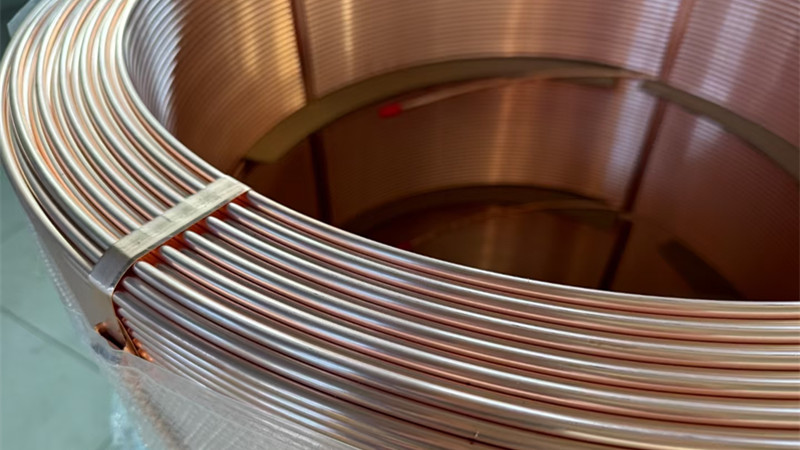
Oxygen-free copper tubes are widely used across electrical, electronic, industrial, and thermal systems.
However, many readers still ask fundamental questions: What does “oxygen-free” really mean? Is it different from normal copper? How is it made, and where is it actually used in real life?
This article provides a clear and practical overview of oxygen-free copper tubes, covering their definition, production process, key characteristics, common grades, and real-world applications.
1. What is an oxygen-free copper tube?
An oxygen-free copper tube is a copper tube produced from copper with extremely low oxygen content, typically measured in parts per million (ppm).
Unlike conventional copper materials, oxygen-free copper is refined and processed under carefully controlled conditions to prevent oxygen from dissolving into the copper matrix.
This results in copper with higher purity, improved conductivity, and greater reliability in demanding applications.
In simple terms: Oxygen-free copper tubes are designed for applications where electrical performance, thermal efficiency, and material stability matter more than basic structural strength.
2. If It's “oxygen-free,” what is it compared to?
This is one of the most common questions.
Copper materials are often divided into two broad categories:
Copper with Oxygen (Oxygen-Bearing Copper)
Produced by conventional smelting and refining
Contains a measurable amount of oxygen (usually as copper oxide)
Commonly used in plumbing, construction, and general industrial applications
These materials are cost-effective and perfectly suitable for many everyday uses.
Oxygen-Free Copper
Produced under controlled or protective atmospheres
Oxygen content is reduced to very low levels (typically ≤ 10 ppm)
Minimizes internal oxides and defects
The key difference is not appearance, but performance under electrical, thermal, and hydrogen-rich conditions.
3. How are oxygen-free copper tubes made?
Oxygen-free copper tubes are produced using special refining and casting processes, such as:
Melting high-purity copper under vacuum or protective atmospheres
Continuous casting to prevent oxygen pickup
Hot extrusion and cold drawing to form tubes
Precision annealing to optimize conductivity and formability
Throughout the process, oxygen exposure is tightly controlled, ensuring consistent purity and internal structure.
This manufacturing route is more demanding than conventional copper tube production, but it delivers superior material stability and performance.
4. Key characteristics of oxygen-free copper tubes
Oxygen-free copper tubes offer several important advantages:
High Electrical Conductivity
Low oxygen and impurity levels reduce electrical resistance.Excellent Thermal Conductivity
Efficient heat transfer makes these tubes ideal for cooling systems.Resistance to Hydrogen Embrittlement
Low oxygen content minimizes reactions with hydrogen at elevated temperatures.Clean Internal Structure
Beneficial for fluid cooling circuits and sensitive systems.Good Formability and Bending Performance
Suitable for coiled supply, bending, and compact system layouts.
5. Is oxygen-free copper better than “pure copper”?
This question often causes confusion.
Technically, oxygen-free copper is still pure copper—just with tighter control over oxygen and impurities.
Whether it is “better” depends on the application:
For general plumbing or construction, oxygen-free copper offers little practical advantage.
For electrical, electronic, thermal, or high-reliability systems, oxygen-free copper provides measurable benefits in conductivity, stability, and long-term performance.
In other words: oxygen-free copper is not universally better—but it is better suited for critical and performance-driven applications.
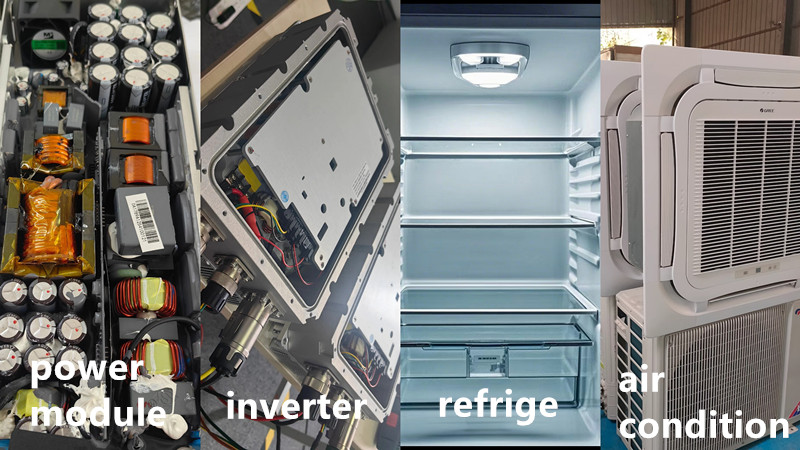
6. Applications
Oxygen-free copper tubes are used across a wide range of industries, where electrical conductivity, thermal performance, and material reliability are required.
Electrical & Electronic Applications
Oxygen-free copper tubes are widely used in power electronics, electronic cooling systems, and high-current electrical assemblies.
Typical examples include liquid cooling circuits for IGBT and SiC modules, precision electronic equipment, and oxygen free copper tubes for electrical and electronic applications designed for stable thermal and electrical performance.
Refrigeration & Air Conditioning
Oxygen-free copper tubes are also used in refrigeration and air conditioning systems, especially where high thermal efficiency, clean internal surfaces, and long service life are required.
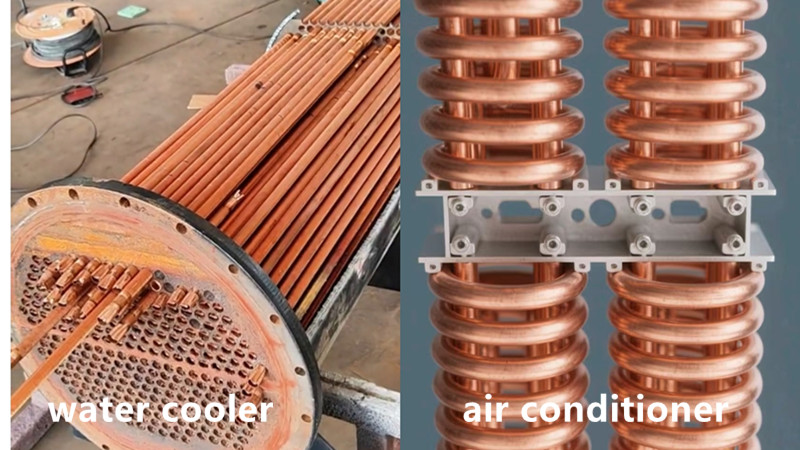
They are commonly found in refrigeration piping, air conditioning heat exchange circuits, and specialized cooling loops.
Industrial & Thermal Systems
Heat exchangers
Precision cooling circuits
Controlled-atmosphere and vacuum equipment
7. Common grades of oxygen-free copper tubes
Oxygen-free copper tubes are available in several internationally recognized grades.
While all of them are produced using oxygen-controlled processes, their purity levels and typical applications differ.
Common UNS / ASTM Grades
C10100 (OFE – Oxygen-Free Electronic Copper)
The highest-purity oxygen-free copper grade, offering extremely low oxygen content and excellent electrical and thermal conductivity.
Commonly used in critical electronic, vacuum, and high-performance applications.C10200 (OFHC – Oxygen-Free High Conductivity Copper)
The most widely used oxygen-free copper grade for electrical, electronic, and thermal systems.
It offers an excellent balance of performance, availability, and cost.C10300 (OFC – Oxygen-Free Copper)
A general oxygen-free copper grade with slightly higher oxygen content compared to OFHC.
Suitable for electrical, thermal, and industrial applications where ultra-low oxygen levels are not strictly required.
Typical Characteristics
| Grade | Copper Content | Oxygen Content | Typical Applications |
|---|---|---|---|
| C10100 (OFE) | ≥ 99.995% | ≤ 5 ppm | High-end electronics, vacuum systems |
| C10200 (OFHC) | ≥ 99.99% | ≤ 10–20 ppm | Electrical, electronic, cooling systems |
| C10300 (OFC) | ≥ 99.95% | ≤ 50 ppm | General electrical & thermal applications |
8. Summary: when should you choose oxygen-free copper tubes?
Oxygen-free copper tubes are an excellent choice when your application requires:
High electrical or thermal conductivity
Long-term stability under thermal cycling
Clean, reliable internal structures
Proven performance in electrical, electronic, or cooling systems
They may not be necessary for every application, but in the right context, they provide clear and measurable advantages over conventional copper materials.
FAQ – Common Questions About Copper Tubes
The following questions address general copper tube handling and fabrication practices.
Actual processing methods may vary depending on tube size, wall thickness, and application requirements.
How to bend a copper tube?
Copper tubes can be bent using manual or mechanical tube benders, depending on the tube diameter and wall thickness.
For small-diameter and thin-wall tubes, hand benders are commonly used to achieve smooth bends without flattening.
For tighter bend radii or higher precision, mandrel or CNC bending equipment is recommended.
Proper support during bending helps prevent kinking and maintains internal cross-sectional integrity.
How to flare a copper tube?
Flaring a copper tube is typically done using a flaring tool, which expands the tube end to form a sealing surface for fittings.
Before flaring, the tube end should be cut square and deburred to ensure a clean and even flare.
Flaring is widely used in refrigeration, air conditioning, and fluid connection systems where leak-tight joints are required.
Can copper tubes be welded?
Yes, copper tubes can be welded, but the welding method depends on the tube size and application.
Common joining techniques include brazing, TIG welding, and soldering.
For applications requiring high joint strength or pressure resistance, brazing or TIG welding is often preferred.
How to weld a copper tube?
Welding copper tubes usually requires proper surface cleaning and controlled heat input due to copper’s high thermal conductivity.
TIG welding and brazing are commonly used methods, often with suitable filler materials.
In critical electrical or electronic applications, welding procedures should be carefully evaluated to avoid contamination or changes in material properties.
How to use a copper tube cutter?
A copper tube cutter is used to produce clean, square cuts on copper tubes.
The cutter is placed around the tube, tightened gently, and rotated while gradually increasing pressure until the tube is cut through.
After cutting, the tube end should be deburred to remove sharp edges and ensure proper fitting or joining.