Copper-Silver Alloy vs Silver-Copper Alloy: Composition, Conductivity and Key Differences
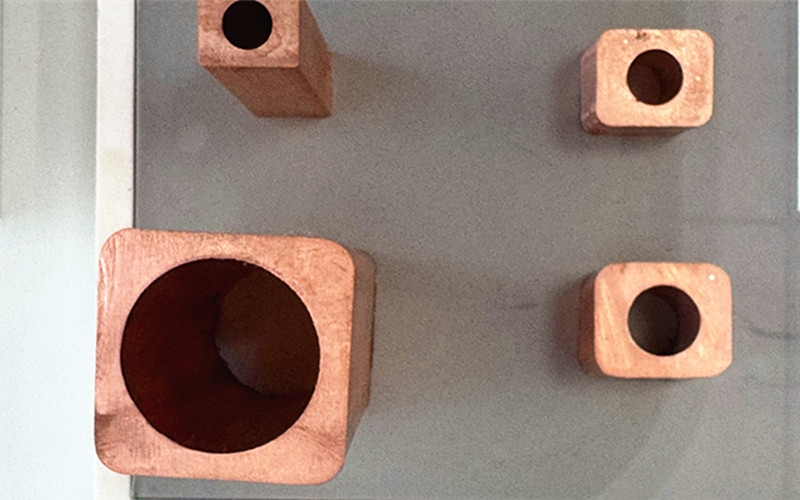
When discussing copper alloys with customers, I often notice the terms "copper-silver alloy" and "silver-copper alloy" being used interchangeably. At first glance, the two names seem to describe the same material. After all, both contain copper and silver.
In practice, however, the two terms usually refer to different types of alloys because the base metal is different. Understanding this distinction is important when selecting materials for electrical conductors, induction equipment, transformers, welding systems, and other high-current applications.
This article explains the difference between copper-silver alloys and silver-copper alloys, compares the conductivity of copper and silver, and looks at why silver is added to copper in the first place.
Are Copper-Silver Alloy and Silver-Copper Alloy the Same Thing?
Technically, both belong to the copper-silver alloy system. The difference is mainly the dominant metal.
A copper-silver alloy is copper-based. Copper typically accounts for more than 99% of the composition, while silver is added in small amounts to improve specific properties.
A silver-copper alloy is silver-based. Silver remains the primary component, and copper is added to improve strength, hardness, wear resistance, or casting performance.
For this reason, CuAg0.1, CW013A, and C11600 are correctly described as copper-silver alloys rather than silver-copper alloys.
In industrial electrical applications, copper-silver alloys are far more common than silver-copper alloys because they offer an attractive balance between conductivity, strength, and cost.
What Is a Copper-Silver Alloy?
Copper-silver alloy refers to a family of high-conductivity copper alloys containing small additions of silver.
The silver content is usually low enough that the alloy retains electrical conductivity close to pure copper. At the same time, the alloy gains improved resistance to softening and better mechanical stability at elevated temperatures.
These alloys are commonly used for:
Electrical conductors
Transformer components
Induction heating equipment
Resistance welding systems
Railway contact wires
Water-cooled conductors
Among the available grades, CuAg0.1 is one of the most widely used.
Thermal Conductivity of Copper-Silver Alloy
Pure copper is widely used as the reference material for thermal and electrical performance, with a thermal conductivity of approximately 390–400 W/m·K at room temperature, depending on purity and processing condition. Copper-silver alloys such as CuAg0.1 typically remain very close to this level, with only a slight reduction in thermal conductivity compared to pure copper.
In practical terms, this means CuAg0.1 still provides excellent heat dissipation capability, which is essential for components operating under continuous current load.
Copper Silver Alloy Melting Point
Melting point behavior remains close to pure copper (around 1083°C for copper), but the alloying effect improves performance stability well before reaching melting conditions, especially in the 200–400°C operating range commonly seen in industrial electrical equipment.
Common Copper-Silver Alloy Grades
The silver content is usually indicated directly in the grade designation.
| Grade | Typical Silver Content |
|---|---|
| CuAg0.03 | 0.03% Ag |
| CuAg0.05 | 0.05% Ag |
| CuAg0.08 | 0.08% Ag |
| CuAg0.1 | 0.08–0.12% Ag |
| CuAg0.12 | 0.12% Ag |
| CuAg0.15 | 0.15% Ag |
| CuAg0.2 | 0.20% Ag |
| CuAg0.3 | 0.30% Ag |
| CuAg0.5 | 0.50% Ag |
As silver content increases, strength and thermal stability generally improve. However, cost also rises, and conductivity may gradually decrease.
For most electrical applications, CuAg0.1 represents a practical balance between performance and cost.
Is Copper a Conductor?
Copper is one of the most important electrical conductors used in modern industry.
Power grids, transformers, motors, switchgear, electrical wiring, busbars, and renewable energy systems all rely heavily on copper.
The popularity of copper comes from a combination of properties:
High electrical conductivity
High thermal conductivity
Good corrosion resistance
Excellent formability
Reasonable cost compared with precious metals
In fact, copper is often used as the reference material for electrical conductivity measurements.
The International Annealed Copper Standard (IACS) defines pure annealed copper as 100% conductivity.
Is Silver a Better Conductor Than Copper?
Yes.
Silver has the highest electrical conductivity of any metal.
At room temperature, silver conducts electricity slightly better than copper. The difference is measurable, but smaller than many people expect.
| Material | Conductivity (% IACS) |
| Silver | 106 |
| Copper | 100 |
| Gold | 70 |
| Aluminum | 61 |
The conductivity advantage of silver is typically around 5–8%.
From a technical standpoint, silver is the better conductor.
From an economic standpoint, copper is the better choice for most industrial applications.
Copper vs Silver Conductivity Comparison
Many buyers assume that adding silver to copper significantly increases conductivity. In reality, that is not the main purpose of the alloy.
Pure silver offers the highest conductivity, but replacing copper with silver would dramatically increase material cost.
A simple comparison illustrates the situation.
| Material | Typical Conductivity |
| Cu-ETP | 100% IACS |
| Cu-OF | 101% IACS |
| CuAg0.1 | 98–101% IACS |
| CuCrZr | 75–85% IACS |
| CuNi2Si | 45–60% IACS |
CuAg0.1 remains extremely close to pure copper in conductivity. The real benefit lies elsewhere.
Why Is Silver Added to Copper?
In my experience, this is probably the most misunderstood aspect of copper-silver alloys.
Silver is not primarily added to increase conductivity.
Instead, silver improves several properties that become important when conductors operate under high current and elevated temperatures.
Improved Softening Resistance
Pure copper gradually loses strength as temperature rises.
Copper-silver alloys retain their mechanical properties better, allowing conductors to maintain dimensional stability under thermal cycling.
Better High-Temperature Strength
Electrical conductors in induction systems, transformers, and welding equipment often experience significant heat generation.
Copper-silver alloys can withstand these conditions more effectively than pure copper.
Improved Resistance to Creep
Long-term exposure to heat can cause pure copper to deform slowly over time.
Silver additions help reduce this effect.
Better Service Life
The combination of conductivity and thermal stability often results in longer operating life in demanding electrical environments.
Copper-Silver Alloy vs Pure Copper
The choice between pure copper and CuAg0.1 depends on operating conditions.
If conductivity is the only concern, oxygen-free copper and electrolytic tough pitch copper remain excellent choices.
However, when current density, operating temperature, or service life become critical factors, copper-silver alloys often provide a better solution.
This is why both CuAg0.1 conductors and oxygen-free copper hollow tubes continue to be widely used in transformer manufacturing, induction heating equipment, and power engineering projects.
Frequently Asked Questions
Is copper-silver alloy stronger than pure copper?
Generally yes. Copper-silver alloys provide improved strength and better resistance to softening while maintaining very high conductivity.
Is silver-copper alloy used for electrical conductors?
Not commonly. Most electrical conductors use copper-based alloys rather than silver-based alloys because of cost considerations.
Does CuAg0.1 conduct better than pure copper?
Not necessarily. Conductivity remains very close to pure copper, but the main advantage of CuAg0.1 is improved high-temperature performance.
Why not use pure silver for electrical conductors?
Silver offers the highest conductivity, but the performance gain is relatively small compared with the substantial increase in material cost.
Conclusion
Copper-silver alloy and silver-copper alloy may sound similar, but they usually refer to different materials because the base metal is different.
For electrical applications, copper-silver alloys such as CuAg0.1 are far more common. The alloy maintains conductivity close to pure copper while improving softening resistance, thermal stability, and long-term reliability.
This balance explains why copper-silver alloys continue to be used in high-current conductors, transformer components, induction equipment, and other demanding electrical applications where pure copper may not always be the best long-term solution.