What Is an Aluminum Capillary Tube and How to Clean It?
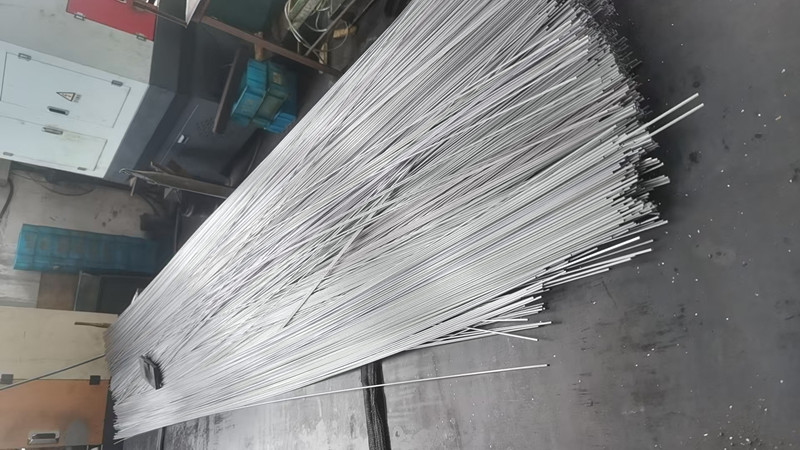
Many people searching for aluminum capillary tubes confuse "aluminum" with "alumina". Although these two words look similar, they refer to completely different materials.
Aluminum is a lightweight metal widely used in engineering applications. Aluminum capillary tubes are made from aluminum alloys and are manufactured through extrusion, cold drawing, and precision finishing processes. They are valued for their low density, corrosion resistance, good thermal conductivity, and excellent machinability.
Alumina, on the other hand, is aluminum oxide (Al₂O₃), a ceramic material produced by oxidizing and sintering aluminum oxide powder. Alumina capillary tubes are not metal tubes. They are typically used in high-temperature, electrical insulation, and laboratory applications where hardness and chemical stability are required.
In this article, we focus mainly on aluminum capillary tubes, including their manufacturing process, working principles, applications, and cleaning methods.
What Is an Aluminum Capillary Tube?
An aluminum capillary tube is a precision small-diameter aluminum tube with a thin wall and controlled internal diameter. Compared with conventional aluminum tubing, capillary tubes require much tighter dimensional control because small changes in diameter can significantly affect fluid flow behavior.
Typical characteristics include:
Small outer diameter
Thin wall thickness
High dimensional accuracy
Smooth internal surface
Lightweight structure
Good corrosion resistance
Aluminum capillary tubes are commonly manufactured from aluminum alloys such as 3003 aluminum alloy, which provides an excellent balance of formability, corrosion resistance, and mechanical performance.
Because of these advantages, aluminum capillary tubes are used in precision fluid control systems, instrumentation, lightweight heat transfer components, and specialized industrial equipment.
Aluminum Capillary Tube Manufacturing Process
Producing an aluminum capillary tube is more complex than simply reducing the diameter of a standard aluminum tube. The manufacturing process requires multiple precision operations to achieve stable inner diameter, surface quality, and flow performance.
1. Casting and Extrusion: Producing the Mother Tube
The process starts with aluminum alloy billets.
For example, 3003 aluminum alloy billets are melted, alloyed, and chemically adjusted to achieve the required manganese content, typically around 1.0–1.5%.
The heated billet is then processed through hot extrusion.
During extrusion:
The billet is heated to approximately 450–500°C.
The aluminum is forced through a die.
A hollow tube blank, also called a mother tube, is produced.
At this stage, the tube does not yet meet capillary tube requirements. The extrusion process mainly establishes the initial tube diameter, wall thickness ratio, and metallurgical structure for later drawing operations.
2. Multi-Pass Cold Drawing: Precision Diameter Reduction
After extrusion, the mother tube undergoes multiple cold drawing processes.
During cold drawing:
The tube passes through a drawing die.
A fixed mandrel or floating mandrel controls the internal diameter.
The outer diameter and wall thickness are gradually reduced.
Unlike copper tubes, aluminum alloys require more careful control during cold working.
Aluminum has different work-hardening behavior compared with copper. Excessive reduction per drawing pass may cause:
Tube cracking
Surface peeling
Uneven wall thickness
Internal defects
Therefore, aluminum capillary tube production usually requires:
Smaller reduction per pass
More drawing stages
More precise process control
3. Intermediate Annealing: Restoring Material Ductility
During repeated cold drawing, aluminum becomes harder and loses ductility.
To continue processing, intermediate annealing is required.
Typical aluminum alloy annealing temperatures are approximately:
350–450°C
The exact temperature and holding time depend on:
Alloy composition
Amount of cold deformation
Required final properties
Annealing restores plasticity by modifying the internal microstructure and reducing work-hardening effects.
The annealing process for aluminum alloys differs from copper tube processing because aluminum and copper have different recrystallization behaviors.
4. Final Sizing: Achieving Precision Tolerance
After several drawing and annealing cycles, the tube enters the final sizing stage.
The final one or two drawing passes are responsible for achieving:
Accurate outside diameter
Precise inside diameter
Controlled wall thickness
Improved surface finish
For precision applications, inner diameter tolerances may be controlled within approximately:
±0.02–0.05 mm
This final sizing process directly affects:
Flow consistency
Pressure drop
Assembly compatibility
5. Internal Cleaning and Oxide Film Control
This is one of the major differences between aluminum and copper capillary tubes.
Aluminum naturally forms a thin aluminum oxide layer immediately when exposed to air.
Although this oxide film protects aluminum from corrosion, uncontrolled oxide formation can affect:
Internal cleanliness
Brazing performance
Surface wettability
Joint reliability
Therefore, aluminum capillary tubes may require:
Chemical cleaning
Surface treatment
Residual oil removal
Controlled storage conditions
After cleaning, minimizing exposure time before brazing or assembly helps reduce excessive surface oxidation.
Compared with aluminum, copper has lower sensitivity to oxide film control during many joining processes.
6. Precision Cutting and Final Inspection
The final step is precision cutting according to customer requirements.
Typical operations include:
Fixed-length cutting
Deburring
End cleaning
Straightness inspection
Dimensional inspection
For example, aluminum capillary tubes may be supplied in specific lengths such as:
285 mm
300 mm
390 mm
Customized lengths
The tube ends must remain clean and free from burrs to avoid flow restriction or assembly problems.
How Aluminum Capillary Tubes Control Fluid Flow: Three Key Design Parameters
Although aluminum capillary tubes look simple, their performance depends heavily on precise dimensional design.
Three parameters determine the flow resistance:
1. Internal Diameter (ID): The Most Sensitive Parameter
The internal diameter is the most critical factor.
A small change in ID can significantly change flow resistance because fluid resistance is highly sensitive to tube diameter.
In simplified terms:
Smaller inner diameter = higher resistance = lower flow rate
Therefore, internal diameter is usually the first parameter considered during capillary tube design.
2. Length: Fine Adjustment of Flow Resistance
Once the inner diameter is selected, tube length is used to adjust the overall flow resistance.
Under the same internal diameter:
Longer tube → higher resistance → lower flow rate
Shorter tube → lower resistance → higher flow rate
This makes length an important tuning parameter in precision fluid systems.
3. Outer Diameter and Wall Thickness: Mechanical Design Factors
Outer diameter and wall thickness mainly influence:
Mechanical strength
Pressure resistance
Connection compatibility
Brazing requirements
For example, the outside diameter must match the connection requirements of components such as:
Heat exchangers
Evaporators
Filters
Fluid control assemblies
How to Use Aluminum Capillary Tubes?
Aluminum capillary tubes are mainly used where lightweight construction, precise fluid control, and corrosion resistance are required.
1. Precision Fluid Control Systems
Because capillary tubes can accurately control small fluid flow rates, they are used in:
Instrumentation systems
Sampling devices
Laboratory equipment
Flow measurement components
The small internal diameter allows engineers to control liquid or gas movement precisely.
2. Microfluidic and Analytical Equipment
Aluminum capillary tubes can serve as lightweight fluid channels in specialized systems.
Typical advantages include:
Compact structure
Low weight
Easy machining
Good corrosion resistance
They are suitable for applications where metal tubing is preferred over plastic materials.
3. Lightweight Heat Transfer Components
Aluminum's excellent strength-to-weight ratio makes it attractive for thermal management applications.
Compared with copper tubing:
Aluminum reduces system weight
Aluminum provides good thermal conductivity
Aluminum is more economical for large lightweight structures
4. Aerospace and Automotive Applications
Weight reduction is important in aerospace and automotive systems.
Aluminum capillary tubes may be used in:
Lightweight fluid lines
Cooling systems
Sensor assemblies
Precision mechanical components
How to Clean Aluminum Capillary Tubes?
Cleaning aluminum capillary tubes requires more attention than cleaning larger tubes because the small internal diameter makes contamination difficult to remove.
Why Do Aluminum Capillary Tubes Become Blocked?
Common causes include:
Manufacturing residues
Oil contamination
Dust particles
Oxide particles
External contaminants entering the tube
Cleaning Methods for Aluminum Capillary Tubes
1. Solvent Flushing
For oil and organic contamination, compatible solvents can be used to flush the internal surface.
The solvent should be compatible with aluminum and the final application.
2. Compressed Air Cleaning
Compressed air can remove:
Loose particles
Dry contaminants
Residual moisture
Clean, filtered air should be used to avoid introducing new contamination.
3. Ultrasonic Cleaning
For precision applications, ultrasonic cleaning can improve internal cleanliness.
It is especially useful when:
Tube diameter is very small
Internal contamination is difficult to remove manually
Avoid Strong Alkaline Cleaners
Strong alkaline solutions should be avoided because aluminum reacts with alkaline chemicals.
Aggressive cleaning agents may cause:
Surface damage
Hydrogen generation
Dimensional changes
Proper cleaning methods should protect the natural oxide layer while removing contaminants.
Other Capillary Tubes
Capillary tubes are widely used in precision fluid control systems. Different materials, including copper, aluminum, brass, and stainless steel, are selected depending on application requirements. If you have the selection confuse, a detailed comparison of these four materials could give you some clues: Aluminum vs Copper vs Brass vs Stainless Steel Capillary Tubes: A Material Selection Guide.