Aluminum vs Copper vs Brass vs Stainless Steel Capillary Tubes: A Material Selection Guide
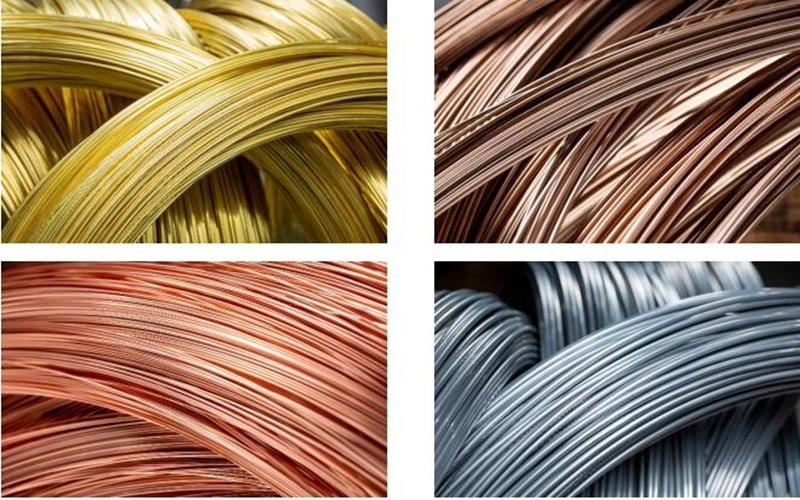
A capillary tube, also known as a micro tube, is one of the least noticeable yet most performance-critical components in a refrigeration system.
At first glance, choosing the material seems straightforward. In reality, it involves multiple factors, including refrigerant compatibility, system pressure requirements, thermal conductivity, processing cost, and the service life of the final equipment.
This article starts from the aspect that is often overlooked but is actually the core of purchasing decisions — application suitability and refrigerant compatibility — and then goes deeper into material characteristics, manufacturing processes, and cost considerations.
Quick Material Comparison
| Dimension | Copper | Brass | Aluminum Alloy | Stainless Steel |
|---|---|---|---|---|
| Thermal conductivity | Highest | Medium | Medium to low | Lowest |
| Strength / pressure resistance | Medium | Medium to high | Relatively low | Highest |
| Corrosion resistance (general environment) | Good | Good (stress corrosion risk exists) | Good (oxide film control required) | Best |
| Ammonia (NH3) compatibility | Not compatible | Not compatible | Requires careful evaluation | Compatible |
| Machining difficulty | Benchmark / mature process | Medium (dezincification corrosion risk) | Medium (oxide film and annealing control) | Higher (rapid work hardening, higher tooling wear) |
1. Application: do the materials could replace each other?
1.1 Applications Where Materials Can Be Substituted
In low-pressure refrigeration systems, such as household and light commercial refrigeration equipment, copper capillary tubes and aluminum alloy capillary tubes can often be evaluated as alternatives. The final choice mainly depends on the manufacturer's cost strategy and lightweight requirements.
Typical applications include:
Household refrigerators
Freezers
Dehumidifiers
Small split air conditioners (some models)
Water dispensers with refrigeration modules
These applications generally operate under relatively moderate pressure levels (usually within 1–2 MPa). Aluminum alloy already provides sufficient strength, and compared with copper, it offers greater cost flexibility and weight reduction advantages. This is why many high-volume appliance manufacturers consider aluminum as a potential replacement material.
1.2 Applications Where Materials Cannot Be Replaced (Selection Boundaries)
In the following situations, material selection is almost fixed, with very limited room for alternatives.
(1) Ammonia (NH3) Refrigeration Systems — Stainless Steel or Iron-Based Materials Are Required
This is a clear technical boundary in the refrigeration industry: copper and copper alloys (including copper and brass) are not suitable for ammonia environments because corrosion reactions can occur.
Therefore, ammonia compression refrigeration systems, commonly used in large cold storage facilities and food processing cold-chain systems, require corrosion-resistant materials for their piping and throttling components. Stainless steel is the standard choice, while copper, aluminum, and brass are generally not recommended.
(2) High-Pressure Systems (Transcritical CO₂ Refrigeration) — Stainless Steel Is Required
Transcritical CO₂ systems can operate at pressures of 8–12 MPa or even higher, which is far beyond the typical pressure capability of copper and aluminum alloy capillary tubes.
At this pressure level, copper and aluminum alloy cannot provide sufficient mechanical strength and safety margin. Stainless steel is therefore almost always the only practical choice.
(3) Highly Corrosive or Chemical Processing Refrigeration Environments
For auxiliary refrigeration systems in chemical plants, marine refrigeration equipment, and systems exposed to high salt spray environments, stainless steel capillary tubes are usually preferred.
Copper or aluminum tubing may still be considered in some cases, but additional corrosion protection measures are often required.
(4) Brass in Stress Corrosion-Sensitive Environments
Although brass capillary tubes offer higher strength than pure copper, brass is vulnerable to stress corrosion cracking (also known as season cracking), especially in humid environments or environments containing ammonia vapor.
Therefore, brass may actually be less reliable than copper or stainless steel in these conditions. Special attention should be paid during material selection.
2. Refrigerant Compatibility Guide
This is the section that refrigeration engineers and purchasing specialists care about most. It also has the strongest search intent when selecting capillary tube materials, so it is worth using as a standalone material selection reference.
| Refrigerant | Copper | Brass | Aluminum Alloy | Stainless Steel |
|---|---|---|---|---|
| R134a | Compatible | Compatible | Compatible | Compatible |
| R600a (Isobutane) | Compatible | Compatible | Compatible | Compatible |
| R410A | Compatible | Compatible | Compatible (pressure should be considered) | Compatible |
| R290 (Propane) | Compatible | Compatible | Compatible | Compatible |
| NH3 (Ammonia, R717) | Not compatible, prohibited | Not compatible, prohibited | Generally not recommended | Compatible, industry-standard choice |
| CO₂ (R744, transcritical) | Insufficient pressure resistance, not recommended | Insufficient pressure resistance, not recommended | Insufficient pressure resistance, not recommended | Compatible, standard choice |
Note: Final material selection should still be confirmed by the engineering team based on system design pressure, refrigerant purity, moisture control, and other operating conditions. This table is intended as an initial material screening reference only.
3. Capillary Tubes Material Composition and Basic Characteristics
Copper (Cu-OF / Cu-ETP / Cu-DHP)
The three commonly used copper grades for capillary tubes have clear differences in composition and performance. Selection should be based on the requirements of the end application.
Cu-ETP (Electrolytic Tough Pitch Copper)
Cu-ETP is the most widely used general-purpose copper grade. It offers good thermal and electrical conductivity, excellent ductility, and reliable processing performance.
It remains the traditional mainstream material for copper capillary tube production and is suitable for most conventional refrigeration applications.
Cu-OF (Oxygen-Free Copper)
Cu-OF contains extremely low oxygen content (typically below 0.001%), which eliminates the risk of hydrogen embrittlement that may occur in conventional copper during high-temperature brazing or welding.
The mechanism behind hydrogen embrittlement is that hydrogen reacts with cuprous oxide (Cu₂O) inside copper, generating water vapor and causing internal cracking.
Because of this characteristic, Cu-OF is more suitable for applications requiring higher brazing reliability, leak tightness, and long-term stability.
Cu-DHP (Phosphorus Deoxidized High Residual Phosphorus Copper)
Cu-DHP uses phosphorus as a deoxidizing element and contains a relatively higher residual phosphorus level.
Although its electrical conductivity is slightly lower than Cu-ETP, it provides more stable brazing and welding performance. It is therefore one of the most widely used copper grades in refrigeration and air-conditioning tubing, especially in applications requiring frequent brazed connections.
The three copper grades have similar thermal conductivity and ductility levels. In practical applications, the selection is mainly determined by the balance between brazing requirements, leak-tightness expectations, electrical conductivity requirements, and cost sensitivity.
There is no absolute answer regarding which grade is "better". The right choice depends on the customer's processing conditions and application requirements.
Brass (such as H62, H65)
Brass is a copper-zinc alloy with slightly higher strength than pure copper. However, it has potential risks of dezincification corrosion and stress corrosion cracking (season cracking).
These risks become more significant in humid environments or environments containing ammonia. During manufacturing and storage, stress-relief annealing and environmental control are often required to reduce the possibility of failure.
Aluminum(1050A / 3003 / 3103)
1050A Aluminum
1050A is commercially pure aluminum with a purity of approximately 99.5%.
Among common aluminum grades used for capillary tubes, it provides near-maximum thermal and electrical conductivity, excellent ductility, and outstanding cold-forming performance.
However, it has the lowest mechanical strength among these three aluminum grades. Therefore, it is mainly suitable for applications where strength requirements are limited and formability or thermal performance is more important.
3003 Aluminum
3003 is an Al-Mn alloy containing approximately 1.0–1.5% manganese.
It provides a balanced combination of strength, corrosion resistance, and brazability, making it the most widely used and versatile aluminum alloy for capillary tube applications.
3103 Aluminum
3103 is also an Al-Mn alloy. Its composition and performance are very close to 3003.
Under some standards, it can be considered an equivalent or alternative grade to 3003. In capillary tube production, these two materials are often interchangeable depending on raw material availability and customer specifications.
For example, some European customers prefer 3103 based on EN standards.
Stainless Steel (such as 304, 316)
Stainless steel provides the best corrosion resistance and pressure capability among the four material categories.
However, its thermal conductivity is significantly lower than copper, aluminum, and brass — a factor that is often overlooked.
In actual refrigeration applications, lower thermal conductivity can affect heat transfer behavior along the tube length, which may influence the actual flow-pressure drop relationship of the capillary tube.
Therefore, stainless steel capillary tubes cannot simply use the same design assumptions as copper tubes. The system performance needs to be evaluated separately.
4. Capillary Tubes Tolerance and Dimension(Copper/Brass/Aluminum/Stainless steel)
| Material | Outer Diameter Range | Wall Thickness Range | Common ID Tolerance Level | Remarks |
|---|---|---|---|---|
| Copper (Cu-OF / Cu-ETP / Cu-DHP) | 0.8–10 mm | 0.08–1.20 mm | ±0.02–0.05 mm | The most mature manufacturing process with the best tolerance stability |
| Brass | 0.8–10 mm | 0.08–1.20 mm | ±0.03–0.06 mm | Tolerance is slightly wider than copper due to alloy hardness |
| Aluminum Alloy (1050A / 3003 / 3103) | 0.8–10 mm | 0.08–1.20 mm | ±0.03–0.06 mm | Batch consistency requires strict control due to oxide film effects |
| Stainless Steel | 1.5–6 mm | Depends on specification | ±0.02–0.08 mm (depending on wall thickness) | High rigidity, but higher processing cost is required to achieve the same tolerance |
The material rigidity directly affects the difficulty and cost of tolerance control.
Stainless steel has the highest rigidity. In theory, this should make dimensional stability easier to maintain. However, because stainless steel has strong work-hardening characteristics and requires higher drawing forces, achieving the same tolerance level often requires more drawing passes and greater investment in tooling and equipment.
Therefore, under the same tolerance requirements, stainless steel capillary tubes usually have significantly higher processing costs than copper and aluminum tubes.
Within the outer diameter range of 0.8 mm to 10 mm, different wall thickness combinations provide a wide range of inner diameter options. These dimensions can meet most throttling requirements, from miniature compressors (such as car refrigerators and compact freezers) to conventional household and light commercial refrigeration equipment.
The recommended specification should ultimately be determined by reverse calculation from the customer's system parameters, including compressor displacement and required refrigerant flow rate.
5. Capillary Tubes Manufacturing Process Comparison
The basic manufacturing route of the four materials is similar:
Ingot / billet → Hot extrusion with piercing → Multi-pass cold drawing for sizing (using mandrel control for inner diameter) → Intermediate annealing → Final sizing → Cleaning → Cut-to-length
However, each material has significant differences in the critical manufacturing stages.
Capillary Copper Tube(Cu-OF / Cu-ETP / Cu-DHP)
Copper has the most mature manufacturing process among the four materials.
Typical annealing temperatures are generally within the range of 500–650°C. After pickling, copper has relatively low oxidation tendency, making it the industry benchmark material for capillary tube production.
Among the three copper grades:
Cu-OF requires stricter control during melting and casting because of its extremely low oxygen content. A protective atmosphere is necessary to prevent secondary oxygen absorption.
Therefore, compared with Cu-ETP and Cu-DHP, Cu-OF requires more precise process control during the melting and billet production stages.
Capillary Aluminum Tube(1050A / 3003 / 3103)
Aluminum alloys have a faster work-hardening rate compared with copper. Therefore:
More cold drawing passes are usually required;
The reduction rate per drawing pass is generally more conservative;
Annealing schedules require independent process design.
The typical annealing temperature range is significantly lower than copper, usually around 350–450°C.
One of the biggest differences between aluminum and copper processing is surface oxidation control.
Aluminum naturally forms an oxide film on its surface. Therefore, controlling:
Inner surface cleanliness;
Oxide film thickness;
Exposure time between cleaning and brazing;
becomes critical to ensure good brazing performance.
Among aluminum alloys:
1050A has the highest purity and lower strength, providing the best cold-forming performance. It generally requires less intermediate annealing compared with 3003 and 3103.
3003 and 3103 have very similar processing characteristics, and their manufacturing routes are generally comparable.
Capillary Brass Tube
The cold drawing process of brass is relatively close to copper.
However, brass requires additional attention to:
Zinc evaporation during heating processes (especially brazing);
Stress-relief annealing;
Prevention of stress corrosion cracking during service.
Proper control of residual stress is essential to prevent future failures caused by season cracking.
Capillary Stainless Steel Tube
Stainless steel is the most difficult material among the four for capillary tube manufacturing.
Because stainless steel has strong work-hardening characteristics:
More drawing passes are usually required;
Higher drawing forces are needed;
Tool wear is significantly higher.
Some production lines use bright annealing (performed under a protective atmosphere) instead of conventional annealing to prevent surface oxidation and discoloration.
The combination of higher tooling consumption, stricter heat treatment requirements, and more complex processing makes stainless steel capillary tubes significantly more expensive to manufacture.
6. Machining Difficulty and Key Considerations
| Material | Drawing Difficulty | Common Defects | Key Considerations |
|---|---|---|---|
| Copper (Cu-OF / Cu-ETP / Cu-DHP) | Benchmark | Surface scratches (less common) | Cu-OF requires strict control during melting and casting to prevent secondary oxygen absorption |
| Brass | Medium | Season cracking, dezincification corrosion | Storage environment humidity and residual stress control |
| Aluminum Alloy (1050A / 3003 / 3103) | Medium | Excessive oxide film, poor brazing wettability | Minimize exposure time after cleaning; 1050A has lower strength and requires careful clamping control |
| Stainless Steel | High | Surface peeling, rapid tooling wear | High drawing force required; annealing should be performed under a protective atmosphere |
7. Which is more higher price? (For Reference Only)
Since metal raw material prices fluctuate significantly, this article does not provide fixed price figures. Instead, the following section explains the general cost logic for material selection.
Raw Material Cost
In most cases, the metal value of copper and brass is higher than aluminum alloy.
The raw material cost of stainless steel is not always the highest among the four materials. However, because stainless steel contains alloying elements such as nickel and chromium, price fluctuations can sometimes cause temporary cost reversals.
Among the three copper grades:
Cu-OF usually has a slightly higher raw material cost than Cu-ETP and Cu-DHP because it requires stricter melting and oxygen control during production.
Cu-ETP and Cu-DHP are generally more cost-effective choices for conventional applications.
Among the three aluminum grades:
1050A, 3003, and 3103 have relatively small differences in raw material cost.
Their prices are mainly influenced by the aluminum market rather than major differences between alloy grades.
Processing Cost
The biggest cost difference between materials often comes from manufacturing rather than raw material price.
Stainless steel usually has significantly higher processing costs because:
It work-hardens quickly;
Requires more drawing passes;
Causes faster tooling wear;
Often requires protective atmosphere annealing.
Even if stainless steel raw material prices are similar to copper or aluminum in certain periods, the total manufacturing cost is usually much higher due to these additional processing requirements.
General Cost Ranking
Under normal conditions:
Aluminum alloy usually offers the lowest overall cost advantage < Copper ≈ Brass < Stainless Steel
Actual pricing still depends on:
Current metal market conditions;
Tube dimensions;
Wall thickness;
Tolerance requirements;
Production quantity;
Surface treatment requirements.
8. Quick Material Selection Guide
Is the system using ammonia (NH3) refrigerant?
→ Yes → Stainless steel is required. Other materials should not be considered.
Is the system a transcritical CO₂ (high-pressure) refrigeration system?
→ Yes → Stainless steel is required.
Is the application located in a highly corrosive or marine environment?
→ Yes → Stainless steel is the preferred choice, or copper/aluminum must receive additional corrosion protection.
Is it a household or light commercial low-pressure refrigeration system where cost or weight reduction is important?
→ Aluminum alloy (mainly 3003/3103) and copper (mainly Cu-ETP/Cu-DHP) can both be evaluated.
Is higher brazing reliability or electrical conductivity required?
→ Copper can be prioritized, especially Cu-OF.
For aluminum applications where excellent formability is required but strength demand is relatively low:
→ 1050A can be considered.
Is the environment humid or contains ammonia vapor, but ammonia is not the primary refrigerant?
→ Carefully evaluate the stress corrosion cracking risk of brass. Copper or stainless steel is usually a safer choice.
9. FAQ about Capillary Tubes
What are the differences between Cu-OF, Cu-ETP, and Cu-DHP capillary tubes? How should I choose?
The three copper grades have similar thermal conductivity and ductility. The main difference lies in oxygen content and the deoxidation method.
Cu-ETP is the most common general-purpose copper grade and is suitable for most standard applications.
Cu-OF is oxygen-free copper, mainly used where brazing reliability, leak tightness, and hydrogen embrittlement risk control are critical.
Cu-DHP provides excellent brazing stability and is one of the mainstream copper grades used in refrigeration and air-conditioning tubing.
There is no absolute answer regarding which one is "better". The correct choice depends on the customer's brazing process, sealing requirements, and cost considerations. If you want to know more what is copper capillary tubes and how does it work, please take more minutes to read another blog.
Can 3003 and 3103 aluminum alloy capillary tubes be interchangeable?
Yes, in most capillary tube applications, they can be considered interchangeable.
Both are Al-Mn series alloys with very similar chemical compositions and performance characteristics.
The final choice mainly depends on:
Raw material availability;
Customer regional standards;
Technical specifications.
For example, some European customers prefer 3103 according to EN standards.
Can stainless steel capillary tubes be brazed?
Yes, but stainless steel brazing requires different processes compared with copper or aluminum.
It usually requires:
Special filler metals;
Dedicated fluxes;
Vacuum brazing;
Or controlled atmosphere brazing in certain applications.
Process validation is normally required before mass production.
Will brass capillary tubes rust?
Brass itself has good corrosion resistance, but it may suffer from stress corrosion cracking (season cracking) in humid environments, ammonia-containing atmospheres, or high salt spray conditions.
This failure mechanism is different from ordinary rusting, but it can also lead to tube failure.
Therefore, the actual service environment must be considered during material selection.
Can aluminum alloy capillary tubes be used in ammonia refrigeration systems?
Not recommended.
In practical engineering applications, ammonia refrigeration systems generally select stainless steel as the standard material.
Although aluminum may have lower corrosion risk than copper in ammonia environments, it is rarely selected for critical ammonia refrigeration systems.
Why are stainless steel capillary tubes much more expensive than copper tubes?
The main reason is not only raw material cost but also processing difficulty.
Stainless steel:
Work-hardens quickly;
Requires more drawing passes;
Causes greater tooling wear;
Requires controlled atmosphere annealing.
These additional manufacturing requirements significantly increase production costs.
Are micro tubes and capillary tubes the same product?
In the refrigeration industry, the terms:
Capillary tube;
Micro tube;
Thin wall tube;
Small diameter tube;
Precision tube;
generally refer to the same type of product.
Different manufacturers or regions may use different terminology, but the core meaning is the same: a small-diameter, thin-wall precision tube.