What Are the Applications of Titanium Ti-6Al-4V Grade 5 AMS4911 Sheet Plate?
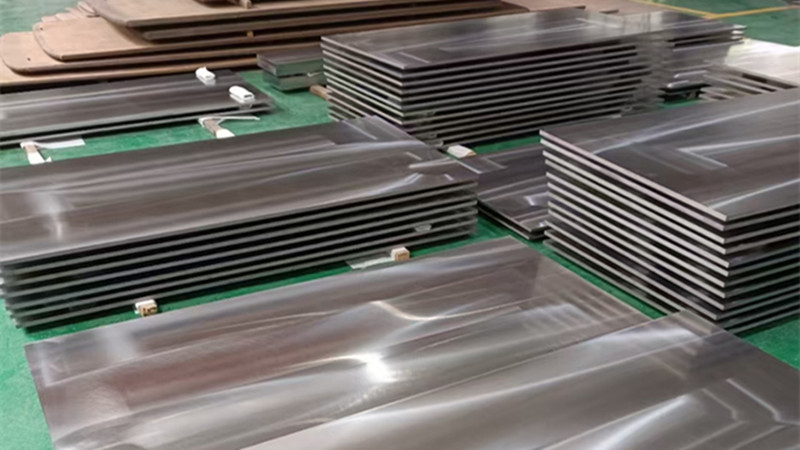
Ti-6Al-4V Grade 5 titanium is the most widely used titanium alloy in the world, accounting for more than 50% of global titanium consumption. When supplied as AMS4911 titanium sheet plate, it represents a critical material form for aerospace, medical, marine, and high-performance industrial applications.
This article provides a comprehensive, engineering-oriented guide to Ti-6Al-4V Grade 5 AMS4911 titanium sheet plate, covering its definition, material properties, manufacturing process, heat treatment, corrosion resistance, and real-world applications. The goal is to offer a single, authoritative reference for engineers, designers, and procurement professionals.
What Is Ti-6Al-4V Grade 5 Titanium?
Ti-6Al-4V, also known as Grade 5 titanium, is an alpha-beta (α+β) titanium alloy containing approximately 6% aluminum and 4% vanadium. Aluminum stabilizes the alpha phase, providing strength and oxidation resistance, while vanadium stabilizes the beta phase, improving toughness and formability.
Grade 5 is considered the benchmark titanium alloy due to its balanced combination of high strength, low density, excellent corrosion resistance, and good fatigue performance.
What Does AMS4911 Mean for Titanium Sheet Plate?
AMS4911 is an Aerospace Material Specification issued by SAE International, specifically governing Ti-6Al-4V titanium sheet and plate products.
Compliance with AMS4911 ensures:
Strict chemical composition limits
Controlled mechanical properties
Defined heat treatment condition (typically annealed)
Consistent flatness, surface quality, and internal integrity
For aerospace and critical industrial applications, AMS4911 is a key requirement that guarantees material reliability and traceability.
Chemical Composition of Ti-6Al-4V Grade 5
Typical chemical composition (wt.%):
Aluminum (Al): 5.5 – 6.75%
Vanadium (V): 3.5 – 4.5%
Iron (Fe): ≤ 0.40%
Oxygen (O): ≤ 0.20%
Carbon (C): ≤ 0.08%
Nitrogen (N): ≤ 0.05%
Hydrogen (H): ≤ 0.015%
Titanium (Ti): Balance
Oxygen content plays a critical role in determining strength and ductility, making composition control especially important for sheet and plate products.
What Are the Key Mechanical Properties of Ti-6Al-4V?
Typical mechanical properties of AMS4911 Ti-6Al-4V sheet plate (annealed condition) include:
Yield strength: ~ 880 MPa (minimum)
Ultimate tensile strength: ~ 950 MPa
Elongation: ≥ 10%
Modulus of elasticity: ~ 110 GPa
Brinell hardness: approximately 330 HB
These properties provide an exceptional strength-to-weight ratio, making Ti-6Al-4V ideal for load-bearing yet lightweight structures.
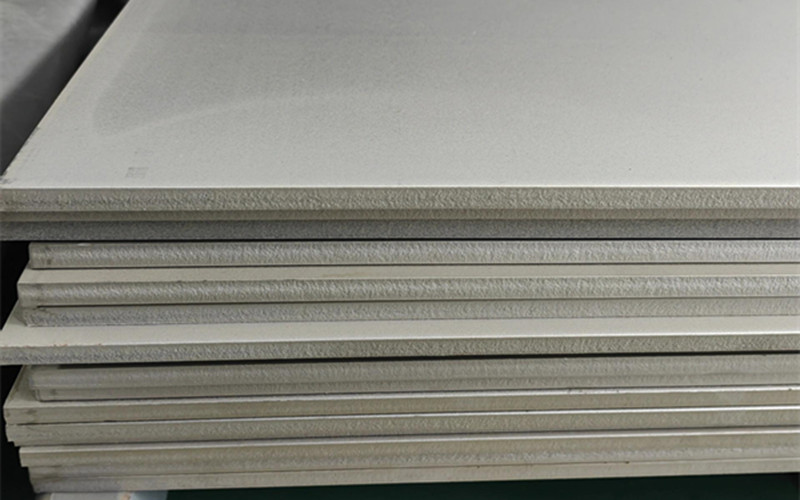
Physical Properties of Ti-6Al-4V Titanium Sheet Plate
Key physical properties include:
Density: ~ 4.43 g/cm³
Melting range: ~ 1604 – 1660°C
Thermal conductivity: ~ 6.7 W/m·K
Electrical resistivity: ~ 1.7 µΩ·m
Compared to steel, Ti-6Al-4V is nearly 45% lighter while offering comparable strength levels.
Why Is the Modulus of Elasticity of Ti-6Al-4V Important?
Ti-6Al-4V has a modulus of elasticity of approximately 110 GPa, significantly lower than steel (~200 GPa). This lower stiffness allows:
Reduced stress concentrations
Improved fatigue life under cyclic loading
Better biomechanical compatibility for medical implants
This unique combination of high strength and relatively low stiffness is a major reason for its widespread aerospace and biomedical use.
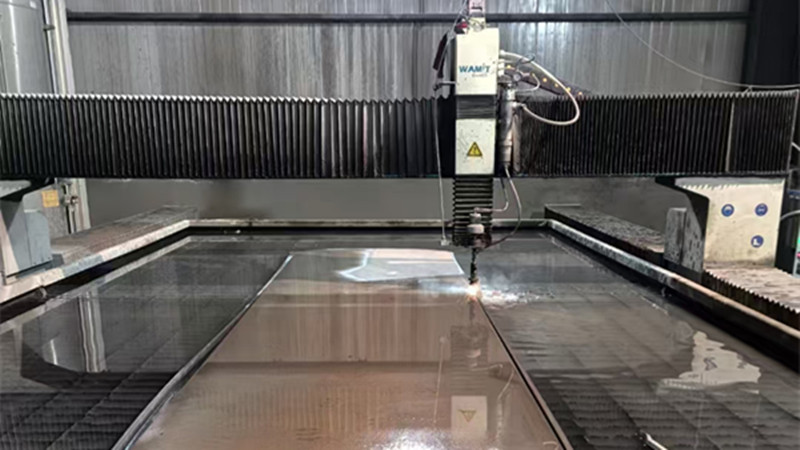
How Is Ti-6Al-4V Titanium Sheet Plate Manufactured?
The production of Ti-6Al-4V AMS4911 sheet plate typically involves:
Vacuum arc remelting (VAR) or multiple melting processes for chemical uniformity
Primary breakdown forging of titanium ingots
Hot rolling into plate or sheet thicknesses
Controlled annealing to achieve stable microstructure
Surface treatment such as pickling or grinding
Each step is tightly controlled to ensure consistency, cleanliness, and mechanical performance.
Heat Treatment and Annealing of Ti-6Al-4V Grade 5
AMS4911 titanium sheet plate is generally supplied in the annealed condition.
Typical annealing temperatures range from 700°C to 800°C, followed by controlled cooling. The purpose of annealing is to:
Relieve residual stresses
Improve ductility and formability
Stabilize the alpha-beta microstructure
Compared with solution-treated and aged (STA) conditions, annealed sheet plate offers superior forming performance.
How Does Ti-6Al-4V Perform in Corrosive Environments?
Ti-6Al-4V exhibits excellent corrosion resistance due to the formation of a stable, self-healing TiO₂ passive film.
It performs exceptionally well in:
Seawater and marine atmospheres
Chloride-containing environments
Many acidic and alkaline solutions
This corrosion resistance significantly reduces maintenance requirements and extends service life.
Why Is Ti-6Al-4V Ideal for Aerospace Applications?
Ti-6Al-4V Grade 5 meets the demanding requirements of aerospace structures due to:
High strength-to-weight ratio
Excellent fatigue and creep resistance
Compatibility with AMS4911 aerospace standards
Proven long-term performance in flight-critical components
As a result, titanium sheet plate is widely used in both commercial and military aircraft.

Applications of Ti-6Al-4V Grade 5 AMS4911 Sheet Plate
Aerospace Applications
Aircraft structural panels and skins
Engine nacelles and heat shields
Fuselage and wing reinforcement components
Medical Applications
Orthopedic plates
Surgical instrument components
Implantable structural parts
Marine and Chemical Processing
Heat exchanger plates
Offshore equipment components
Corrosion-resistant structural parts
Industrial and High-Performance Uses
Motorsport and racing components
High-strength tooling plates
Advanced manufacturing equipment
How to Select the Right Ti-6Al-4V AMS4911 Sheet Plate
When selecting titanium sheet plate, consider:
Required thickness and dimensional tolerance
Mechanical property requirements
Compliance with AMS4911 or other specifications
End-use environment and forming needs
Proper selection ensures optimal performance and cost efficiency.
Conclusion
Ti-6Al-4V Grade 5 AMS4911 titanium sheet plate is a high-performance material combining strength, lightweight design, corrosion resistance, and aerospace-grade reliability. Its versatility across aerospace, medical, marine, and industrial sectors makes it one of the most important titanium products in modern engineering.
By understanding its properties, manufacturing process, and application advantages, engineers and buyers can confidently specify the right titanium sheet plate for demanding applications.