Can 2024 Aluminum Alloy Be Bent?
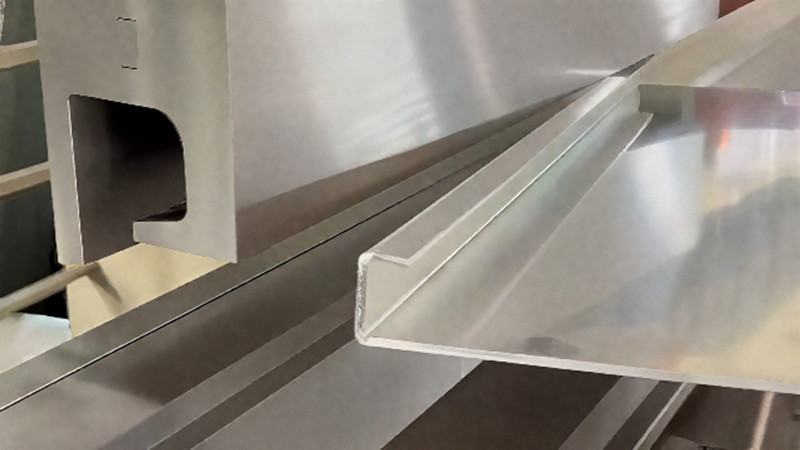
2A12 aluminum alloy is essentially the Chinese equivalent of 2024 aluminum alloy, both belonging to high-strength hard aluminum in the Al-Cu-Mg series. Known for its excellent strength-to-weight ratio, fatigue resistance, and widespread use in aerospace structural components, its bending performance varies significantly depending on the temper. The key differences mainly come from changes in strength and ductility under different heat-treatment conditions.
Aluminum 2024-O Temper (annealed): excellent formability, ideal for complex cold bending
Bending feasibility:
Fully bendable. Among all 2A12 tempers, the O temper provides the best bendability.
Bending difficulty:
Very low. It offers outstanding ductility and can achieve smooth forming without special processes.
Key process points:
No pre-treatment is required. Standard cold-bending procedures are sufficient. The material supports complex cold forming such as deep drawing and can withstand 180° bend tests without cracking.
Important considerations:
No strict restrictions on bend direction or radius. Follow normal sheet-metal bending practices; stress concentration is not a concern.
Aluminum 2024-T4 Temper (solution heat treated and naturally aged): bendable with controlled processes
Bending feasibility:
Bendable, but cannot be processed like soft aluminum. Targeted measures are needed to avoid cracking.
Bending difficulty:
Moderate. Strength is higher than O temper but lower than T3, while ductility is better than T3 (elongation 15–18%). Overall bending difficulty is significantly less than T3.
Key process points:
If bending is required, reversion heat treatment can be used to increase plasticity:
Heat to 295 ± 10°C for 5–10 minutes
Quench in room-temperature water
Complete bending within 0.5 hours of cooling
Heat the die to 260 ± 20°C
Ensure the bend direction is perpendicular to the rolling direction to reduce stress concentration
Important considerations:
Use a larger bending radius compared to the O temper. Avoid tight radii and hard bending.
For thin sections and large-radius bends, reversion may not be needed—controlling bend direction and radius is typically sufficient to prevent cracking.
Aluminum 2024-T3 Temper (cold worked + naturally aged): difficult to bend, requires precise and strict control
Bending feasibility:
Bendable but far less feasible than O and T4. It has the highest cracking risk and demands extremely strict control.
Bending difficulty:
Very high. Strength is significantly higher than T4 (yield strength 310–340 MPa, ultimate strength 420–450 MPa) with ductility of only 12–14%. This “high strength / medium ductility” profile makes it prone to cracking when stress concentrates.
Key process points:
A multi-parameter optimized bending strategy is required:
Increase the inner bend radius to distribute stress
Bend strictly perpendicular to the rolling direction to reduce grain-orientation cracking
For thicker plates, briefly heat to 290–300°C and quench rapidly, then bend within a short time after cooling
Use a high-precision CNC press brake; choose a lower-die opening several times the sheet thickness
Apply bending force slowly and evenly to prevent uneven loading
Important considerations:
Inspect the part surface after bending; remove burrs or micro-cracks by light grinding if needed.
During pre-treatment, temperature control must be precise to avoid altering the inherent high-strength properties of the T3 temper.
Can 2024 aluminum be welded?
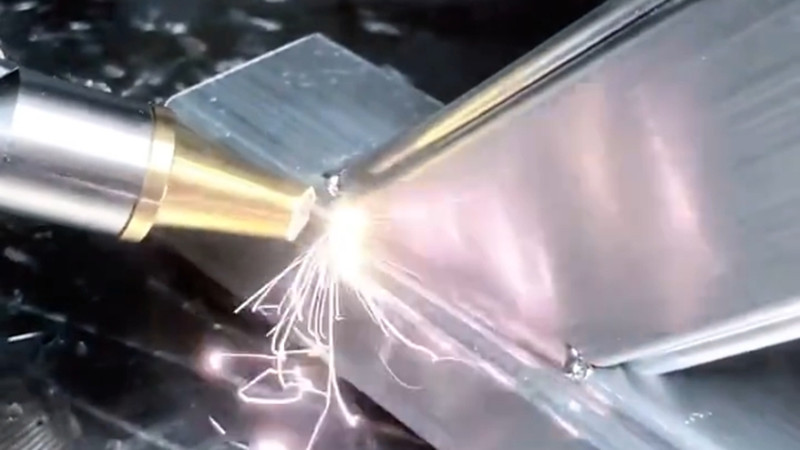
2024(2A12) aluminum alloy can be welded, but as a high-strength hard aluminum (Al-Cu-Mg series), it is relatively difficult to weld. The main challenges are the tendency to form hot cracks, gas porosity, and reduced joint strength. By selecting suitable welding methods and controlling the process parameters, high-quality and reliable welds can still be achieved.
Weldability
2A12 contains a relatively high copper content (3.8%–4.9%), which is the source of its high strength but also the main cause of welding difficulties:
It has a wide solidification range, leading to a higher risk of solidification cracking (the most common form of hot cracking).
It forms a dense Al₂O₃ oxide film, which, if not removed thoroughly, causes porosity and inclusions.
The heat-affected zone (HAZ) tends to soften during welding, resulting in joint strength typically 60%–80% of the base material.
Nevertheless, these issues can be effectively avoided through proper welding methods, filler material selection, and parameter control.
Recommended welding methods and characteristics
TIG/MIG (argon arc welding)
The most commonly used welding methods for 2024, suitable for thin to medium-thickness plates and complex joint structures.
TIG (Gas Tungsten Arc Welding, GTAW):
Offers high welding precision and excellent heat input control. It helps reduce hot cracking and is ideal for single-piece or small-batch production, as well as root welding of thick plates.MIG (Gas Metal Arc Welding, GMAW):
High welding efficiency, suitable for medium-thickness plates and mass production. Requires aluminum-specific filler wires.
Electron beam welding / Laser welding
High-energy-beam processes with highly concentrated heat input and minimal HAZ softening. They can achieve the highest joint strength and are suitable for precision components with stringent welding requirements. Equipment cost, however, is relatively high.
Not recommended
Manual metal arc welding (stick welding): Poor arc stability, prone to porosity and cracking; difficult to ensure reliable joint quality.
Gas welding (oxy-acetylene): Excessive heat input exacerbates hot cracking and HAZ softening; rarely used for 2A12.
Key welding process requirements
1. Filler material selection
Use filler wires matching the composition and crack-resistance requirements:
ER4043 (Si-based): Best crack resistance.
ER5356 (Mg-based): Provides slightly higher joint strength.
2. Pre-weld surface preparation
Thorough cleaning is essential:
Completely remove oxide film, oil, and moisture using stainless steel brushing, mechanical grinding, or chemical cleaning (acid cleaning followed by rinsing and drying).
Preheat thick sections to 100–200°C to reduce welding stress and lower the chance of hot cracking.
3. Process parameter control
Use low current and fast travel speed to reduce heat input.
Minimize HAZ softening and hot cracking tendencies.
Ensure adequate argon shielding (argon purity ≥99.99%) to prevent weld oxidation.
4. Post-weld treatment
Stress-relief annealing: 200–250°C for 1–2 hours to remove residual stresses.
Solution + aging treatment: Can be applied when strength recovery is required, helping restore part of the joint strength.
Can 2024 aluminum be anodized?
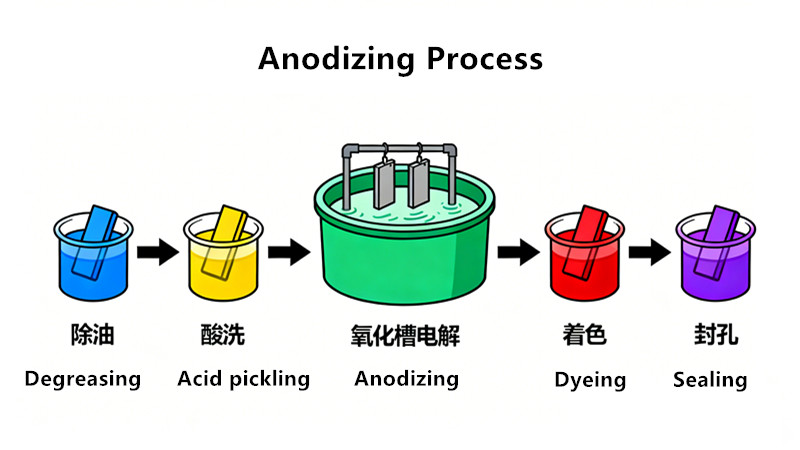
2024(2A12) aluminum alloy can be anodized, but compared with pure aluminum (1000 series) or Al-Mg alloys (5000 series), it is more difficult to process. High-quality anodized results—such as uniform color and strong film adhesion—require targeted process control.
Anodizing feasibility and challenges
Feasibility:
Since the main component of 2A12 is aluminum, it naturally supports anodizing. When current is applied, a dense Al₂O₃ oxide film forms on the surface, which improves corrosion resistance, wear resistance, and allows coloring through dyeing.
Core challenges:
Because 2A12 contains 3.8%–4.9% copper, several issues may arise during anodizing:
The film tends to develop black spots or blotches, especially in regions where copper is locally concentrated, making it difficult to achieve uniform color.
Film adhesion is slightly weaker; copper affects the bonding strength between the oxide film and the substrate, potentially causing peeling or flaking if not properly controlled.
The anodizing growth rate is slower than low-alloy aluminum, meaning the oxide layer forms more slowly under the same conditions.
Key Process
1. Enhanced pre-treatment
Perform alkaline cleaning (e.g., sodium hydroxide solution) to remove oil, contaminants, and the natural oxide film.
Follow with nitric acid neutralization and brightening to remove alkaline residues and “smut” (copper compounds) left after etching.
When necessary, apply de-coppering treatment, briefly immersing the part in a low-concentration ammonium bifluoride solution to reduce surface copper content and avoid dark spots during anodizing.
2. Optimized anodizing parameters
Use the standard sulfuric acid anodizing process with:
Sulfuric acid concentration: 15%–20%
Temperature: 10–15°C (lower temperature reduces negative copper effects and helps achieve a more uniform film)
Reduce current density to 1.0–1.5 A/dm² and extend anodizing time to prevent localized overheating and to improve film quality.
3. Dyeing and sealing treatment
Before dyeing, thoroughly clean the oxide pores to remove residual acid that may affect color uniformity.
Use acid dyes; control dye temperature at 40–50°C and adjust immersion time depending on the desired color depth.
For sealing, prioritize boiling water sealing or nickel-salt sealing to fully close the film pores and enhance corrosion resistance and adhesion.
After sealing, rinse completely with clean water and dry thoroughly.
Additional notes
Although the hardness and corrosion resistance of anodized 2A12 are not as high as those of pure aluminum, they are sufficient for general industrial applications such as decorative finishes and basic protection.
For applications requiring extremely uniform color (e.g., precision instrument housings), strict control of material composition uniformity and process consistency is essential. Secondary surface treatments such as painting or powder coating may also be considered to optimize appearance.
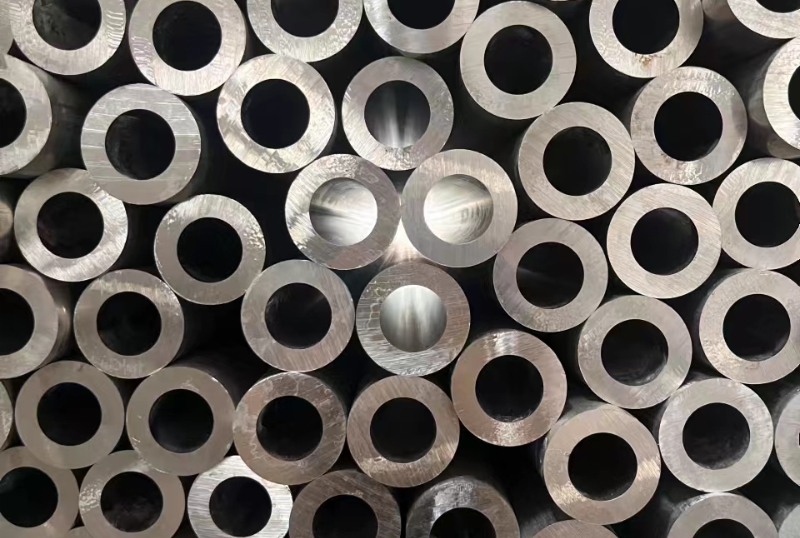
At Shenzhen Chinalcometal, we offer a comprehensive range of 2024 aluminum alloy (2A12) products — covering sheet, plate, bar, rod and seamless tube — with full temper options and aerospace-grade standards.
2024 T3 / T4 Cold-Drawing Aluminum Aircraft Alloy Rod Bar
2024 Aluminum Bar (T3, T4, T351