How strong is aluminum tube?
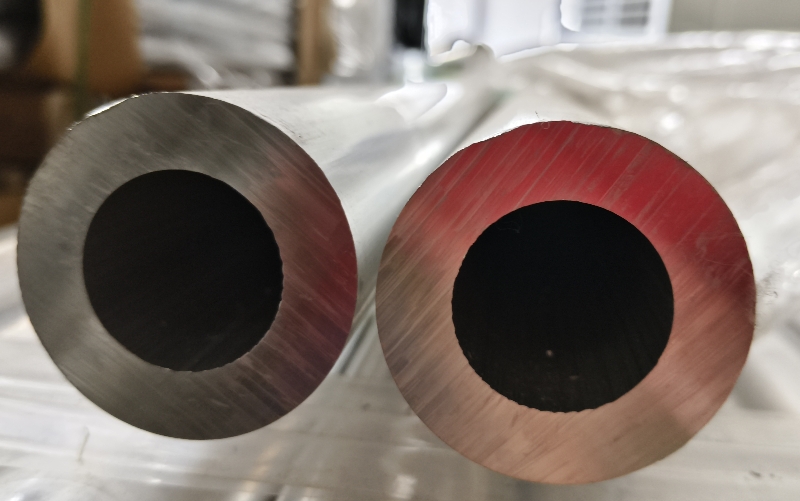
The compressive strength of aluminum tubes varies depending on the alloy composition and processing techniques used. Generally, pure aluminum has relatively low compressive strength, while aluminum alloys formed by adding other metal elements (such as copper, magnesium, and silicon) exhibit significantly higher compressive strength.
| Grade | Tensile Strength (MPa) | Yield Strength (MPa) | Chemical Composition |
|---|---|---|---|
| 7075 | 540–630 | 480–530 | Zn: 5.1–6.1%, Mg: 2.1–2.9%, Cu: 1.2–2.0%, Fe, Si, Cr, Ti: trace |
| 2024 | 400–500 | 270–400 | Cu: 3.8–4.9%, Mg: 1.2–1.8%, Mn: 0.3–0.9%, Fe, Si, Zn, Ti: trace |
| 6061 | 240–310 | 200–260 | Mg: 0.8–1.2%, Si: 0.4–0.8%, Cu: 0.15–0.4%, Cr: 0.04–0.35%, Fe, Zn, Ti: trace |
| 5083 | 290–330 | 145–230 | Mg: 4.0–4.9%, Mn: 0.4–1.0%, Cr: 0.05–0.25%, Fe, Si, Zn, Ti: trace |
| 2014 | 410–480 | 275–370 | Cu: 3.9–5.0%, Mg: 0.2–0.8%, Si: 0.5–1.2%, Mn: 0.4–1.2%, Fe, Zn, Ti: trace |
| 7050 | 500–580 | 440–490 | Zn: 5.7–6.7%, Mg: 1.9–2.6%, Cu: 2.0–2.6%, Zr: 0.08–0.15%, Fe, Si, Cr: trace |
| 6013 | 310–380 | 270–300 | Mg: 0.8–1.2%, Si: 0.6–1.0%, Cu: 0.6–1.0%, Mn: 0.2–0.6%, Fe, Zn, Ti: trace |
| 6351 | 290–350 | 240–300 | Mg: 0.8–1.2%, Si: 0.7–1.3%, Cu: ≤0.1%, Mn: 0.4–0.8%, Fe, Zn, Ti: trace |
| 2A14 | 420–520 | 290–430 | Cu: 3.8–4.8%, Mg: 0.2–0.8%, Si: 0.5–1.2%, Mn: 0.4–1.2%, Fe, Zn, Ti: trace |
One of the strongest aluminum alloy grades is7075 aluminum, with a compressive strength of approximately 560 MPa. This alloy is known for its high strength and excellent mechanical properties, making it commonly used in the aerospace industry for aircraft structural components and other high-stress parts. Another high-strength grade is 7050 aluminum, with a compressive strength of around 520 MPa, primarily used in aerospace structures where high strength and corrosion resistance are required.
6061 aluminum is another widely used high-strength alloy, with a compressive strength of about 310 MPa. Due to its good machinability, weldability, and corrosion resistance, 6061 aluminum is widely applied in construction, shipbuilding, automotive components, and other industrial applications requiring medium strength.
Additionally, 2024 aluminum is a commonly used high-strength alloy with a compressive strength of approximately 470 MPa. It is primarily used in the aerospace industry for components like fuselage and wing structures, where high strength and light weight are critical.
| Grade | Type | Key Features | Applications |
|---|---|---|---|
| 7075 | Al-Zn-Mg-Cu Series | Excellent tensile strength and corrosion resistance | Aerospace, automotive, bicycles |
| 2024 | Al-Cu-Mg Series | Lightweight, high strength, good machinability | Aircraft fuselage, wing beams |
| 6061 | Al-Mg-Si Series | Good welding performance and mechanical properties | Aerospace, automotive parts, bicycle frames |
| 5083 | Al-Mg Series | Exceptional corrosion resistance and good weldability | Ships, hulls, tanks |
| 2014 | Al-Cu-Mg-Si Series | Excellent machinability and mechanical properties | Aircraft parts, automotive frames |
| 7050 | Al-Zn-Mg-Cu Series | High corrosion resistance and excellent strength | Aerospace and military fields |
| 6013 | Al-Mg-Si-Cu Series | High strength, good weldability | Automotive bodies, train carriages |
| 6351 | Al-Mg-Si Series | Lightweight, high strength, corrosion resistance, easy forming and welding | Industrial, aerospace, automotive, electronics |
| 2A14 | Hard Aluminum | Good mechanical properties, corrosion resistance | Aerospace, defense, sports equipment, automotive, rail |
In summary, the compressive strength of aluminum tubes varies depending on the alloy grade, and selecting the appropriate aluminum alloy grade depends on the specific mechanical requirements of the application.