What Are AMS4942 CP2 Titanium Seamless Tube Used For
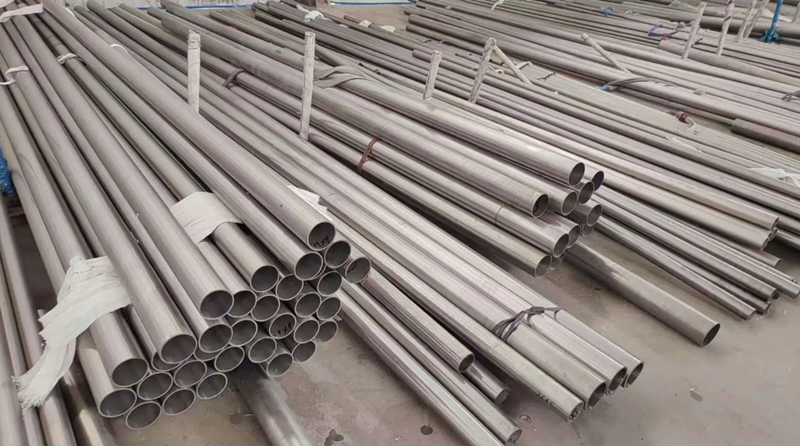
What is CP-2 Titanium?
CP-2 (Grade 2) is one of the most widely used grades within the commercially pure (CP) titanium family. With a titanium content of ≥ 99.2%, CP-2 offers an excellent combination of corrosion resistance and mechanical performance, making it the default choice for many industrial and aerospace tubing applications.
Compared with other titanium grades:
It provides higher strength than CP-1 while maintaining very good ductility.
Its strength is comparable to or higher than some stainless steels, but with significantly lower density.
It exhibits excellent biocompatibility, making it suitable for medical and healthcare applications.
Comparison of CP Titanium Grades (CP-1 to CP-4)
| Grade | Oxygen Content | Relative Strength | Ductility / Formability | Typical Characteristics |
|---|---|---|---|---|
| CP-1 (Grade 1) | Lowest | Low | Excellent | Maximum formability, deep drawing |
| CP-2 (Grade 2) | Low–Medium | Medium | Very Good | Best balance of strength and corrosion resistance |
| CP-3 (Grade 3) | Medium | Higher | Moderate | Higher strength, reduced formability |
| CP-4 (Grade 4) | Highest | High | Lower | Highest strength among CP grades |
Key Physical and Mechanical Performance of Pure Titanium Grade 2
Moderate strength with excellent ductility and processability: Suitable for bending, forming, and welding operations.
Outstanding corrosion resistance: Highly stable in chlorides, seawater, and oxidizing acids, thanks to a self-healing titanium oxide surface film.
Low density and high strength-to-weight ratio: Ideal for lightweight structural and fluid-transport systems.
Seamless Titanium Tube Manufacturing Process
AMS4942 CP2 Titanium Seamless Tube are produced without any longitudinal weld. As a result, they offer:
More uniform microstructure and mechanical properties
Superior pressure resistance and fatigue performance
Elimination of weld-related defects and corrosion risks
These advantages make seamless tubes the preferred solution for aerospace, chemical processing, and other high-reliability environments.
Typical Manufacturing Process of Seamless Titanium Tubes
Titanium ingot or billet preparation
Hot piercing to create a hollow shell
Hot rolling or cold rolling
Longitudinal cold drawing for dimensional precision
Heat treatment (annealing)
Finishing, straightening, and inspection
Key process benefits:
Piercing and drawing ensure consistent roundness and wall thickness
Annealing relieves internal stress and restores ductility
Precision control delivers tight tolerances and consistent surface quality
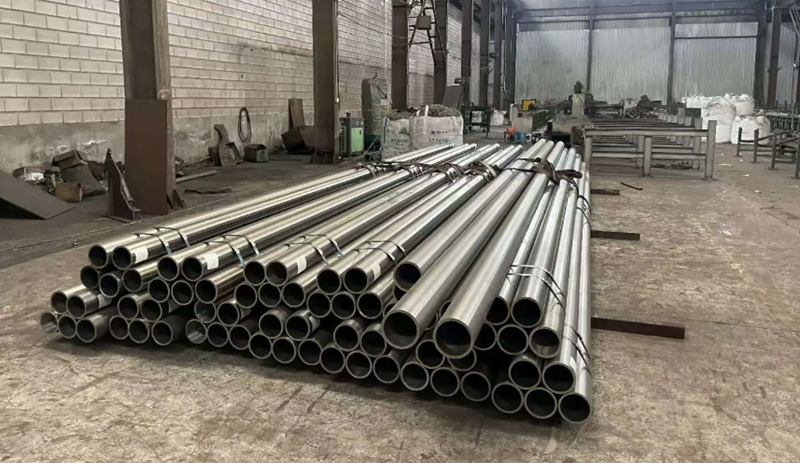
What Is AMS4942 and What Does It Require?
AMS4942 is a titanium tubing specification issued by SAE International, officially titled “Titanium Tubing, Seamless, Annealed.” It is widely adopted in aerospace and high-end industrial applications where material consistency and reliability are critical.
The standard is periodically revised; the current version is AMS4942H (2022 revision).
Key Technical Requirements of AMS4942
Material condition
Tubes must be supplied in the annealed condition to ensure adequate ductility and stress relief.
Mechanical properties
Minimum yield strength typically around 40 ksi (≈ 275 MPa), with clearly defined test methods and acceptance criteria.
Dimensional tolerances and geometry
Strict limits on outer diameter, wall thickness, straightness, and roundness.
Chemical composition
While AMS4942 focuses on finished tubing performance, it implicitly requires compliance with CP-2 titanium (UNS R50400) chemical composition.
Inspection and testing
Chemical analysis
Mechanical testing
Nondestructive testing (such as eddy current or ultrasonic inspection)
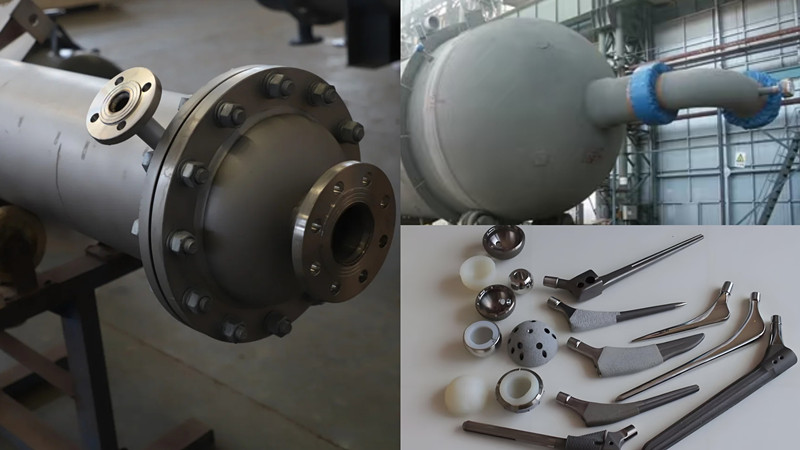
Applications of AMS4942 CP-2 Seamless Titanium Tubes
Aerospace: Lightweight design, strength, and corrosion resistance at elevated temperatures.
Typical uses include hydraulic lines, fuel systems, heat exchangers, and structural support tubing.
Chemical and Petrochemical Industry: Aggressive corrosive media and high-temperature operation.
Applications include acid and alkali transfer lines, reactor sleeves, condensers, and heat exchange systems.
Marine and Seawater Desalination: Long-term resistance to seawater corrosion and extended service life. Used in seawater piping, offshore platform systems, and desalination heat exchangers.
Energy and Power Generation:Heat transfer efficiency and chemical stability. Commonly applied in cooling circuits and heat exchanger systems in nuclear and conventional power plants.
Medical Devices: Biocompatibility, non-toxicity, and corrosion resistance.
Used for orthopedic components, surgical instruments, catheters, and medical tubing.
Automotive and Transportation:Lightweight construction and durability.
Applications include high-performance exhaust systems, lightweight structural parts, and thermal management components.
Conclusion
AMS4942 CP-2 seamless titanium tubes combine balanced mechanical properties, exceptional corrosion resistance, and stringent quality requirements. This makes them a reliable and cost-effective solution for aerospace, chemical processing, marine, energy, and medical applications where safety, performance, and long service life are essential.