What is 5754 Aluminum?
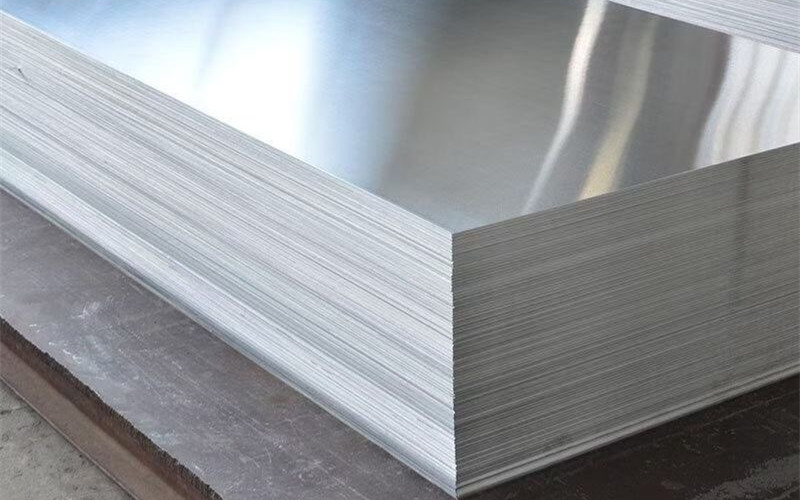
5754 aluminum belongs to the Al-Mg (5000 series) wrought aluminum alloys, well known for its excellent corrosion resistance, moderate strength, and outstanding formability. As a non-heat-treatable alloy strengthened mainly through cold working, 5754 stands out in applications requiring both durability and resistance to seawater, industrial chemicals, and atmospheric conditions. It offers a balanced combination of strength and weldability, making it a common material for automotive fuel tanks, ship structures, pressure vessels, and sound barrier panels.
In this article, we will provide a detailed overview of 5754 aluminum properties, its available tempers and specifications, typical applications, equivalent grades, and a comparison with the popular 5052 aluminum alloy.
5754 Aluminium Properties
5754 aluminum is a non-heat-treatable alloy primarily alloyed with magnesium (Mg 2.6–3.6%), giving it enhanced strength and corrosion resistance compared to pure aluminum. It offers a good balance between mechanical performance, formability, and surface finish, suitable for both industrial and decorative uses.
Typical physical properties include:
Density: ~2.67 g/cm³
Elastic modulus: ~69 GPa
Thermal conductivity: 130–147 W/m·K
Coefficient of thermal expansion: ~23–24 µm/m·K
Mechanical characteristics (depending on temper):
Tensile strength: 190–330 MPa
Yield strength: 80–220 MPa
Elongation: 12–20%
Excellent weldability and corrosion resistance in marine or chemical environments
5754 Tempers: O and Other Common Conditions
The performance of 5754 aluminum varies depending on its temper, which defines the level of cold working and mechanical hardening applied to the material. Below are the most common conditions:
O (Annealed): Fully soft condition with maximum ductility and lowest strength, ideal for complex forming and bending.
H111: Slightly strain-hardened, offering a balance of strength and excellent formability; commonly used in automotive and marine structures.
H22 / H24 / H26: Quarter-hard to three-quarter-hard conditions, providing progressively higher strength and lower elongation.
H32 / H34 / H36: Harder tempers with enhanced mechanical strength for load-bearing or structural parts.
H114 / H14: Occasionally used for patterned or tread plates requiring surface hardness and durability.
5754 Aluminum Sheet and Plate Specifications
| Specification | Typical Range / Description |
|---|---|
| Thickness | 0.1 – 600 mm |
| Width | 20 – 2650 mm |
| Length | 500 – 16 000 mm |
5754 aluminum sheet and plate are available in a wide range of dimensions to meet automotive, marine, and industrial manufacturing requirements.
Typical Applications of 5754 Aluminum Plate
1. Marine Industry: Components for Seawater Environments
5754 aluminum plate offers outstanding corrosion resistance in seawater, especially against chloride-induced corrosion. It is widely used for:
Hull plating and deck materials
Outfitting components and cabin partitions
Auxiliary structures for offshore platforms
Its excellent weldability ensures stable weld strength and minimizes cracking during vessel construction and repair. These properties allow marine structures to maintain long-term integrity even under high humidity, salt spray, and highly corrosive environments.
2. Chemical and Petroleum Industries: Industrial Piping and Pressure Equipment
5754 aluminum also shows high stability in chemical media and polluted atmospheres, making it suitable for:
Chemical equipment casings
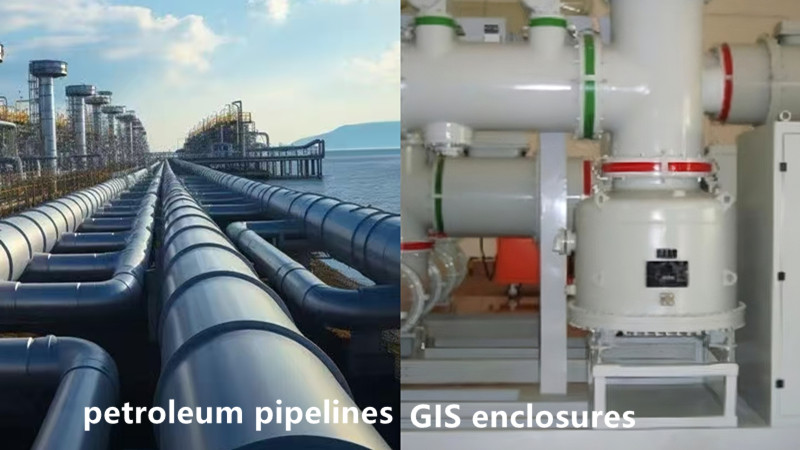
Industrial pipelines in the petroleum sector
Storage tanks and reactor outer shells
It provides strong resistance to stress-corrosion cracking and features a favorable strength-to-weight ratio, making it an ideal lightweight alternative to carbon steel and stainless steel. Its post-weld performance remains reliable, supporting the fabrication of large industrial structures.
3. Automotive Manufacturing: Fuel Tanks and Lightweight Components
Thanks to its high formability, corrosion resistance, and anti-permeation properties, 5754 aluminum plate is widely used in:
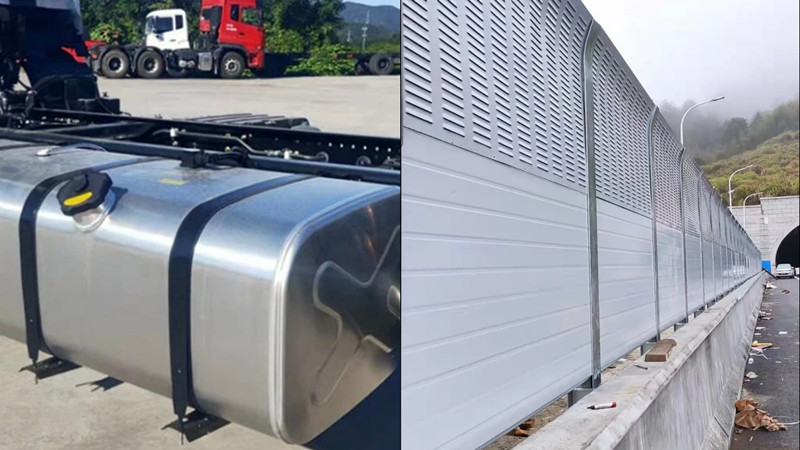
Passenger car fuel tanks
Lightweight structural parts and brackets
Interior acoustic panels and baffles
Compared with steel fuel tanks, 5754 aluminum tanks are lighter, rust-free, and more resistant to fuel corrosion. Its superior ductility allows deep drawing into complex shapes required for modern fuel tank designs.
4.Sound Barrier Panel for Highways
5754 aluminum can be used for transportation sound barrier panel structures, especially sound barrier panel for highways. It provides the outer shell or reflective surface of the barrier, valued for its light weight, corrosion resistance, and surface treatment adaptability. Typically, 5754 aluminum panels are combined with acoustic or composite layers to achieve optimal sound insulation performance, serving as durable protective shells in modern noise control systems. Of course, aluminum foam panles are another suitable choice.
5. Power Industry: GIS (Gas-Insulated Switchgear) Enclosures
GIS enclosures require high mechanical strength, sealing performance, and corrosion resistance under high-voltage and outdoor conditions. 5754 aluminum plate excels in this application because it:
Maintains structural integrity in humid, salty, polluted, and high-temperature environments
Offers excellent weldability for defect-free fabrication of large housings
Provides lightweight strength, reducing installation and transportation difficulty
These characteristics enable 5754 aluminum to meet the strict safety, sealing, and durability requirements of high-voltage switchgear housings.
5754 Aluminum Equivalent
In different international standards, 5754 aluminum corresponds to several equivalent designations, depending on regional alloy naming systems.
In the EN standard, it is designated as EN AW-5754 (AlMg3), belonging to the 5xxx wrought aluminum-magnesium series. In the ISO and DIN systems, it is also referred to as AlMg3 or 3.3535, while in AA (Aluminum Association) designation, it remains 5754.
Equivalent Grades:
EN / ISO: EN AW-5754 (AlMg3)
DIN: AlMg3 / 3.3535
UNS: A95754
BS: 5251 (partially comparable)
JIS: A5052 (closest equivalent in performance)
Aluminum 5754 vs 5052
Both 5754 and 5052 aluminum belong to the Al-Mg series and share many characteristics, such as good corrosion resistance, weldability, and moderate strength. However, their small differences in magnesium and chromium content result in distinct mechanical and forming behavior.
Key Differences:
Strength: 5754 provides higher tensile strength (up to ~330 MPa) and better stability after welding, while 5052 offers lower strength but better elongation for complex forming.
Composition: 5754 contains more magnesium (2.6–3.6%), whereas 5052 includes chromium, enhancing surface finish and corrosion protection.
Corrosion Resistance: Both perform well in marine environments; 5052 has a slight advantage in acidic conditions, while 5754 performs better in alkaline or neutral environments.
Applications:
5754 aluminum: Automotive fuel tanks, marine components, pressure vessels, and sound barrier panel for highways.
5052 aluminum: Enclosures, signage, sheet metal panels, and parts requiring deep drawing.