What is 6101 aluminum and its properties?
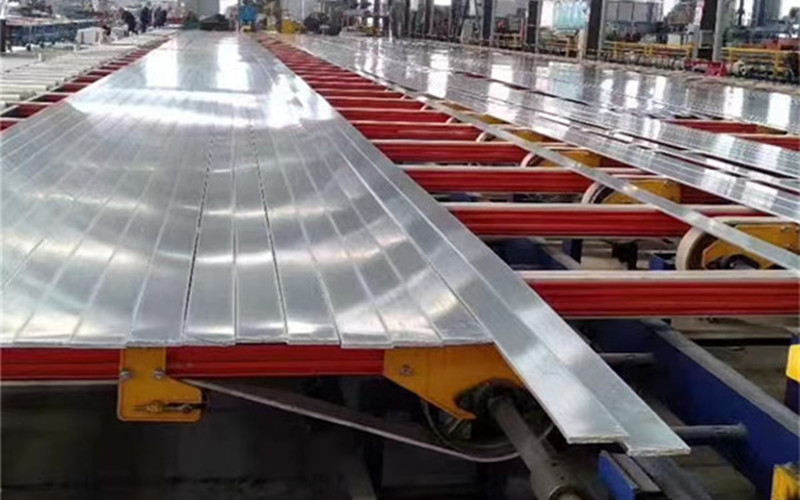
In modern electrical power distribution systems, 6101 aluminum is widely recognized as one of the most important alloys for aluminum busbars and high-current conductors. Unlike general-purpose aluminum alloys, 6101 is specifically engineered for electrical applications, offering an optimized balance between high electrical conductivity, adequate mechanical strength, lightweight performance, and cost efficiency.
This article explains what a busbar is, what 6101 aluminum is, why it is commonly used for busbars, and how it compares with other alloys such as 6061 aluminum.
What Is 6101 Aluminum?
6101 aluminum is a heat-treatable Al-Mg-Si alloy developed primarily for electrical conductor applications. It combines relatively high electrical conductivity with moderate mechanical strength, low density, good corrosion resistance, and good forming and extrusion characteristics. These properties make 6101 aluminum particularly suitable for electrical conductors, busbars, power distribution components, battery connections, and other lightweight conductive applications.
Unlike general-purpose 6xxx-series alloys such as 6061 and 6063, which are widely used for structural, architectural, and general engineering applications, 6101 is designed with a stronger emphasis on the balance between electrical conductivity and mechanical performance. Its controlled magnesium and silicon content allows the alloy to be strengthened through precipitation hardening while maintaining considerably higher conductivity than many structural aluminum alloys.
Chemical Composition of 6101 Aluminum
The typical chemical composition of 6101 aluminum is based on a balance of magnesium and silicon, with strict control of impurity elements. The nominal composition is:
· Si: 0.30–0.70%
· Mg: 0.35–0.80%
· Fe: ≤ 0.50%
· Cu: ≤ 0.10%
· Mn: ≤ 0.03%
· Cr: ≤ 0.03%
· Zn: ≤ 0.10%
· Other individual impurities: ≤ 0.05%
· Total impurities: ≤ 0.15%
· Aluminum: Balance
Magnesium and silicon are the principal alloying elements. During heat treatment and aging, they form Mg₂Si precipitation phases that increase the strength of the alloy. However, excessive alloying or impurity content can reduce electrical conductivity by increasing electron scattering. This is why the composition of 6101 is carefully controlled to maintain a useful balance between conductivity and mechanical strength.
Minor additions of elements such as boron may also be used during production for grain refinement and metallurgical control.
Key properties of 6101 aluminum alloy:
| Property | Value |
|---|---|
| Density | 2.70 g/cm³ |
| Tensile Strength | 160 – 240 MPa |
| Yield Strength | 110 – 180 MPa |
| Elongation at Break | 12 – 18% |
| Hardness | 40 – 60 Brinell (HB) |
| Electrical Conductivity | 40 – 55% IACS |
| Modulus of Elasticity | 69.0 GPa |
| Melting Point | 585°C to 650°C (1,085°F to 1,202°F) |
| Corrosion Resistance | Good (especially in atmospheric environments) |
| Weldability | Excellent |
6101 Aluminum Temper System
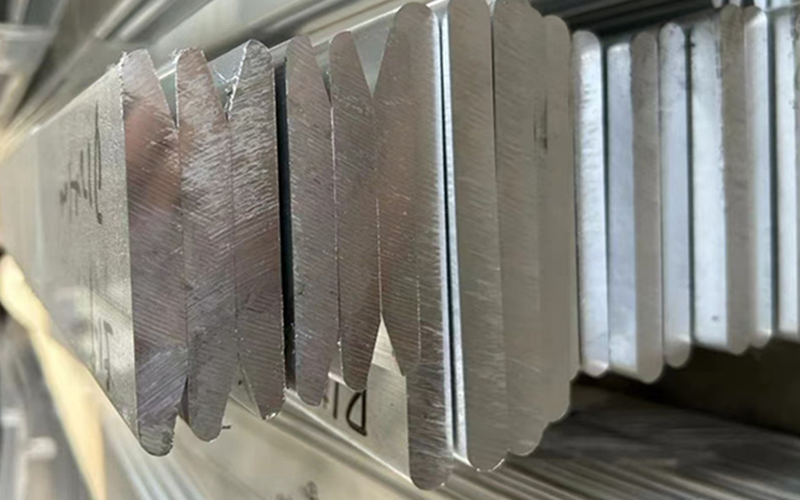
One of the important characteristics of 6101 aluminum is its ability to obtain different combinations of strength, electrical conductivity, and formability through heat treatment and artificial aging.
Common tempers include 6101-T6, T61, T63, T64, and T65. The specific properties of each temper depend on the heat-treatment and aging conditions.
6101-T6
6101-T6 is a solution heat-treated and artificially aged condition designed to provide high mechanical strength.
Typical properties include:
· Tensile strength: ≥200 MPa
· Yield strength: ≥172 MPa
· Electrical conductivity: ≥55% IACS
T6 is suitable for applications where mechanical strength, resistance to deformation, and long-term structural stability are important, including certain outdoor busbar and high-current conductor applications.
6101-T61
6101-T61 is an overaged condition that sacrifices some mechanical strength in favor of higher electrical conductivity.
Typical properties include:
· Tensile strength: ≥103 MPa
· Yield strength: ≥55 MPa
· Electrical conductivity: approximately 57–59% IACS
It can be considered when electrical conductivity is prioritized and the component is subject to relatively low mechanical loading.
6101-T63
6101-T63 provides an intermediate balance between mechanical strength and electrical conductivity.
Typical properties include:
· Tensile strength: ≥185 MPa
· Yield strength: ≥150 MPa
· Electrical conductivity: ≥56% IACS
This type of balanced property profile makes T63 suitable for general electrical conductor and busbar applications where neither conductivity nor mechanical strength can be compromised significantly.
6101-T64
6101-T64 is a more deeply overaged condition with higher electrical conductivity and improved formability compared with higher-strength tempers.
Typical electrical conductivity is:
· Electrical conductivity: ≥59.5% IACS
Its relatively good ductility and forming characteristics make it suitable for conductive components that require bending or forming into more complicated geometries.
6101-T65
6101-T65 provides a controlled balance between mechanical strength, electrical conductivity, and forming performance.
Typical electrical conductivity is:
· Electrical conductivity: ≥56.5% IACS
It can be considered for precision conductive components requiring consistent processing performance, including components manufactured through automated bending, stamping, or forming operations.
In general, increasing the severity of overaging tends to reduce strength while increasing electrical conductivity and improving formability. Therefore, temper selection should be based on the relative importance of conductivity, mechanical strength, creep resistance, and forming requirements.
Mechanical Properties and Creep Resistance
The mechanical properties of 6101 aluminum vary considerably with temper. Higher-strength conditions such as T6 provide greater resistance to deformation, while overaged conditions generally provide better ductility and forming performance.
For electrical conductors, creep resistance and stress relaxation are also important. Compared with commercially pure aluminum, 6101 provides improved resistance to long-term deformation under sustained mechanical and thermal loading.
This is particularly useful in bolted electrical connections, outdoor conductors, and other applications where the material may experience continuous heating, mechanical loading, vibration, or thermal cycling.
Better creep resistance can help reduce the gradual loss of contact pressure at bolted connections and contribute to long-term electrical connection stability. Nevertheless, aluminum alloys still exhibit creep behavior, so electrical connections should use appropriate tightening torque, joint design, and anti-loosening measures.
Typical elongation at fracture is approximately 9–15%, depending on temper and product condition. More ductile tempers are generally better suited to cold bending, while higher-strength conditions such as T6 may require a larger minimum bending radius to reduce the risk of cracking.
Corrosion Resistance of 6101 Aluminum
6101 aluminum has good atmospheric corrosion resistance because aluminum naturally forms a thin, dense oxide film on its surface. This protective layer helps shield the underlying metal from further oxidation and allows 6101 to be used in many indoor and outdoor electrical applications.
However, corrosion considerations become more important when aluminum is connected directly to copper. In the presence of moisture, direct aluminum-copper contact can create a galvanic corrosion cell and gradually deteriorate the electrical connection.
For aluminum-copper connections, suitable transition components, surface treatments, joint compounds, or other engineered connection methods should therefore be considered according to the application and applicable electrical standards.
Common surface treatments and connection-related solutions include:
1. Nickel or tin plating — used to improve surface stability, contact performance, and compatibility with electrical connection systems.
2. Anodizing — provides a durable oxide coating and improved corrosion resistance, but the anodized surface is electrically insulating and should not be applied to the required conductive contact area.
Ampacity of 6101 Aluminum Busbars
The ampacity (current-carrying capacity) of a busbar depends on several factors: cross-sectional size, installation conditions, temperature rise limits, and surface treatment. While copper has a higher conductivity, aluminum busbars made from 6101 can be sized appropriately to achieve the same electrical performance at a lighter weight and lower cost.
6101 vs pure aluminum (1070 / 1350)
Pure aluminum offers higher conductivity but suffers from very low mechanical strength, making it unsuitable for many busbar applications.
6101 aluminum:
Retains high conductivity
Significantly improves strength and rigidity
Provides better long-term stability in power systems
6101 vs 6061 vs 3003 Aluminum
| Property / Application Focus | 6101 Aluminum | 6061 Aluminum | 3003 Aluminum |
|---|---|---|---|
| Alloy series | 6xxx (Al–Mg–Si) | 6xxx (Al–Mg–Si) | 3xxx (Al–Mn) |
| Heat treatable | Yes (T6 / T61) | Yes (T6 / T651) | No |
| Primary design purpose | Electrical conductivity | Structural strength | Formability & corrosion resistance |
| Electrical conductivity | 55–60% IACS | ~43% IACS | ~40–45% IACS |
| Mechanical strength | Medium | High | Low to medium |
| Formability | Good | Good | Excellent |
| Typical product forms | Busbars, extruded profiles | Bars, plates, structural parts | Sheet, plate, coil |
| Suitability for busbars | Excellent | Limited | Not recommended |
| Typical applications | Power busbars, conductors, substations | Frames, brackets, machined parts | Enclosures, roofing, heat exchangers |
| Cost efficiency (busbar use) | High | Medium | Low |
Copper vs. Aluminum Busbars
| Characteristic | Copper Busbar | 6101 Aluminum Busbar |
|---|---|---|
| Conductivity | ~100% IACS | 55–60% IACS |
| Density | ~8.9 g/cm³ | ~2.7 g/cm³ |
| Weight | Heavy | Much lighter |
| Cost | High | Lower |
| Applications | Compact, space-critical designs | Power distribution, renewable energy, large installations |
Product Forms of 6101 Aluminum
6101 aluminum can be supplied in several semi-finished forms depending on the electrical, mechanical, and fabrication requirements of the application.
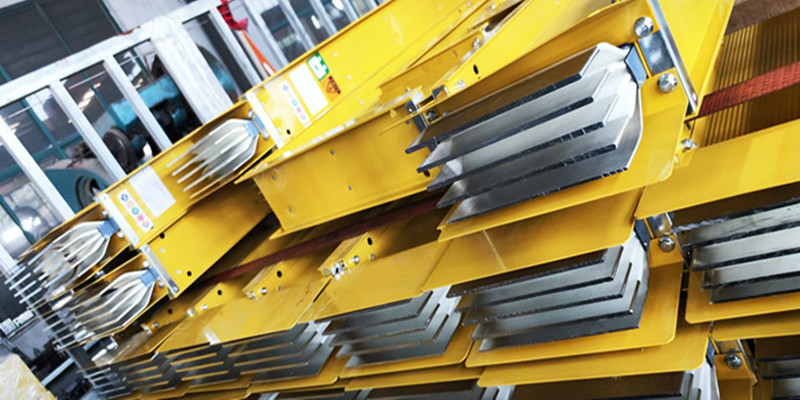
· 6101 Aluminum Busbar — widely used for power distribution, switchgear, busbar trunking, substations, battery systems, and other high-current electrical applications.
· 6101 Aluminum Plate — used for fabricated electrical components, conductive plates, equipment components, and custom-machined parts.
· 6101 Aluminum Wire — used for electrical conductors, power transmission components, and lightweight conductive systems.
· 6101 Aluminum Extrusion Profile — suitable for rectangular, custom, and other conductive cross-sections used in electrical equipment and power distribution systems.
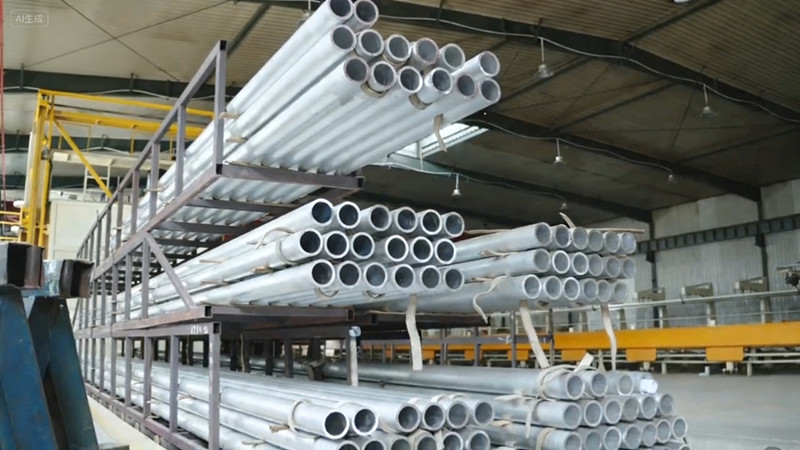
· 6101 Aluminum Tube — available in round or customized tubular sections for specialized electrical, thermal, structural, and industrial applications.
Other customized shapes and dimensions can also be produced according to the required conductivity, cross-sectional geometry, temper, and processing requirements.
Processing of 6101 Aluminum
Extrusion
6101 aluminum has good extrusion characteristics and can be processed into rectangular conductors, complex cross-sections, and tubular profiles. Extrusion is particularly suitable for high-volume production of conductive profiles with consistent dimensions.
Machining
6101 aluminum can be machined by drilling, milling, turning, and tapping. Higher-strength tempers such as T6, T63, and T65 generally provide greater resistance to deformation during machining than softer conditions.
For electrical busbars and conductive components, burr control is particularly important. Sharp burrs can interfere with insulation systems or create problems during assembly, so edge finishing and dimensional inspection should be properly controlled.
Bending and Stamping
Formability varies with temper. More ductile conditions generally provide better cold-bending performance, while higher-strength conditions may require a larger bending radius.
Thin 6101 strip and sheet products can also be stamped or formed into customized conductive components, including compact electrical parts designed for limited installation space.
Welding
6101 aluminum generally offers good weldability and can be processed using welding methods such as MIG, TIG, laser welding, and other application-specific joining processes.
The naturally occurring aluminum oxide layer has a much higher melting point than the underlying aluminum, so proper surface preparation is important before welding. The oxide film should be adequately removed or controlled to reduce the risk of incomplete fusion and other weld defects.
Welding heat can also locally alter the temper and mechanical properties of the heat-affected zone. Therefore, welded 6101 components should be evaluated according to the required mechanical and electrical performance after joining.
Standards for 6101 aluminum busbars
6101 aluminum busbars are commonly produced according to international standards, including:
ASTM B317 – Aluminum alloy extruded bars and profiles for electrical use
IEC 60105 / IEC 61238 – Electrical conductor and connection standards
EN 573 / EN 755 – European aluminum alloy and extrusion standards
Manufacturing processes typically include extrusion, precision cutting, heat treatment (T6 or T61), and optional surface treatments such as tin plating or silver plating to improve contact performance and corrosion resistance.
Advantages of 6101 Aluminum
6101 aluminum offers several advantages for electrical and conductive applications:
1. High electrical conductivity with moderate mechanical strength — it provides a useful alternative between commercially pure electrical aluminum and lower-conductivity structural alloys such as 6061.
2. Multiple temper options — different tempers allow engineers to prioritize conductivity, strength, creep resistance, or formability.
3. Low density — its lightweight construction can reduce conductor weight and supporting-structure requirements.
4. Good resistance to creep and deformation — useful for long-term electrical connections and conductors exposed to mechanical and thermal loading.
5. Good extrusion and fabrication characteristics — suitable for large-scale production of busbars, profiles, and customized conductive components.
6. Good thermal conductivity — helps dissipate heat generated during electrical operation.
Limitations of 6101 Aluminum
Despite its advantages, 6101 aluminum also has several limitations:
1. Lower electrical conductivity than commercially pure electrical aluminum — larger conductor cross-sections may be required for the same current-carrying capacity.
2. Galvanic corrosion risk with copper — aluminum-copper connections require appropriate joint design and surface protection.
3. Creep cannot be completely eliminated — bolted connections require proper torque control and joint design.
4. Welding requires careful surface preparation — poor oxide-film control can result in welding defects.
5. Relatively high thermal expansion — long conductors and busbar systems should account for thermal expansion and contraction.
Applications of 6101 Aluminum
The combination of electrical conductivity, mechanical strength, low density, and good processability makes 6101 aluminum suitable for a wide range of electrical and industrial applications.
Power Distribution
6101 aluminum is used in:
· Outdoor and indoor busbar systems
· Substations
· Switchgear
· Distribution cabinets
· Busbar trunking systems
· High-current electrical conductors
New Energy and Battery Systems
6101 aluminum can also be used in:
· EV battery busbars
· Battery module conductive components
· CCS and battery interconnection systems
· Energy storage systems
· Inverter components
· High-power charging equipment
The appropriate temper and product form should be selected according to the required electrical conductivity, mechanical strength, bending requirements, connection method, and operating environment.
Renewable Energy and Transportation
6101 aluminum is also suitable for selected conductive components in:
· Solar power systems
· Wind power equipment
· Rail transportation
· Electric vehicles
· Industrial power systems
Its low density can provide a significant advantage where conductive components must combine electrical performance with weight reduction.
How to Select the Right 6101 Temper
The appropriate 6101 temper depends on the priorities of the final application.
· High conductivity with relatively low mechanical loading: T61 / T64
· Balanced strength and conductivity for general busbar applications: T63
· Higher strength and creep resistance: T6
· Automated bending, stamping, and forming: T65
In practice, temper selection should not be based on electrical conductivity alone. Engineers should consider current-carrying requirements, mechanical loading, creep resistance, bending radius, connection method, operating temperature, and manufacturing process together.
For this reason, 6101 aluminum is best understood not simply as a high-conductivity aluminum alloy, but as a family of engineered material conditions that can be selected to match different electrical and mechanical requirements.