Applications of Conductive Aluminum Tubes in Power Systems
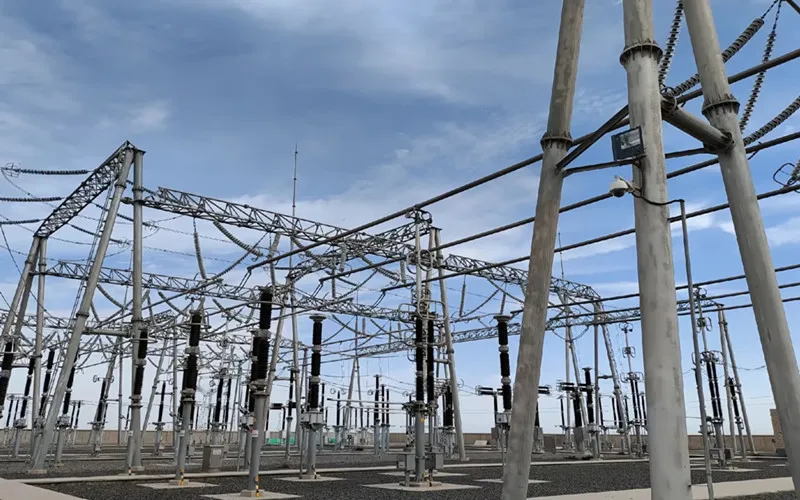
In the power industry, Tubular Bus and Bus Pipe can both be used to describe tubular conductors used in busbar systems. Here, bus does not refer to public transportation. In electrical engineering, a bus or busbar is a common conductor used to collect, transmit, and distribute electrical current. Tubular Bus can be understood as a “tubular busbar,” while Bus Pipe literally refers to a “pipe used for busbar applications.”
In actual power systems, these tubular conductors are often made of aluminum and are therefore also referred to as conductive aluminum tubes or aluminum tubular bus. They are mainly used as busbars and large-current conductors for electrical connections between power generation, transmission, substation, and distribution equipment, and are particularly common in substations and switchyards.
1. The Position and Role of Conductive Aluminum Tubes in Power Systems
Electricity generated at a power plant is not delivered directly to the final user. It normally passes through several stages, including power generation, voltage step-up, transmission, transformation, distribution, and final consumption.
In simple terms, electricity generated by a generator usually first passes through a step-up transformer to increase the voltage. This reduces the current and line losses during long-distance transmission. The high-voltage electricity is then transmitted through power lines to substations in different regions, where transformers gradually reduce the voltage before the electricity enters the distribution system and is eventually delivered to factories, commercial buildings, and residential users.
During this process, substations and switchyards are important nodes for collecting, transforming, switching, and distributing electrical power. They require many conductors to connect circuit breakers, disconnectors, transformers, transmission lines, and other electrical equipment. In high-voltage and high-current systems, these connections must provide more than basic electrical conductivity. They also need to meet requirements for mechanical strength, weight, current-carrying capacity, and long-term outdoor operation.
Tubular Bus is one important type of conductor used in these systems. Conductive aluminum tubes provide a relatively large conductive cross-section through their tubular structure and can be used to collect and transmit large currents while connecting different electrical components to the same busbar system. They are therefore mainly used in substations, switchyards, and other high-voltage and high-current electrical equipment.
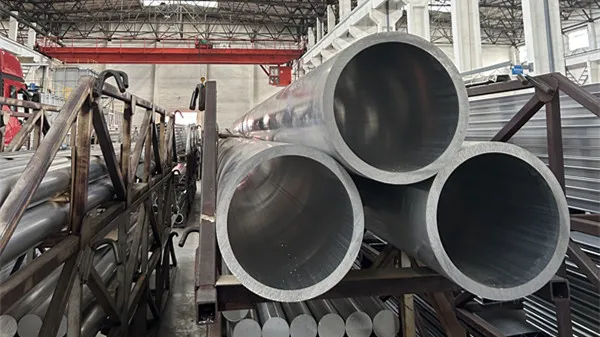
2. Why Are Conductive Aluminum Tubes Used in Power Systems?
First, it is important to distinguish between ordinary aluminum tubes and conductive aluminum tubes. Although both may have a round tubular shape, they are designed for different purposes.
Ordinary industrial aluminum tubes are commonly selected for applications such as fluid transportation, heat exchange, or mechanical structures. Conductive aluminum tubes, on the other hand, are selected primarily for their electrical conductivity and current-carrying capacity, while also meeting requirements for mechanical strength, weight, dimensions, and operating stability in power equipment.
Conductive Aluminum Tube vs. Ordinary Aluminum Tube
The main function of an ordinary aluminum tube may be to transport air, water, or another medium, or to serve as a structural component. Its selection may therefore focus on corrosion resistance, formability, sealing performance, heat-transfer performance, or mechanical strength.
A conductive aluminum tube needs to give particular consideration to:
Electrical conductivity
Current-carrying capacity
Cross-sectional area
Mechanical strength
Tube diameter and wall thickness
Mechanical forces under short-circuit conditions
Long-term outdoor operating conditions
Therefore, a conductive aluminum tube is not simply an ordinary aluminum tube used to carry electrical current. Its material and dimensions are selected specifically for electrical conductor applications.
Aluminum Bus Tube vs. Aluminum Bus Bar
Aluminum bars can also be used in busbar systems, so why are tubular busbars needed?
One important reason is mechanical performance and structural efficiency.
As busbar size and span increase, simply increasing the width and thickness of an aluminum bar causes its weight to increase continuously and may also require larger supporting structures. A round tube, however, can provide a relatively large conductive cross-section while using a hollow structure to reduce unnecessary material weight. It also provides good bending rigidity.
Therefore, for some large-span, high-current, and high-voltage outdoor busbar systems, a tubular structure can offer certain engineering advantages.
Why Are Round Tubes Commonly Used?
The round cross-section is not simply a matter of appearance. It is related to both the electrical and mechanical performance of the conductor.
From a mechanical perspective, a round tube has favorable sectional inertia characteristics and can provide good bending resistance at relatively low weight.
From a high-voltage electrical perspective, a round surface does not have obvious sharp corners, and the electric field around the conductor is more evenly distributed. This makes the shape suitable for high-voltage and extra-high-voltage electrical equipment.
Therefore, a round tube is essentially a structural form that balances electrical conductivity, mechanical strength, weight, and high-voltage electrical performance.
Conductive Aluminum Tube vs. Copper Tube
Copper has higher electrical conductivity than aluminum, so copper has an advantage when electrical conductivity alone is considered.
However, for large electrical conductors, conductor weight also needs to be considered.
Aluminum has a significantly lower density than copper. Therefore, when the required current-carrying capacity can be achieved, aluminum conductors can significantly reduce weight. For long bus sections and tubular conductors in large substations, this can reduce the load on insulators, supporting structures, and installation systems in addition to reducing the weight of the conductor itself.
Therefore, the key advantage of conductive aluminum tubes is not that they are “more conductive than copper,” but Use aluminum's lower density to achieve a balance between a large conductive cross-section, sufficient mechanical strength, and lower weight.
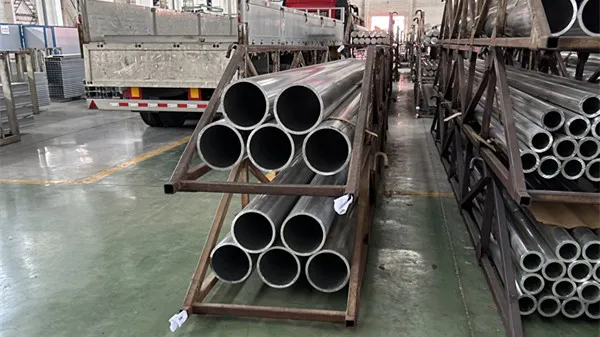
3. What Are the Differences Between 1350, 6101, 6061, and 6063 Conductive Aluminum Tubes?
Once aluminum has been selected as the material for a tubular conductor, the next step is to choose the appropriate aluminum alloy.
1350, 6101, 6061, and 6063 can all appear in discussions of electrical conductors or related aluminum structures, but their design priorities are different.
| Alloy | Main Characteristic | Electrical Conductivity | Strength | Typical Consideration |
|---|---|---|---|---|
| 1350 | High-purity electrical aluminum | Very high | Relatively low | High-conductivity conductors |
| 6101 | Electrical Al-Mg-Si alloy | 52--56% IADS | UTS~180MPa | Busbars, conductive tubes, and other electrical conductors |
| 6061 | Strong overall performance | 43--48% IADS | UTS~290MPa | Conductive structures with higher mechanical requirements |
| 6063 | Good extrusion and forming performance | 50--53% IADS | UTS~205MPa | Extruded profiles, complex cross-sections, and some conductive structures |
1350: Conductivity as the Priority
1350 is a typical electrical-grade aluminum alloy, with its main characteristic being high electrical conductivity.
Compared with aluminum alloys that need to balance conductivity and strength, 1350 places greater emphasis on current-carrying performance. Therefore, when the design focuses on low electrical resistance and high conductivity, 1350 tube offers a clear material advantage.
However, its mechanical strength is generally lower than that of heat-treatable 6xxx-series aluminum alloys. Therefore, for tubular busbars that require higher structural strength, longer spans, or greater mechanical loading, the tube diameter, wall thickness, support arrangement, and operating conditions also need to be considered.
It can be simply understood as: 1350 is more focused on “conductivity first.”
6101: A Balance Between Conductivity and Strength
6101 is one of the most notable electrical-conductive aluminum alloys among these materials.
It is an Al-Mg-Si alloy that maintains relatively high electrical conductivity while achieving better mechanical strength than 1350 through heat treatment.
Therefore, 6101 is particularly suitable for electrical conductors that need to consider both:
Electrical current transmission + mechanical strength
For applications such as Tubular Bus / Tubular Busbar / Electrical Conductor, 6101 is a natural material choice.
It can be simply understood as: 6101 is more focused on "a balance between conductivity and strength.”
6061: More Focused on Mechanical Strength
6061 is also an Al-Mg-Si alloy, but its main advantages are not the highest electrical conductivity. Instead, it is known for its strength, machinability, and overall mechanical performance.
Therefore, if a conductive aluminum tube is also required to withstand relatively high mechanical loads or requires significant machining, 6061 may be considered.
In other words: 6101 is more focused on electrical conductivity, while 6061 is more focused on mechanical performance.
Whether it is suitable for a specific tubular bus application still needs to be confirmed according to the required electrical conductivity and mechanical performance.
6063: More Focused on Extrusion and Forming
6063 is also a commonly used Al-Mg-Si alloy and is known for its excellent extrusion performance, formability, and surface quality. It is therefore widely used for aluminum profiles.
For conductive structures with complex cross-sections or applications where extrusion performance and surface quality are important, 6063 may be considered.
However, if the primary function of the product is high-current transmission, 6063 should not be treated as equivalent to 6101 simply because it has good extrusion performance. The specific alloy still needs to be selected according to electrical conductivity, mechanical properties, cross-sectional dimensions, and actual electrical requirements.
Shenzhen Chinalcometal supply conductive aluminum tube 6101 6061 6063 6101B, if you are not sure which alloy suitable for your project, pls contact us to get techincal advice.
4. SCH 40 vs. SCH 80 Aluminum Conductive Tubes
When ordering or specifying conductive aluminum tubes, you may see designations such as SCH 40 and SCH 80. SCH stands for Schedule, a pipe dimensional designation used to indicate the wall-thickness series for a given nominal pipe size.
For the same nominal pipe size, SCH 80 has a thicker wall than SCH 40. Therefore, the Schedule designation mainly helps determine the tube's nominal wall thickness and, consequently, its inside diameter, metal cross-sectional area, and approximate weight.
For conductive aluminum tubes, the difference can be understood simply as:
SCH 40
→ Thinner wall
→ Smaller conductive cross-sectional area
→ Lower weight
SCH 80
→ Thicker wall
→ Larger conductive cross-sectional area
→ Higher weight and generally greater mechanical rigidity
Does SCH 80 Have Higher Electrical Conductivity?
Not necessarily. SCH 80 does not mean that the aluminum itself has higher electrical conductivity than SCH 40. If both tubes are made from the same aluminum alloy and temper, their material conductivity is essentially determined by the alloy rather than the Schedule.
The main electrical difference is the conductive cross-sectional area. A thicker SCH 80 wall contains more aluminum in the tube section, which can reduce resistance and may allow a higher current-carrying capacity under the same design conditions.
Therefore, when comparing SCH 40 and SCH 80 conductive aluminum tubes, it is more accurate to say:SCH 80 provides a larger conductive cross-section, not higher material conductivity.
For tubular bus and other high-current applications, the final tube size should be selected according to the required alloy, outside diameter, wall thickness, current-carrying capacity, operating temperature, mechanical load, and short-circuit conditions. Also, some power-system tubular busbars are specified directly by outside diameter × wall thickness rather than by SCH 40 or SCH 80, so the applicable dimensional requirements should be confirmed with the customer.
Market Outlook: Conductive Aluminum Tubes and the Growth of Power Infrastructure
As AI computing power and data center construction continue to expand, global power infrastructure is entering a new phase of expansion. According to the IEA's latest 2026 analysis, global data center electricity consumption increased by about 17% in 2025, with AI data centers growing faster than the overall data center sector. Under the base case, global data center electricity consumption is expected to increase from approximately 485 TWh in 2025 to about 950 TWh by 2030, while electricity consumption from AI-related data centers is expected to increase by roughly three times over the same period. At the same time, transformer supply, grid connections, and transmission and distribution capacity have become infrastructure bottlenecks affecting the expansion of some data center projects.
This means that the growth of AI computing is not only increasing electricity demand within data centers, but is also driving the expansion of power generation, substations, switchyards, and transmission and distribution networks. As new renewable energy, energy storage, and large data center projects continue to connect to the grid, demand for large-current, high-reliability conductors is also expected to increase. Within this infrastructure chain, tubular busbars and other large-cross-section conductive aluminum products have potential applications in substations, switchyards, and high-current electrical connections, creating additional market opportunities for conductive aluminum tubes as power infrastructure continues to expand.