Explosive Bonding of Dissimilar Metals: Composite Plates, Manufacturing and Industrial Applications
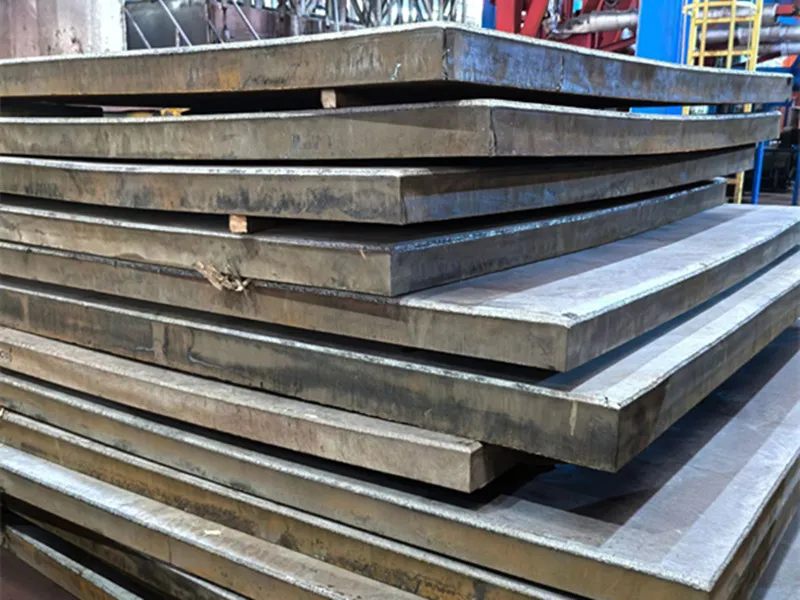
Explosive bonding is a solid-state joining process used to combine dissimilar metals into composite plates. By creating a metallurgical bond between different metal layers, the process makes it possible to combine the properties of different materials in a single plate.
Explosive-bonded composite plates are used in industries such as oil and gas, chemical processing, power generation, environmental protection, water treatment, and shipbuilding. Depending on the material combination, a composite plate can combine the strength of steel with the corrosion resistance of titanium, the conductivity of copper with the structural support of steel, or the low density of aluminum with the properties of another metal.
This article explains how explosive bonding works, how composite plates are manufactured, how explosive bonding differs from hot-rolled cladding, and how these plates are used in industrial equipment.
1. What Is Explosive Bonding?
1.1 The Basic Principle of Explosive Bonding
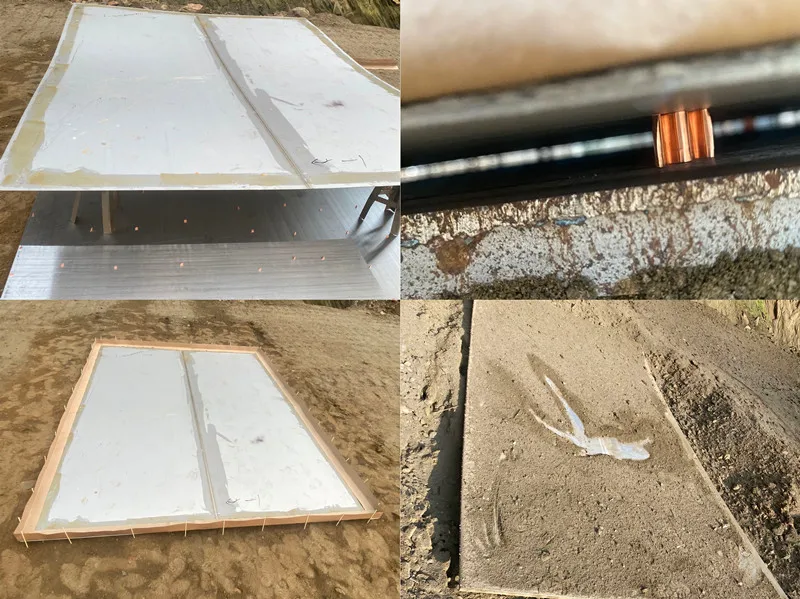
Explosive bonding, also known as explosive welding, is a solid-state metal joining process. It uses a controlled explosive charge to accelerate one metal plate toward another at high velocity and at a suitable impact angle.
During impact, the metal surfaces undergo intense plastic deformation. A high-velocity metal jet can form at the collision front, removing surface contaminants and helping create intimate contact between the two metals. Under suitable process conditions, this produces a metallurgical bond without melting the entire joint interface.
The resulting composite plate contains two or more bonded metal layers. Each layer contributes specific properties to the finished material.
For example, a steel-titanium composite plate combines the structural strength and relatively low cost of steel with the corrosion resistance of titanium. A copper-steel composite plate combines copper's electrical or thermal conductivity with the strength and rigidity of steel.
The quality of the bond depends on factors such as the material combination, surface condition, plate arrangement, explosive parameters, and impact conditions.
1.2 Why Use Explosive Bonding for Dissimilar Metals?
Different metals offer different advantages. In many industrial applications, a single material cannot provide the required combination of strength, corrosion resistance, conductivity, weight, and cost.
Explosive bonding makes it possible to combine materials that are difficult to join reliably using conventional fusion welding.
Typical combinations include:
Steel and titanium: Used where structural strength and corrosion resistance are both required.
Steel and aluminum: Combines the structural support of steel with the lower density of aluminum.
Copper and steel: Combines electrical or thermal conductivity with structural strength.
Copper and aluminum: Combines the conductivity characteristics and economic advantages of the two metals.
The appropriate combination depends on the operating environment, design requirements, and subsequent fabrication process.
1.3 How Are Explosive-Bonded Composite Plates Manufactured?
The manufacture of explosive-bonded composite plates involves several stages. Process parameters must be selected according to the materials and the required bond quality.
1. Material selection
The base metal and cladding metal are selected according to the required mechanical properties, corrosion resistance, conductivity, operating temperature, and service environment.
2. Surface preparation and plate assembly
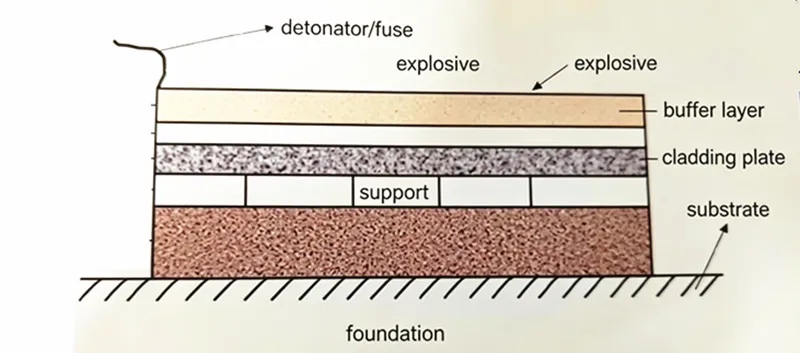
The bonding surfaces are cleaned to remove contaminants and prepared according to the process requirements. The plates are arranged with a controlled gap or stand-off distance, depending on the selected bonding method.
3. Explosive bonding
A controlled explosive charge accelerates the cladding plate toward the base plate. The high-velocity collision produces intense plastic deformation and creates the metallurgical bond between the layers.
4. Post-bonding processing
After bonding, the composite plate may undergo trimming, flattening, heat treatment where applicable, cutting, or other processing steps specified for the material combination and final application.
5. Inspection and testing
Inspection may include ultrasonic testing, bond-strength testing, dimensional checks, and other examinations required by the applicable standard or purchase specification. The inspection plan depends on the product, material combination, and end-use requirements.
The resulting plate can then be supplied as a composite plate or used as a blank for further fabrication into industrial components.
1.4 Explosive Bonding vs. Hot-Rolled Cladding
Explosive bonding and hot-rolled cladding are both used to manufacture metal composite plates, but they rely on different bonding mechanisms and production processes. Their typical bonding-interface appearances also differ.
Explosive bonding uses high-velocity impact to create a metallurgical bond, while hot-rolled cladding primarily uses elevated temperature and rolling pressure to bring different metals into a bonded state.
| Comparison | Explosive Bonding | Hot-Rolled Cladding |
|---|---|---|
| Basic principle | High-velocity collision between metal plates under controlled explosive loading | Elevated temperature and rolling pressure to bond different metal layers |
| Process characteristics | Bonding is produced by intense impact and plastic deformation | Bonding is produced through heating, rolling, and appropriate interface preparation |
| Typical bonding interface | Often wavy; local vortex-like features may also appear | Generally flatter and more uniform in appearance |
| Thermal conditions | Primarily a solid-state joining process, although localized transient heating can occur at the interface | The materials experience elevated temperatures during processing |
| Material suitability | Suitable for a range of dissimilar metal combinations, subject to process compatibility | Suitable for metal combinations that can be bonded reliably under the selected heating and rolling conditions |
How Does the Bonding Interface Differ?
During explosive bonding, the two metals collide at high velocity and undergo intense plastic deformation. The resulting bonding interface often has a wavy profile. Localized vortex-like features may also occur, depending on the collision conditions and material behavior. In a cross-sectional view, the interface may therefore look wave-shaped or somewhat saw-toothed.
In hot-rolled cladding, the metals are bonded mainly through heating and rolling pressure. The interface is generally flatter and more uniform in appearance, although its actual morphology depends on the material combination and processing conditions.
Interface appearance alone does not determine the quality of a composite plate. Bond strength, ultrasonic inspection results, and compliance with the applicable technical requirements must also be considered.
Each process has its own suitable applications. The choice between explosive-bonded and hot-rolled composite plates should be based on the metal combination, plate dimensions, subsequent fabrication requirements, and final service conditions.
2. Types of Explosive-Bonded Composite Plates
Explosive-bonded composite plates can be classified according to the number and combination of metal layers. The layers are arranged through the thickness of the plate, with each layer serving a specific function.
2.1 Two-Layer Composite Plates
Two-layer composite plates consist of a base metal and a cladding metal. The base metal generally provides structural support, while the cladding layer supplies a property required at the service surface or in the operating environment.
Common combinations include:
| Metal Combination | Typical Purpose |
|---|---|
| Steel + Titanium | Structural strength combined with corrosion resistance |
| Steel + Aluminum | Structural support combined with reduced weight |
| Copper + Steel | Electrical or thermal conductivity combined with structural strength |
| Copper + Aluminum | Combines the conductivity characteristics of copper and aluminum |
The exact arrangement and thickness of each layer depend on the application. Material selection should account for service conditions, fabrication requirements, and the properties required from each side of the composite plate.
2.2 Three-Layer and Multilayer Composite Plates
Three-layer and multilayer composite plates contain three or more metal layers. They are designed for applications that require a combination of properties that cannot be achieved as effectively with a simple two-layer structure.
Examples include steel-titanium-aluminum and steel-aluminum-steel combinations. The layer arrangement and thickness ratios are determined by the required functions of the individual metals.
For example, a multilayer structure may use one metal to provide structural support, another to resist corrosion, and a third to meet additional weight, conductivity, or surface requirements.
The feasibility of a particular combination depends on the compatibility of the selected metals and the bonding process. Material combinations and layer arrangements should therefore be confirmed against the intended manufacturing route and technical specifications.
3. What Can Be Made from Explosive-Bonded Composite Plates?
Explosive-bonded composite plates are commonly supplied as plate material or semi-finished blanks. They can be cut, formed, machined, and joined with other components to manufacture industrial equipment.
3.1 Heat Exchanger Components
Composite plates can be processed into tube sheets and other components for heat exchangers. The material combination is selected according to the fluids, temperatures, pressures, and corrosion conditions involved.
The cladding layer provides the required surface properties, while the base metal supplies structural support.
3.2 Pressure Vessels and Chemical Equipment
Composite plates can be used as material for pressure-vessel shells, heads, and other components in chemical and petrochemical equipment.
For equipment exposed to corrosive media, a corrosion-resistant cladding layer can reduce the need to manufacture the entire component from a more expensive corrosion-resistant alloy. The final design must meet the relevant pressure-equipment codes and material requirements.
3.3 Shipbuilding Components
Steel-aluminum composite plates can serve as raw material for structural transition joints used to connect steel and aluminum sections in shipbuilding.
The composite plate is processed into the required transition component according to the design and application. The finished transition joint and the original composite plate are distinct products.
3.4 Electrical and Electrochemical Components
Copper-based composite plates can be used to manufacture specialized conductive components where electrical or thermal conductivity must be combined with structural support or another material property.
The specific metal combination depends on current-carrying requirements, operating temperature, contact resistance, and the intended connection method.
4. Industrial Applications of Explosive-Bonded Composite Plates
4.1 Oil and Gas
Oil and gas equipment can encounter corrosive fluids, elevated pressures, and demanding operating conditions. Steel-based composite plates with suitable corrosion-resistant cladding can be used in selected pressure vessels and process equipment.
Material selection must consider the actual fluid composition, temperature, pressure, and applicable design requirements.
4.2 Chemical and Petrochemical Processing
Chemical processing equipment often requires both structural strength and resistance to aggressive media. Steel-titanium composite plates are used in suitable applications where the steel provides structural support and the titanium cladding provides corrosion resistance.
Potential applications include process vessels, reaction equipment, and components for chemical handling systems, subject to the requirements of the specific service environment.
4.3 Power Generation and Energy
Power-generation equipment may require materials that can withstand pressure, temperature, and corrosive operating conditions. Composite plates can be selected for specific equipment components where combining different metal properties provides a practical design solution.
The appropriate material combination depends on the equipment design, operating conditions, and applicable standards.
4.4 Electrical and Electrochemical Industries
Copper-based composite plates can be considered for applications requiring electrical or thermal conductivity together with structural support. The final material design should reflect the required conductivity, connection performance, temperature rise, and mechanical loading.
4.5 Environmental Protection and Water Treatment
Equipment used in water treatment and environmental protection may be exposed to corrosive liquids, chemical agents, or challenging operating conditions. Suitable corrosion-resistant composite plates can be used in selected tanks, process vessels, and related equipment.
The cladding material should be chosen according to the actual medium and service conditions rather than the application category alone.
4.6 Shipbuilding
Shipbuilding uses different metals for different structural functions. Steel-aluminum structural transition joints allow steel and aluminum sections to be connected in applications where their different properties are required.
Explosive-bonded composite plates can be processed into transition components for suitable ship structures. The design and fabrication process must follow the applicable marine requirements and project specifications.
5. STJ vs. ETJ: What Is the Difference?
STJ and ETJ refer to different types of transition joints in common industrial usage. Their meanings should be checked against the terminology used in the relevant industry documents, standards, and project specifications.
5.1 STJ — Structural Transition Joint
STJ commonly stands for Structural Transition Joint. In shipbuilding, it often refers to a transition component used to connect steel and aluminum structures.
Steel provides structural strength, while aluminum helps reduce weight. Because these metals have different physical and metallurgical properties, directly joining them can present challenges. A suitable transition joint provides a bonded transition between the two materials.
Explosive-bonded steel-aluminum composite plate can be used as the starting material for manufacturing such joints. Additional cutting and fabrication are required to produce the finished component.
5.2 ETJ — Electrical Transition Joint
ETJ commonly stands for Electrical Transition Joint. It is used to connect dissimilar conductive metals, such as copper and aluminum, in electrical systems.
Copper and aluminum have different electrical and physical properties. The transition joint must provide suitable electrical performance and mechanical reliability under the intended operating conditions.
Key considerations include contact resistance, temperature rise, current-carrying capacity, connection design, and the service environment. Copper-aluminum composite materials can be used as the starting material for manufacturing certain transition components.
The terms STJ and ETJ may be defined differently in particular industries or documents. Always confirm their meanings against the relevant drawings, standards, and supplier specifications.
6. How to Select Explosive-Bonded Composite Plates
Choosing a suitable composite plate requires more than identifying two metals that can be bonded together. The material combination and manufacturing route must match the final application.
Metal combination: Identify the required base metal and cladding metal according to structural, corrosion-resistance, conductivity, and weight requirements.
Service environment: Consider the operating medium, temperature, pressure, corrosion conditions, and expected service life.
Dimensions and layer thickness: Confirm the overall plate dimensions, thickness of each layer, tolerances, and any machining allowance required for subsequent processing.
Fabrication requirements: Consider whether the plate will be cut, rolled, formed, machined, or welded during downstream manufacturing. The fabrication route can affect material selection and processing requirements.
Inspection and documentation: Specify the required inspection methods, bond-quality criteria, material certificates, testing records, and applicable standards in the purchase specification.
The selection process should start with the requirements of the finished component and work backward to the appropriate composite plate, material combination, and bonding process.
7. Conclusion
Explosive bonding provides a way to combine dissimilar metals into composite plates with different functional layers. By selecting an appropriate combination, manufacturers can integrate properties such as structural strength, corrosion resistance, electrical conductivity, and reduced weight into a single material.
Explosive bonding and hot-rolled cladding use different manufacturing processes and produce different typical bonding-interface appearances. The appropriate method depends on the material combination, product dimensions, fabrication route, and service requirements.
For industrial applications, successful material selection requires clear specifications for the metal combination, layer thickness, operating environment, subsequent processing, and inspection requirements. These factors determine whether an explosive-bonded composite plate is suitable for the intended component and service conditions.