Why Is 6101 Aluminum Used for Busbar Trunking Systems?
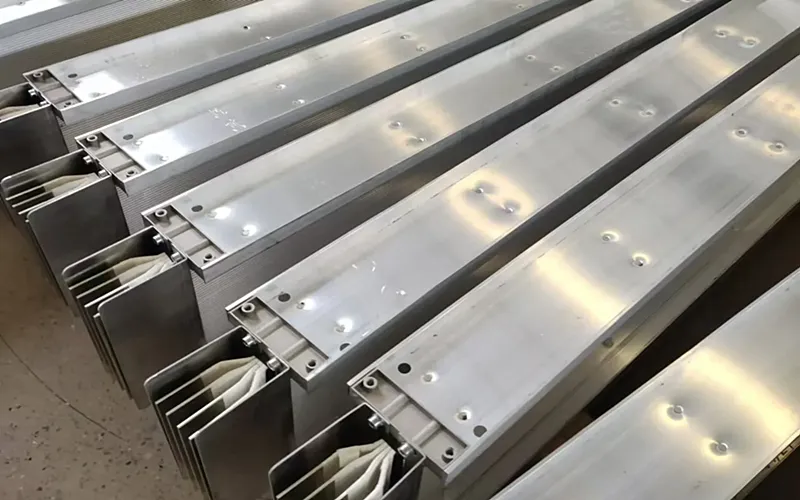
In modern building power distribution, industrial plants, and large commercial complexes, busbar trunking has become an important solution for high-current power distribution, gradually replacing traditional installations that rely on multiple large power cables.
A common question among electrical engineers, contractors, and purchasing teams is: Should the conductor inside a busbar trunking system be made of aluminum or copper? Why are aluminum busbars increasingly preferred for many power distribution projects?
This article explains the basic structure and working principle of an electrical busbar system, compares the major types of busbar trunking, and examines the differences between aluminum and copper conductors to help you understand why aluminum busbars are widely used in modern power distribution.
1. What Is Busbar Trunking?
What is busbar trunking? Also known as a busway system, busbar trunking is an enclosed electrical power distribution system designed to transmit large electrical currents through a compact, modular assembly.
In traditional power distribution, multiple large cables are often bundled together to carry high currents. As the required current increases, cable sizes and quantities also increase, making installation more complicated, requiring more space, and making heat dissipation and future expansion more difficult.
A busbar trunking system integrates conductive busbars, high-performance insulation, and a protective metal enclosure into a compact modular unit. Compared with conventional cable distribution, it offers high current-carrying capacity, controlled heat dissipation, improved mechanical protection, convenient branch connections, and easier system expansion.
In simple terms, cables are commonly used for individual loads and smaller circuits, while busbar trunking is particularly suitable for high-current power distribution and main electrical feeders.
2. Main Components of an Electrical Busbar System
A complete electrical busbar system generally consists of four main components: the metal enclosure, insulation supports, conductive busbars, and functional accessories.
Among these components, the conductive busbar is the core electrical element because it carries the current through the entire system. The enclosure and insulation mainly provide mechanical protection, electrical isolation, and heat dissipation.
2.1 Metal Enclosure
The enclosure is commonly manufactured from cold-rolled steel sheet with a protective coating or from aluminum alloy.
Its primary functions include:
Protecting the internal conductors from mechanical damage
Providing protection against dust and moisture
Helping dissipate heat
Providing mechanical support
Contributing to the grounding and protective structure of the system
The enclosure is primarily a protective and structural component rather than the main current-carrying conductor.
2.2 Insulation Supports
Insulation components are commonly manufactured from high-temperature, flame-retardant insulating materials such as SMC or DMC.
They are used to:
Electrically isolate individual phases
Maintain the correct position of the busbars
Reduce the risk of phase-to-phase faults
Provide heat resistance and flame retardancy
Maintain the mechanical stability of the conductor assembly
2.3 Conductive Busbars — The Core of the System
The busbar is the heart of a busbar trunking system because all electrical power is transmitted through the internal conductive bars.
The two major conductor materials used in busbar trunking are copper and aluminum.
Copper Busbar Trunking
Copper busbars offer excellent electrical conductivity, low electrical resistance, and stable long-term electrical performance. They have traditionally been widely used in premium and high-current electrical distribution systems.
Their main advantages include:
Excellent electrical conductivity
Low electrical resistance
Good long-term electrical stability
Strong performance in high-current applications
However, copper also has significant disadvantages:
High raw material cost
High density and heavy weight
Higher transportation and installation costs
Greater structural and lifting requirements for large installations
Aluminum Busbar Trunking
Aluminum busbars provide a different balance between electrical conductivity, mechanical strength, weight, and cost.
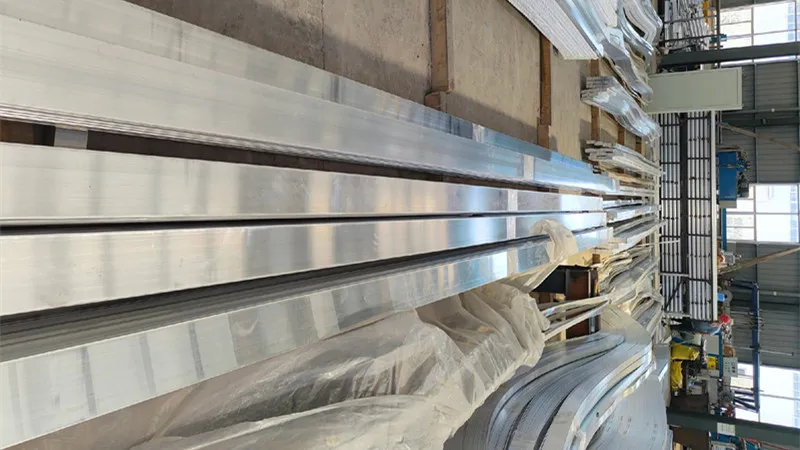
For electrical conductor applications, 6101 aluminum alloy is widely used because it combines good electrical conductivity with useful mechanical strength. Under ASTM B317/B317M, 6101 electrical conductor products can be supplied in several tempers, including T6, T61, T63, T64, T65, and H111, depending on the required properties.
For customers looking specifically for electrical busbars, our 6101 T65 T61 Busbar can be supplied for applications requiring a balance between electrical conductivity and mechanical performance.
Compared with copper, 6101 aluminum busbars offer several important advantages:
Much lower weight — aluminum has a density of about one-third that of copper, significantly reducing the weight of the busbar assembly and making transportation, lifting, and installation easier.
Good electrical conductivity — 6101 is specifically designed for electrical conductor applications and offers a useful combination of conductivity and strength. ASTM B317/B317M specifically covers 6101 extruded products for electrical purposes.
Good corrosion resistance — aluminum naturally forms a thin oxide film that protects the underlying metal from further oxidation under normal atmospheric conditions.
Lower material cost — aluminum is generally much less expensive than copper, making it attractive for large-scale power distribution projects.
Good strength-to-weight ratio — heat-treated tempers such as T6, T61, and T65 provide different combinations of strength and electrical conductivity, allowing the conductor specification to be selected according to project requirements.
For many conventional commercial, industrial, and building power distribution applications, a properly designed aluminum busbar system can provide the required electrical and mechanical performance while significantly reducing system weight and material costs.
3. Main Types of Busbar Trunking
According to their internal construction and insulation design, busbar trunking systems can generally be divided into air-insulated busbar trunking and sandwich-type or compact busbar trunking.
Both designs can use either aluminum or copper conductors, depending on the system design and electrical requirements.
3.1 Air-Insulated Busbar Trunking
Air-insulated busbar trunking uses air gaps between the conductors as part of the insulation and cooling arrangement.
Its advantages include:
Relatively simple construction
Good heat dissipation
Lower manufacturing cost
Easy maintenance
It can be suitable for certain conventional distribution systems, retrofit projects, and applications where compact dimensions are not the primary requirement.
3.2 Compact or Sandwich Busbar Trunking
In compact busbar trunking systems, the conductors are closely arranged and insulated, creating a more compact structure with efficient space utilization.
Typical advantages include:
Smaller overall dimensions
High current-carrying capacity
More uniform conductor arrangement
Efficient heat dissipation
Good mechanical protection
Convenient installation in space-constrained applications
Compact busbar trunking is widely used in new commercial buildings, industrial facilities, data centers, and other high-current distribution systems.
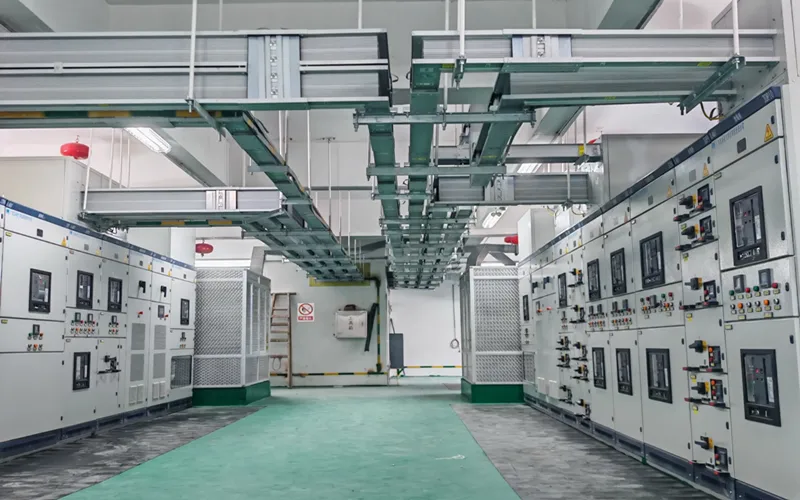
4. Main Applications of Busbar Trunking Systems
The main purpose of a busbar trunking system is to provide reliable, high-current power transmission along electrical distribution routes.
Typical applications include:
High-rise office buildings, hotels, and residential buildings for vertical power distribution through electrical risers
Industrial factories and production facilities for distributing power to production lines and large electrical loads
Shopping malls, commercial complexes, stadiums, airports, and railway stations
Data centers and server rooms requiring high-capacity and reliable power distribution
Industrial parks and photovoltaic power projects
Electrical system upgrades and building renovation projects
These applications often involve long distribution routes, high current requirements, limited installation space, and the possibility of future expansion. These are precisely the conditions where the lightweight and cost advantages of aluminum busbars can become particularly valuable.
5. Aluminum vs. Copper Busbars: A Detailed Comparison
A common concern is whether aluminum busbars are inferior to copper busbars and whether they are more likely to overheat.
The answer depends on the conductor material, cross-sectional area, electrical design, connection technology, cooling conditions, and required current rating.
5.1 Weight
Copper:
Copper has a much higher density, making copper busbars significantly heavier. Large busbar trunking systems therefore require more effort for transportation, lifting, and installation.
Aluminum:
Aluminum weighs roughly one-third as much as copper by volume. This can substantially reduce the weight of the conductor assembly and simplify installation.
5.2 Electrical Conductivity and Heat Generation
Copper has higher electrical conductivity than aluminum at the same cross-sectional area.
However, electrical busbars are not selected solely according to conductivity. The conductor cross-section, current density, temperature rise, enclosure design, ventilation, and connection resistance must all be considered.
6101 aluminum alloy is specifically covered by ASTM B317/B317M for electrical conductor applications, with different tempers available to balance conductivity and mechanical properties.
Therefore, an appropriately designed aluminum busbar with a suitable cross-sectional area can meet the required current-carrying and temperature-rise requirements of many conventional low-voltage distribution systems.
5.3 Corrosion Resistance
Both copper and aluminum can undergo surface oxidation.
Copper can develop a dark oxide layer and, under certain environmental conditions, copper corrosion products such as patina. Aluminum naturally develops a thin oxide film that provides protection against further atmospheric oxidation.
For humid or industrial environments, however, the overall corrosion resistance of the complete busbar system depends not only on the alloy but also on enclosure protection, surface treatment, joint design, environmental exposure, and maintenance.
5.4 Material and Project Cost
The lower density and generally lower raw material cost of aluminum can provide substantial savings for large-scale electrical distribution systems.
The actual project saving varies according to conductor cross-section, copper and aluminum market prices, enclosure design, current rating, installation conditions, and other system components. Therefore, it is better to evaluate the total project cost rather than assume a fixed percentage of savings for every busbar trunking project.
5.5 Application Selection
Copper busbar trunking may be preferred for:
Very high-current applications
Projects with strict space limitations
Critical electrical infrastructure
Applications where maximum conductivity within a limited conductor cross-section is required
Projects where the higher material and installation cost is acceptable
Aluminum busbar trunking may be preferred for:
Commercial buildings
Industrial facilities
Manufacturing plants
Shopping centers and large buildings
Conventional low-voltage distribution systems
Projects where weight reduction and cost control are important
Long busbar trunking runs where conductor weight becomes a major installation consideration
The right choice should always be based on the required current rating, allowable temperature rise, available installation space, mechanical requirements, environmental conditions, and applicable electrical standards.
6. FAQ About Aluminum Busbar Trunking
Q1: Does aluminum busbar have poor conductivity and easily overheat?
Not necessarily.
Copper has higher electrical conductivity than aluminum, but 6101 aluminum is specifically used for electrical conductor applications. With the appropriate conductor cross-section, current rating, joint design, and thermal design, an aluminum busbar system can meet the electrical and temperature-rise requirements of many low-voltage distribution applications. ASTM B317/B317M includes 6101 extruded products specifically for electrical conductor applications.
Q2: Is aluminum less durable than copper?
Aluminum busbars can provide long service life when the conductor material, joints, insulation, enclosure, and installation environment are properly specified.
However, it is not technically accurate to claim that aluminum is universally more durable than copper. The service life of a complete busbar trunking system depends on environmental conditions, thermal loading, connection quality, corrosion protection, insulation aging, and maintenance.
Q3: Are aluminum busbar trunking systems acceptable for engineering projects?
Whether a specific aluminum busbar trunking system is accepted depends on the applicable national or regional electrical codes, product standards, project specifications, testing requirements, and certification documents.
For international projects, buyers should check the required standards and request relevant test reports, material certificates, and product certifications from the supplier.
Q4: Is there a specific aluminum alloy used for electrical busbars?
Yes.
6101 aluminum alloy is one of the established aluminum alloys used for electrical conductor applications. ASTM B317/B317M covers 6101 extruded bars, rods, tubes, pipes, and profiles for electrical purposes. The standard recognizes several tempers, including T6, T61, T63, T64, T65, and H111.
The appropriate temper depends on the required combination of electrical conductivity, tensile strength, yield strength, and fabrication requirements.
Q5: When should copper busbar be considered instead of aluminum?
Copper may be preferred when the application requires higher electrical conductivity within a limited cross-sectional area, very high current density, compact conductor dimensions, or other project-specific electrical and mechanical requirements.
For critical facilities and high-current installations, the final selection should be made according to the engineering design rather than simply choosing one material as universally superior.
Q6: Will aluminum busbars bend or deform easily?
The mechanical performance depends on the alloy, temper, dimensions, support spacing, installation method, and operating conditions.
6101 is available in different tempers, including T6, T61, and T65, allowing engineers to select a suitable combination of conductivity and mechanical strength. Properly supported and correctly installed aluminum busbars can provide reliable mechanical performance in busbar trunking applications.
Conclusion
The conductor is the core electrical component of a busbar trunking system. While copper offers excellent electrical conductivity, its high density and material cost can significantly increase the weight and overall cost of large electrical distribution systems.
6101 aluminum busbar provides an attractive alternative by combining good electrical conductivity, useful mechanical strength, low density, corrosion resistance, and cost efficiency.
Importantly, 6101 electrical busbars are not limited to T6. T6, T61, T63, T64, T65, and H111 are recognized tempers for 6101 electrical conductor products under ASTM B317/B317M.
For this reason, aluminum busbars can be a highly practical choice for many commercial buildings, industrial facilities, manufacturing plants, and conventional low-voltage power distribution projects.
The key is not simply choosing aluminum instead of copper, but selecting the correct 6101 temper, conductor cross-section, current rating, joint design, insulation system, and enclosure according to the actual electrical requirements of the project.