6061 vs. 6063 Aluminum for EV Battery End Plates: Material & Machining Guide
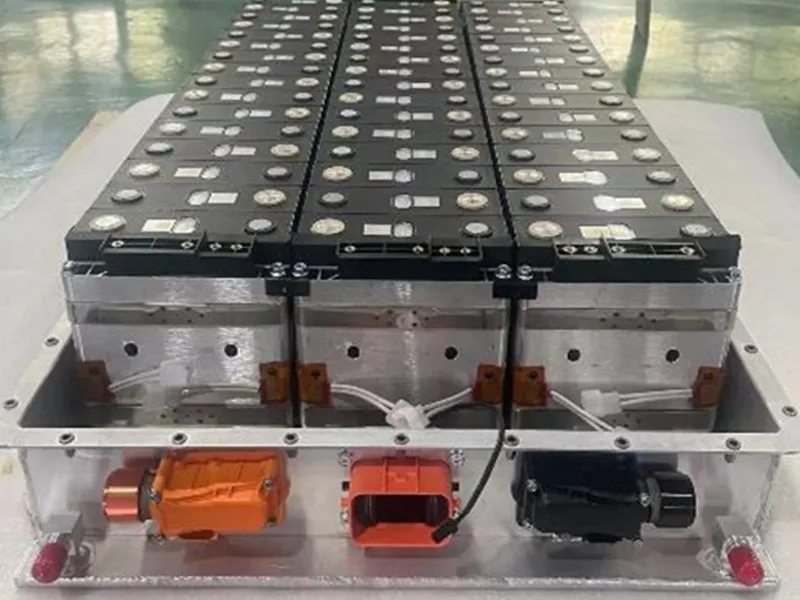
As electric vehicles become lighter, more compact, and more energy-dense, battery manufacturers are paying increasing attention to the materials used in battery structural components. Among these components, the battery module end plate may appear relatively simple, but its material selection can affect structural stability, machining performance, weight, and production cost.
Aluminum is widely considered for battery end plates because it combines low density with useful structural strength, corrosion resistance, and good manufacturability. Within the 6000 series, 6061 and 6063 aluminum are two grades that may enter the material selection discussion, but they are not interchangeable in every design.
The better choice depends on how the end plate is designed and manufactured. A CNC-machined end plate cut from aluminum plate may have different material requirements from an end plate produced from an extruded profile. Likewise, a high-load structural component may prioritize strength and machinability, while a profile-based design may place greater emphasis on extrusion performance and surface finish.
This guide examines 6061 vs. 6063 aluminum for EV battery end plates, with a focus on material properties, temper selection, stock form, CNC machining, and practical material-selection considerations.
1. What is an EV Battery End Plate?
A battery module end plate is a structural component installed at the end of a battery module, typically working together with other structural members to hold and restrain a group of battery cells.
In prismatic-cell battery modules, the end plates can form part of the mechanical clamping structure. Depending on the module architecture, they may contain mounting holes, positioning features, counterbores, grooves, or other machined details.
The exact geometry varies considerably from one battery design to another. Some end plates are relatively simple flat plates, while others incorporate ribs, bosses, recesses, or integrated mounting features.
This variation is important because the geometry and manufacturing route of the end plate directly influence the aluminum alloy and stock form that make sense for production.
2. Why is Aluminum Used for EV Battery End Plates?
The attraction of aluminum for battery structural components is not based on a single property. It comes from the combination of weight, mechanical performance, corrosion resistance, and manufacturability.
The 6xxx aluminum series is particularly relevant because these alloys offer a useful combination of moderate-to-high strength, corrosion resistance, formability, weldability, and extrusion capability. The Aluminum Association describes 6xxx alloys as versatile, heat-treatable alloys with moderately high strength and excellent corrosion resistance.
Lightweight Construction
Reducing the weight of battery structures can contribute to the overall weight target of an EV.
Aluminum has a density of roughly one-third that of steel, making it attractive where structural weight matters. The benefit is not simply replacing a steel plate with an aluminum plate of identical dimensions, however. Designers can also modify section thickness, add ribs, or optimize the geometry to achieve the required stiffness with less material.
Structural Strength
A battery end plate may be exposed to clamping loads, vibration, handling loads, and dimensional changes associated with battery operation.
The required strength depends on the module architecture and loading conditions. For higher-load structural applications, an alloy such as 6061 may be attractive because it offers a stronger combination of structural performance and machinability than softer extrusion-focused alloys. Hydro describes 6061 as a medium-to-high strength aluminum alloy with good machinability, corrosion resistance, and suitability for structural and automotive applications.
Corrosion Resistance
Battery systems can experience humidity, temperature changes, condensation, and other environmental conditions. Aluminum's naturally forming oxide layer provides useful corrosion resistance, while additional surface treatments can be selected when the application requires them.
Machinability
End plates frequently require secondary machining after the material is cut or extruded. Typical operations may include:
Face milling
Drilling
Counterboring
Tapping
Pocket milling
Groove machining
Precision hole positioning
6061 is particularly attractive when a significant amount of CNC machining is required because machinability is one of its recognized advantages.
Extrusion Capability
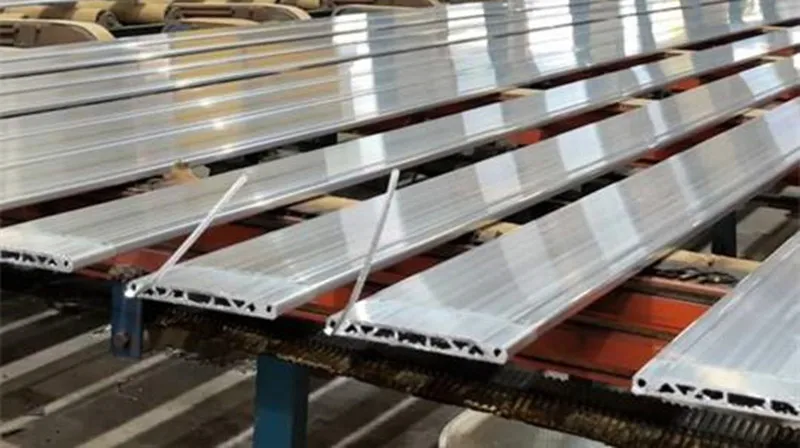
When an end plate is designed around a constant or semi-constant cross-section, aluminum extrusion can reduce the amount of material that must be removed during machining.
Extrusion is a process in which a heated aluminum billet is forced through a die to produce a specified cross-sectional shape. The resulting extrusion can then be cut, machined, bent, or otherwise fabricated into the final component.
This is where the comparison between 6061 and 6063 becomes particularly relevant.
3. What Aluminum Properties Matter for Battery End Plates?
Choosing an aluminum alloy for a battery end plate should begin with the actual requirements of the component rather than with the alloy designation alone.
Several properties deserve attention.
Strength and Stiffness
The end plate must maintain its geometry under the loads imposed by the battery module.
Strength helps the material resist permanent deformation, while stiffness affects how much the component deflects under load.
For this reason, an end plate designed for significant mechanical loading may favor a higher-strength heat-treatable alloy such as 6061 over a softer extrusion-oriented alloy.
Dimensional Stability
Dimensional stability becomes especially important when the end plate contains large machined areas, thin sections, deep pockets, or closely controlled mounting features.
The issue is not simply whether the raw aluminum plate is flat. Residual stresses within the stock can be released as material is removed during machining, potentially causing distortion.
Research on 6061 aluminum has specifically identified residual stress as a contributor to machining deformation.
Machinability
A material may be structurally suitable but still create manufacturing difficulties if the final component requires extensive CNC machining.
For a heavily machined end plate, machinability affects:
Cutting efficiency
Tool wear
Surface quality
Cycle time
Dimensional control
Risk of deformation
This is one reason 6061 can be attractive for machined structural components.
Extrudability
If the end plate can be designed around an extruded cross-section, extrusion performance becomes much more important.
6063 is one of the most widely used aluminum extrusion alloys. It is known for excellent extrudability, consistent surface quality, and good anodizing characteristics.
Surface Finish and Anodizing
Surface appearance may not be the primary consideration for an internal battery component, but surface quality can still matter for finishing, corrosion protection, and consistent production.
6063 generally provides an advantage when surface finish and anodizing quality are important, while 6061 offers a stronger overall balance for structural and heavily machined applications.
4. 6061 vs. 6063 Aluminum for Battery End Plates
6061 and 6063 are both heat-treatable 6xxx-series aluminum alloys containing magnesium and silicon, but their typical strengths lie in different areas.
A simplified comparison is useful:
| Property | 6061 Aluminum | 6063 Aluminum |
|---|---|---|
| Structural strength | Higher | Moderate |
| Extrudability | Good | Excellent |
| Machinability | Good | Fair to good |
| Surface finish | Good | Excellent |
| Anodizing | Good | Excellent |
| Complex extrusion | Good | Excellent |
| Typical advantage | Structural and machined parts | Extruded profiles and surface quality |
| Typical consideration for end plates | Higher-load / CNC-machined designs | Profile-based designs with moderate structural demands |
When 6061 is More Suitable
6061 is often the more straightforward option when the battery end plate functions primarily as a structural and machined component.
It can be attractive when the design requires:
Higher mechanical strength
Extensive CNC machining
Precision mounting holes
Deep pockets or grooves
Structural stiffness
Good corrosion resistance
Stable performance after heat treatment
6061 is widely used in structural, automotive, marine, and other applications where strength, corrosion resistance, fabrication, and machining are important.
For a machined battery end plate made from plate or thick stock, 6061-T6 or 6061-T651 may therefore be considered depending on the required material condition and machining strategy.
When 6063 is Better Choice
6063 has a different advantage.
Its excellent extrusion characteristics allow manufacturers to produce complex or semi-complex profiles efficiently. It also offers good surface quality and anodizing performance.
6063 can therefore be considered when:
The component geometry is suitable for extrusion
A large portion of the final shape can be formed by the extrusion die
Machining volume needs to be reduced
Surface finish is important
Structural loading is moderate
Production volume can justify extrusion tooling
This does not mean that 6063 is automatically unsuitable for battery end plates. The correct question is whether its mechanical properties and temper are sufficient for the actual design.
The alloy choice should ultimately be based on the required load, geometry, manufacturing route, dimensional tolerances, and applicable engineering specifications.
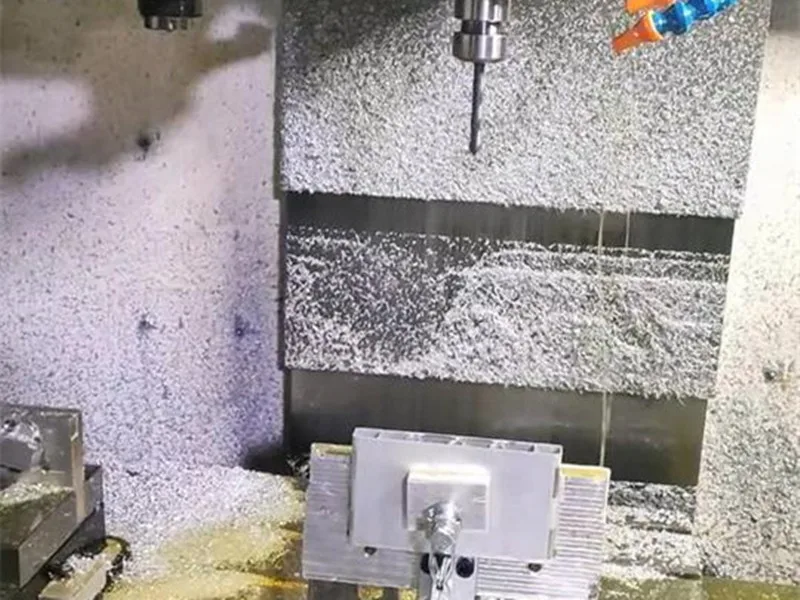
5. 6061-T6 vs. 6061-T651 for CNC-Machined End Plates
For CNC-machined aluminum end plates, alloy selection is only part of the decision. The temper can also affect manufacturing behavior.
6061-T6
6061-T6 is a widely available heat-treated condition offering a useful combination of strength, toughness, corrosion resistance, and machinability.
It is suitable for many general structural and machined applications.
6061-T651
6061-T651 is also solution heat-treated and artificially aged, but it additionally undergoes stress relief by stretching.
This distinction matters when a large amount of material will be removed during machining.
When machining a thick aluminum plate, removing material can release residual stresses and cause the remaining material to move. Studies of aluminum machining have demonstrated that residual stress can contribute to distortion after material removal.
T651 is therefore often considered when dimensional stability during machining is particularly important. Hydro describes T651 as a 6061 condition that is stress-relieved by stretching before artificial aging, while T6511 is similarly intended to reduce the possibility of distortion in machined parts.
However, T651 does not mean that a machined part can never deform.
The final result still depends on:
Stock thickness
Material removal ratio
Part geometry
Symmetry of machining
Clamping method
Machining sequence
Cutting parameters
Heat generated during machining
Initial material residual stress
For precision battery end plates, material condition should therefore be considered together with the CNC process rather than treated as a standalone solution.
6. Aluminum Plate vs. Extruded Stock for End Plate Manufacturing
The choice between plate stock and extruded aluminum is another important consideration.
There is no universal rule that plate is only for small batches and extrusion is only for mass production. Production volume matters, but so do part geometry, tooling cost, material utilization, machining time, and dimensional requirements.
CNC Machining from Aluminum Plate
A typical route may look like:
Aluminum plate → Cutting → Face milling → CNC machining → Inspection
This approach can be attractive for:
Prototypes
R&D projects
Small production runs
Frequently changing designs
Flat end plates
Parts with relatively simple geometry
The major advantage is flexibility.
No dedicated extrusion die is required, and the stock dimensions can be changed relatively easily when the end plate design changes.
For CNC-intensive designs, a stress-relieved plate condition such as 6061-T651 may also be considered when dimensional stability is important.
For applications requiring 6061 material in plate form, our 6061 T6 / T651 Aluminum Sheet Metal for CNC Machining, Marine and Aircraft Engineering can be used as a material option for machining structural components.
Machining from Extruded Aluminum
A profile-based route may look like:
Aluminum billet → Extrusion → Cutting → CNC machining → Inspection
The major advantage is that extrusion can produce a cross-section that is already close to the final component geometry.
This can reduce:
Material removal
Machining time
Scrap
Production cycle time
The Aluminum Association notes that extruded products are commonly cut and then subjected to secondary operations such as machining, bending, or welding before becoming finished components.
6061 and 6063 can both be used in extrusion, but their extrusion characteristics differ. 6063 is particularly well known for its excellent extrudability, while 6061 provides a stronger structural profile option with good machinability.
For customers evaluating extruded stock for structural components, our 6061 T6 T4 T651 Aluminum bar Stock Extrusions provide another material route to consider.
Which Route Is Better?
The answer depends on the design.
| Consideration | Plate + CNC | Extrusion + CNC |
| Prototype flexibility | Excellent | Limited by tooling |
| Small batches | Usually attractive | Depends on tooling cost |
| Repeated production | Possible | Often advantageous |
| Complex constant profiles | Less efficient | Strong advantage |
| Material utilization | Depends on geometry | Potentially better |
| Machining volume | Often higher | Can be reduced |
| Design changes | Easier | May require die changes |
| Best material choice | Often 6061 | 6061 or 6063 depending on design |
The most economical solution is therefore not determined by alloy price alone. The total manufacturing route should be considered.
7. Aluminum Thickness and Stock Size: What Determines the Choice?
Battery end plates do not have one universal thickness.
The required thickness depends on the structural design of the battery module, including:
Cell format
Module dimensions
Clamping force
Distance between supports
End plate geometry
Rib or reinforcement design
Required stiffness
Mounting features
Material strength
Weight target
CNC machining requirements
For this reason, a specification such as “10 mm” or “15 mm” should be treated as a design-specific value rather than a universal battery end plate standard.
The stock thickness also does not necessarily equal the final end plate thickness.
A CNC-machined part may require additional material for:
Face milling
Flatness correction
Pocket machining
Dimensional finishing
Surface preparation
The required machining allowance depends on the starting material, cutting process, tolerance requirements, and final geometry.
When ordering aluminum stock for battery component machining, it is therefore useful to specify both the required final dimensions and the required material condition rather than selecting material only by nominal thickness.
8. CNC Machining Considerations for Aluminum Battery End Plates
Once the aluminum alloy and stock form have been selected, the machining process becomes the next important factor.
A typical machined end plate may involve:
Stock cutting
The plate or extrusion is cut to a suitable blank size.Reference surface machining
One or more faces are machined to establish reliable datums.Rough machining
Pockets, grooves, mounting features, and other large areas are removed.Semi-finishing
Remaining material is removed while maintaining a controlled machining allowance.Finish machining
Critical dimensions, hole locations, flatness, and surface features are completed.Deburring and cleaning
Burrs and machining residues are removed before inspection or assembly.Dimensional inspection
Critical dimensions and geometric tolerances are checked against the engineering drawing.
Why Machining Sequence Matters
A large aluminum plate can behave differently as material is progressively removed.
For example, if a deep pocket is machined from one side, the stress balance of the original stock can change. This is one reason roughing and finishing strategies matter for precision aluminum components.
For high-precision parts, the machining process should therefore be considered together with:
Material temper
Blank size
Material removal ratio
Fixturing
Machining sequence
Final tolerance
The goal is not simply to find an aluminum alloy that can be machined, but to select a material and process combination that can reliably produce the required geometry.
9. EV Battery vs. Energy Storage End Plates
The same general material-selection principles can extend beyond EV battery modules into stationary energy storage systems.
However, the design priorities may differ.
EV Battery Applications
Automotive battery structures often place strong emphasis on:
Weight reduction
Structural rigidity
Dimensional accuracy
Vibration resistance
Compact packaging
High-volume production
This can make the combination of aluminum alloy, optimized geometry, and efficient machining or extrusion particularly important.
Energy Storage Applications
Energy storage systems can have different priorities depending on whether they are designed for residential, commercial, industrial, or containerized applications.
Some systems may place greater emphasis on:
Cost
Long-term environmental exposure
Larger structural dimensions
Production efficiency
Standardized module designs
As a result, the same aluminum alloy should not automatically be specified for every battery system.
The correct selection depends on the actual structural and manufacturing requirements.
10. How to Select Aluminum for Battery End Plate Manufacturing
For buyers sourcing aluminum for battery end plate production, the following decision process can provide a practical starting point.
Choose 6061 When:
Structural strength is a major requirement
The end plate will be heavily CNC machined
Precision holes and pockets are required
Good machinability is important
The component carries significant mechanical loads
Plate or bar stock is being used
A heat-treated structural alloy is preferred
6061's combination of strength, machinability, corrosion resistance, and fabrication characteristics makes it a versatile choice for structural applications.
Consider 6063 When:
The design is suitable for aluminum extrusion
Complex or continuous profiles can reduce machining
Surface finish is important
Anodizing quality is a consideration
Structural loads are moderate
Production efficiency can benefit from profile-based manufacturing
6063 is especially well suited to extrusion because of its excellent extrudability and surface characteristics.
Consider T651 When:
A thick 6061 plate will undergo substantial material removal
Flatness is important after machining
Residual-stress-related distortion is a concern
The component contains deep pockets or asymmetric features
T651 can reduce the risk associated with residual stress, although machining strategy and part geometry still have a major influence on final dimensional stability.
Consider Extruded Stock When:
The part has a repeatable cross-section
Production volume justifies tooling
Material removal from plate would be excessive
Machining time needs to be reduced
The extrusion can closely match the final component geometry
Ultimately, 6061 vs. 6063 is not a simple question of which alloy is better. It is a question of which alloy, temper, stock form, and manufacturing route best fit the actual battery end plate design.
Conclusion
Aluminum battery end plates illustrate an important point in material selection: the best aluminum alloy cannot be determined from the component name alone.
For many CNC-machined structural end plates, 6061 is an attractive starting point because it combines structural strength, machinability, corrosion resistance, and heat-treatable tempers. When machining large or thick blanks, 6061-T651 may be considered where residual-stress-related distortion is a concern.
6063, meanwhile, offers excellent extrusion performance, good surface quality, and strong anodizing characteristics. When the end plate design can take advantage of an extruded profile and the structural requirements are compatible with the alloy and temper, 6063 may provide an efficient manufacturing route.
The final decision should consider:
Required mechanical performance
End plate geometry
Material temper
Plate or extrusion stock
Machining volume
Dimensional tolerances
Production volume
Material utilization
Surface treatment requirements
For aluminum suppliers, understanding these relationships is just as important as supplying the alloy itself. A suitable material specification can help battery component manufacturers reduce machining problems, improve production consistency, and select a more economical manufacturing route.
FAQ
What is the best aluminum alloy for EV battery end plates?
There is no single alloy that is best for every battery end plate. 6061 is often a strong candidate for structural and CNC-machined designs because of its combination of strength and machinability. 6063 may be considered when extrusion performance and surface finish are more important.
Is 6061-T6 or 6061-T651 better for CNC-machined battery end plates?
Both are heat-treated 6061 conditions, but T651 includes stress relief by stretching. For thick stock or components involving substantial material removal, T651 may offer advantages in controlling machining distortion. The final result still depends on the machining process and part geometry.
Can 6063 aluminum be used for battery end plates?
Yes, 6063 can be used in applications where its extrusion characteristics and mechanical properties are suitable for the design. It should not automatically be treated as a replacement for 6061; the actual load, geometry, temper, and manufacturing route should determine the choice.
Should battery end plates be machined from aluminum plate or extrusion?
Either route can be appropriate. Plate is flexible for prototypes, customized designs, and CNC-machined parts, while extrusion can become attractive when the geometry is suitable for a repeatable profile and production volume can justify tooling.
Does battery end plate thickness have a standard value?
No universal thickness applies to all EV battery end plates. Thickness depends on module dimensions, cell configuration, clamping loads, structural geometry, required stiffness, material properties, and weight targets.
Why is T651 useful for precision aluminum machining?
T651 includes a stress-relief stretching step that can reduce the risk of distortion associated with residual stress when material is removed during machining. It does not eliminate machining distortion entirely, so stock quality and machining strategy remain important.