Can Aluminum Flat Bar Be Used as a Bus Bar?
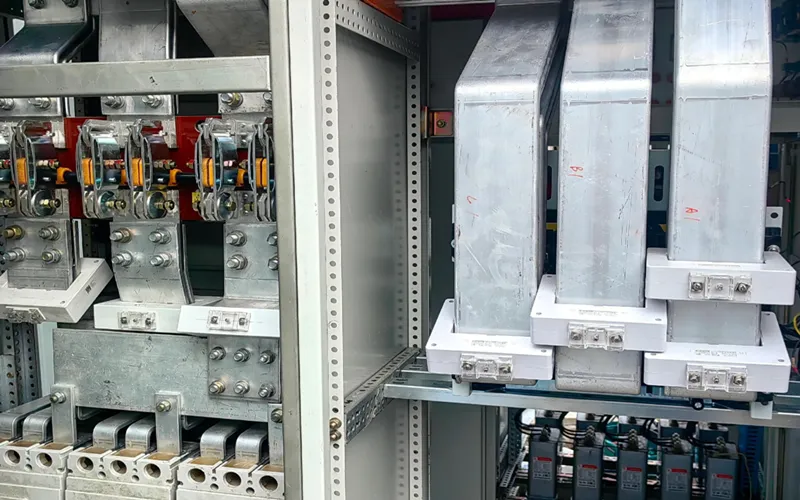
Yes, aluminum flat bar can be used as a bus bar in certain electrical applications, provided that its electrical conductivity, current-carrying capacity, mechanical strength, and operating conditions meet the requirements of the electrical system.
Aluminum bus bars commonly have a flat rectangular cross-section, similar to standard aluminum flat bars. However, the two terms describe different aspects of the material. Flat bar refers to the shape, while bus bar refers to the electrical function.
Understanding this distinction helps determine whether an aluminum flat bar is suitable for use as a bus bar.
1. Aluminum Flat Bar vs. Aluminum Bus Bar: What's the Difference?
Aluminum flat bar and aluminum bus bar can have the same rectangular cross-section and even the same dimensions, but they are classified differently.
An aluminum flat bar is a shape-based product, typically supplied as a long rectangular section. It can be used for machining, structural components, electrical components, and other industrial applications.
An aluminum bus bar is an electrical conductor used to distribute and connect electrical power between different circuits or components. Rectangular bus bars are commonly used in switchgear, distribution panels, substations, and other electrical systems.
| Item | Aluminum Flat Bar | Aluminum Bus Bar |
|---|---|---|
| Classification | Shape-based | Function-based |
| Cross-section | Rectangular | Usually rectangular |
| Main Applications | Structural parts, machining, electrical components | Power distribution and electrical connections |
| Key Requirements | Dimensions, mechanical properties, machinability | Electrical conductivity, current-carrying capacity, temperature rise, mechanical strength |
| Material Selection | Depends on the intended application | Depends on electrical and mechanical requirements |
An aluminum bus bar can have the same rectangular cross-section as a standard aluminum flat bar. The difference is not necessarily in its shape, but in its intended electrical function and the performance requirements it must meet.
Surface Area Calculation for Aluminum Flat Bar and Bus Bar
Since aluminum flat bars and rectangular aluminum bus bars can have the same cross-sectional shape, their geometric surface area is calculated using the same formula.
The calculation depends on the width, thickness, and length of the bar rather than whether it is called a flat bar or a bus bar.
For a rectangular aluminum bar:
W = Width (mm)
T = Thickness (mm)
L = Length (mm)
Total Surface Area:
S = 2(WL + TL + WT)
This formula includes all six surfaces of a rectangular bar:
2WL = Top and bottom surfaces
2TL = Two side surfaces
2WT = Two end surfaces
If only the four longitudinal surfaces are considered, excluding both ends:
S = 2L(W + T)
For example, a rectangular aluminum bar measuring 100 mm × 10 mm × 1000 mm has a total geometric surface area of:
S = 2(100 × 1000 + 10 × 1000 + 100 × 10)
S = 222,000 mm² = 0.222 m²
Therefore, when an aluminum flat bar and an aluminum bus bar have identical dimensions, their geometric surface area is exactly the same.
However, geometric surface area should not be directly equated with heat dissipation. Actual thermal performance also depends on installation orientation, airflow, ambient temperature, spacing, and operating conditions.
2. Can Aluminum Flat Bar Meet the Requirements of a Bus Bar?
Although aluminum flat bar can be used for electrical applications, not every aluminum flat bar is automatically suitable for use as a bus bar.
The material must meet the electrical, thermal, and mechanical requirements of the intended application.
2.1 Electrical Conductivity
Electrical conductivity determines how easily current flows through the aluminum conductor. Different aluminum alloys and tempers have different conductivity levels.
For bus bar applications, conductivity is an important consideration because electrical resistance affects power loss and heat generation.
Aluminum 6101 is commonly selected for bus bar applications where a combination of electrical conductivity and mechanical strength is required.
2.2 Current-Carrying Capacity (Ampacity)
Current-carrying capacity, also known as ampacity, refers to the maximum current a conductor can continuously carry under specified operating conditions without exceeding its allowable temperature limit.
For a rectangular aluminum bus bar, the cross-sectional area is calculated as:
A = W × T
Where:
A = Cross-sectional area (mm²)
W = Width (mm)
T = Thickness (mm)
The basic relationship between current, current density, and cross-sectional area can be expressed as:
I = J × A
Where:
I = Current (A)
J = Current density (A/mm²)
A = Cross-sectional area (mm²)
This relationship shows why cross-sectional area is an important factor in bus bar sizing. A larger cross-sectional area generally allows a conductor to carry more current.
However, current density is not a fixed value for all aluminum bus bars. Actual ampacity depends on factors such as:
Aluminum alloy and temper
Cross-sectional dimensions
Ambient temperature
Installation orientation and spacing
Cooling and ventilation conditions
Allowable temperature rise
Therefore, this formula provides a simplified explanation of the relationship between cross-sectional area and current rather than a definitive ampacity calculation. Final bus bar sizing should be verified according to applicable electrical standards and project-specific operating conditions.
2.3 Temperature Rise and Heat Dissipation
When current passes through an aluminum bus bar, electrical resistance generates heat.
The heat must be dissipated to the surrounding environment to keep the conductor temperature within the allowable operating range.
A larger bus bar provides a larger cross-sectional area for carrying current and also generally provides more surface area for heat dissipation. However, actual temperature rise depends on the installation environment, airflow, spacing between conductors, and electrical load.
For this reason, bus bar selection should not be based on cross-sectional area alone.
2.4 Mechanical Strength and Connection Design
A bus bar must also provide sufficient mechanical strength for installation and operation.
The design may need to account for support spacing, vibration, fastening, and mechanical forces generated during short-circuit conditions.
Connection design is another important consideration. Bolt holes, contact surfaces, fastening methods, and joint resistance can affect the electrical performance of the complete bus bar system.
Therefore, an aluminum flat bar intended for use as a bus bar should meet both the electrical and mechanical requirements of the application.
3. Applications of Aluminum Flat Bar and Aluminum Bus Bar
Although aluminum flat bars and aluminum bus bars may share the same rectangular cross-section, their applications differ according to their intended functions and performance requirements.
Aluminum Flat Bar Applications
Aluminum flat bars are used in a wide range of industrial applications where a rectangular aluminum section is required.
Common applications include:
Machined Components: CNC-machined parts, brackets, mounting plates, and other components.
Structural Components: Frames, supports, reinforcement parts, and equipment structures.
Electrical Components: Conductive components and electrical equipment parts when the selected material meets the required electrical specifications.
Aluminum Bus Bar Applications
Aluminum bus bars are primarily used for electrical power distribution and connections where efficient current transmission is required.
Common applications include:
Switchgear and Distribution Panels: Power distribution between incoming and outgoing circuits.
Electrical Substations: Connections between transformers, circuit breakers, and other electrical equipment.
Power Distribution Systems: Electrical distribution equipment in industrial and commercial facilities.
Renewable Energy Systems: Electrical connections and power distribution equipment used in solar and other energy systems.
The key difference is that a flat bar is primarily identified by its shape, while a bus bar is identified by its electrical function and the performance requirements associated with that function.
4. Which Aluminum Alloy Is Suitable for Bus Bars?
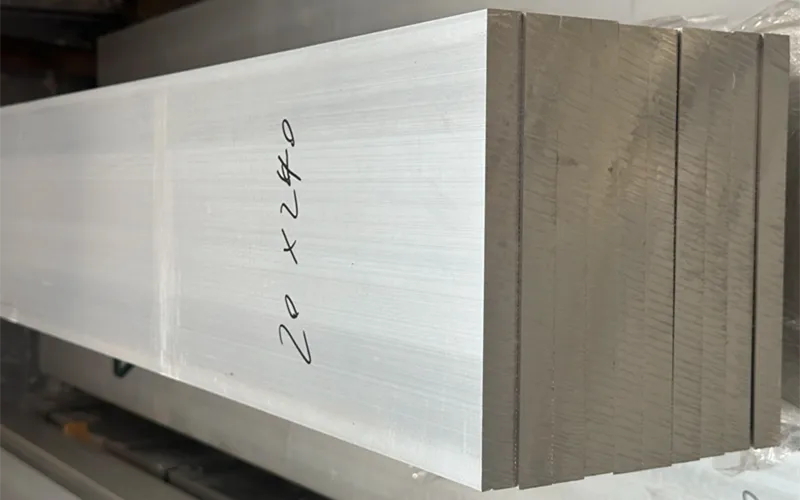
Aluminum 6101 is commonly selected for electrical bus bar applications because it provides a balance of electrical conductivity and mechanical strength.
6101 aluminum alloy is available in different tempers, including 6101-T6 and 6101-T65, depending on the required properties and applicable specifications.
For bus bar applications, material selection should consider:
Electrical conductivity
Tensile and yield strength
Required temper
Dimensions and tolerances
Applicable material and product standards
The appropriate alloy and temper depend on the electrical design, installation environment, and mechanical requirements of the project.
5. Can Any Aluminum Flat Bar Be Used as a Bus Bar?
Not necessarily.
An aluminum flat bar can serve as a bus bar when its material properties, dimensions, electrical conductivity, thermal performance, and mechanical characteristics meet the requirements of the intended electrical application.
The fact that a flat bar has a rectangular cross-section does not automatically make it suitable for power distribution.
Conversely, an aluminum bus bar does not necessarily require a special cross-sectional shape. In many applications, it is a rectangular aluminum conductor selected and specified for electrical service.
Therefore, when selecting aluminum for a bus bar application, the key question is not simply “Is it a flat bar?” but rather “Does the material and design meet the electrical and mechanical requirements of the application?”
For applications requiring a combination of electrical conductivity and mechanical strength, 6101 aluminum bus bar can be considered as one material option.